French Drains Fayetteville NC: How to Stop Yard Water, Foundation Moisture, Crawl Space Problems, and Soil Erosion

July 13th, 2026
French drains Fayetteville NC by Drainage & Waterproofing Solutions LLC

French Drains Fayetteville NC: How to Stop Yard Water, Foundation Moisture, Crawl Space Problems, and Soil Erosion

French drains Fayetteville NC homeowners can trust are designed to move unwanted water away from the home before it creates bigger problems around the foundation, basement, crawl space, driveway, retaining wall, or yard. In Fayetteville and surrounding Cumberland County communities, heavy rain, clay soil, grading issues, low yard areas, clogged downspouts, and stormwater runoff can leave homeowners dealing with soggy soil, standing water, basement seepage, crawl space moisture, and foundation concerns.

A wet yard may seem like a landscaping problem at first. But when water repeatedly collects near the home, the problem can become more serious. Water may press against foundation walls, seep into a basement, enter a crawl space, wash out soil, damage landscaping, weaken retaining wall areas, or keep the ground too saturated around the structure.

Drainage & Waterproofing Solutions LLC helps Fayetteville homeowners with French drains, yard drainage, basement waterproofing, foundation waterproofing, basement moisture control, crawl space and basement waterproofing, sealed crawl spaces, retaining walls, and drainage system inspections. The company is locally owned, family operated, and brings more than 20 years of drainage and waterproofing experience to homes across Fayetteville, Raleigh, Garner, Cary, Apex, Durham, Chapel Hill, Clayton, Fuquay-Varina, Holly Springs, Wake Forest, Wilson, Southern Pines, and surrounding Central North Carolina communities.

If your Fayetteville yard stays wet after rain, your crawl space smells musty, your basement shows water stains, or water collects near your foundation, call (919) 508-7503 or request a free estimate from Drainage & Waterproofing Solutions LLC.

What Is a French Drain?

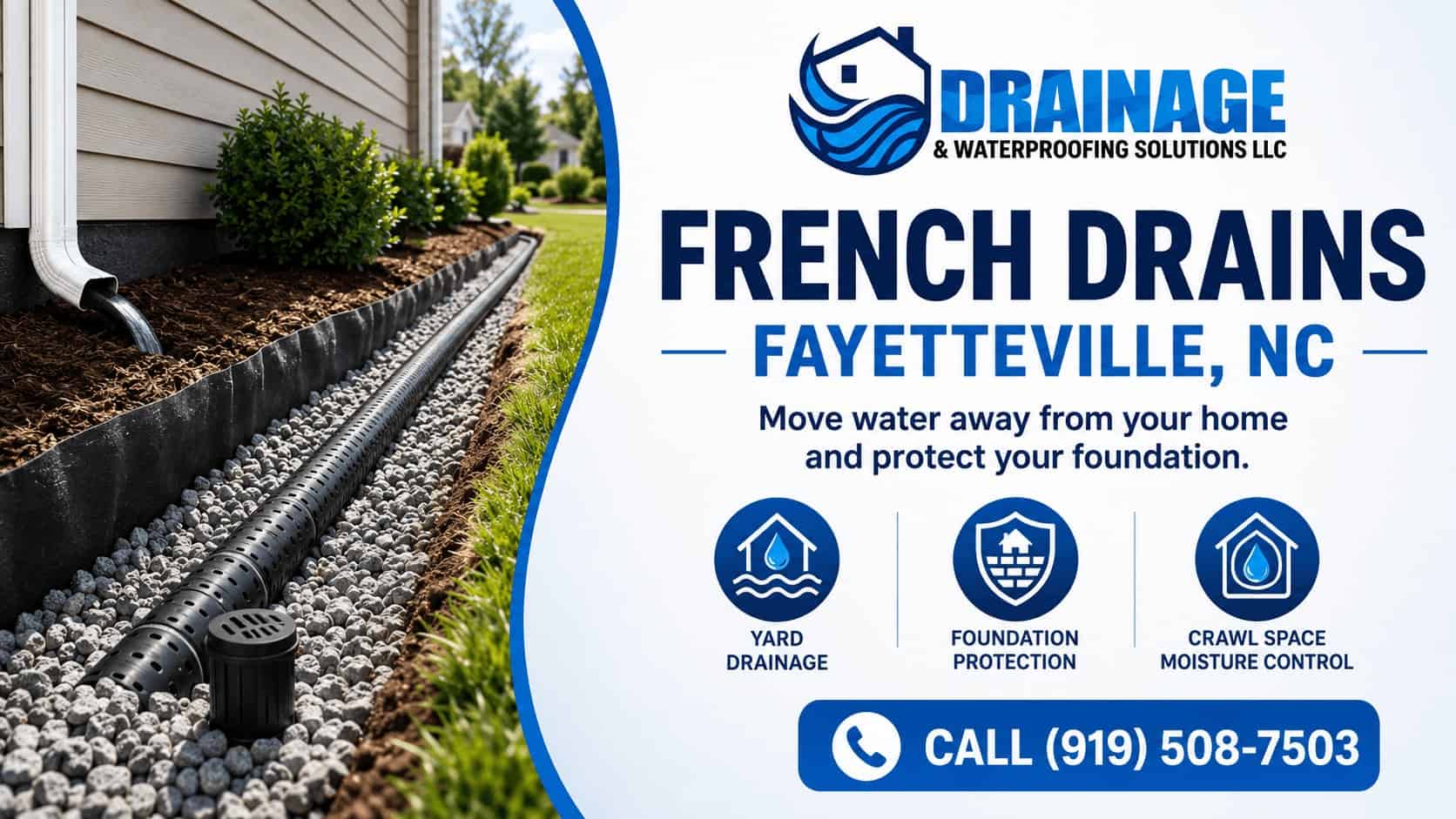
A French drain is a drainage system that helps collect and redirect groundwater or surface water away from problem areas. It usually includes a sloped trench, gravel or drainage stone, filter fabric, and perforated drainage pipe that moves water toward a safer discharge location.

French drains may help with:

  • Standing water in the yard
  • Soggy soil near the foundation
  • Water pooling beside the home
  • Crawl space moisture
  • Basement seepage after rain
  • Foundation water pressure
  • Downspout drainage problems
  • Low spots in the lawn
  • Water collecting near patios
  • Drainage issues near driveways
  • Retaining wall drainage
  • Soil erosion
  • Wet walkways
  • Stormwater runoff
  • Repeated puddling after heavy rain

The goal is to give water a controlled path away from the home instead of allowing it to sit against the foundation or collect in low areas.

French Drains Fayetteville NC: Why They Matter

French drains Fayetteville NC homeowners install can help protect the home from repeated moisture problems. Fayetteville properties may experience heavy rainfall, compacted soil, clay-heavy areas, uneven grading, stormwater runoff, and drainage challenges around older and newer homes.

When water does not drain correctly, it can create problems such as:

  • Wet crawl spaces
  • Basement moisture
  • Foundation seepage
  • Musty odors
  • Mold-like growth
  • Wood rot concerns
  • Yard erosion
  • Retaining wall pressure
  • Damaged landscaping
  • Soft soil near the home
  • Water pooling near walkways
  • Soggy areas that stay wet for days
  • Increased pressure against foundation walls

A French drain is not just a landscaping feature. It is a water-management solution that can help protect the home from moisture before water reaches the basement, crawl space, or foundation.

Common Signs You May Need a French Drain

Many Fayetteville homeowners notice drainage problems after a storm. The yard may hold water for several days, the soil may stay muddy, or water may collect near the home every time it rains.

Common signs include:

  • Standing water in the yard
  • Soggy soil that does not dry
  • Water pooling near the foundation
  • Crawl space moisture after storms
  • Musty odors under the home
  • Basement seepage after heavy rain
  • Water stains on foundation walls
  • Soil erosion near the house
  • Mulch washing away
  • Puddles near patios or walkways
  • Downspouts dumping water near the foundation
  • Water flowing toward the home
  • Wet spots near retaining walls
  • Driveway edge erosion
  • Low yard areas holding water
  • Mold-like growth in damp areas
  • Wet crawl space insulation
  • Sump pump running often
  • Yard areas that cannot support grass
  • Previous drainage fixes that did not last

If these signs keep returning, a drainage system inspection can help determine whether the home needs a French drain, downspout correction, foundation drainage, grading improvement, sump pump, or another waterproofing solution.

What Causes Yard Drainage Problems in Fayetteville Homes?

Yard drainage problems often come from several issues working together. A yard may have heavy soil, poor slope, short downspouts, and a low area where runoff collects after every storm.

Common causes include:

  • Heavy rainfall
  • Clay or compacted soil
  • Poor grading
  • Downspouts discharging too close to the home
  • Low spots in the yard
  • Water flowing from neighboring properties
  • Driveways or patios directing water toward the house
  • Retaining walls without proper drainage
  • Soil settlement
  • Clogged drainage systems
  • Failed previous drains
  • Landscaping that traps water
  • Crawl space moisture
  • Foundation seepage
  • Yard erosion
  • Stormwater runoff
  • Water collecting near walkways
  • Slope changes from construction or landscaping

A French drain may help when water needs a controlled path away from a problem area. The right design depends on slope, soil, discharge location, foundation proximity, and where the water is coming from.

French Drain vs. Yard Drain vs. Foundation Drain

French drains are often discussed alongside yard drains and foundation drains. These systems may work together, but they are not always the same.

Drainage SolutionBest ForWhat Homeowners Should Know
French drainGroundwater, soggy soil, yard drainage, foundation water movementUses gravel, fabric, and perforated pipe to redirect water
Yard drainSurface water collecting in low lawn areasOften captures water from specific surface areas
Foundation drainWater collecting near below-grade foundation wallsHelps move water away from the footing or foundation area
Downspout drainageRoof runoff discharging too close to the homeMoves gutter water away from the foundation
Interior drain systemWater entering basement or crawl space perimeterManages water after it reaches the home
Sump pump systemCollected water that needs mechanical removalOften works with interior or exterior drainage

A Fayetteville home may need one system or a combination. The inspection should identify whether the main issue is surface water, groundwater, roof runoff, foundation pressure, or crawl space moisture.

Interior vs. Exterior French Drains

French drains may be installed outside the home or as part of an interior water-management system. The correct option depends on where water is entering and whether the goal is to stop water before it reaches the home or manage water after it gets inside.

Drain TypeBest ForWhat Homeowners Should Know
Exterior French drainYard water, groundwater, foundation water movementHelps redirect water before it reaches the home
Interior drainage systemBasement or crawl space water at the perimeterCaptures water after it enters or reaches the inside edge
Foundation drainWater collecting near foundation footingOften supports foundation waterproofing
Retaining wall drainWater pressure behind retaining wallsHelps reduce pressure and erosion near walls
Downspout drain extensionRoof runoff near the foundationOften one of the first drainage corrections to consider

Exterior drainage is usually preferred when water can be redirected before reaching the home. Interior drainage may be needed when water is already entering through the basement or crawl space perimeter.

When a French Drain Makes Sense

A French drain may make sense when water repeatedly collects in the same area or moves toward the home instead of away from it. It is especially useful when grading alone cannot solve the problem.

A French drain may be appropriate when:

  • Water pools near the foundation
  • The yard stays soggy after rain
  • A crawl space gets wet during storms
  • Basement seepage appears after heavy rain
  • Downspouts overload one area
  • A retaining wall has water pressure behind it
  • Soil is washing away
  • A low yard area cannot dry
  • Foundation walls show moisture signs
  • Water flows toward the home
  • Previous drainage work failed
  • Sump pump discharge needs better routing
  • Drainage needs to be hidden underground
  • Homeowners want a durable drainage solution

The best French drain design depends on where water enters, how the yard slopes, where water can safely discharge, and what parts of the home need protection.

French Drain Installation Process at Drainage & Waterproofing Solutions LLC

French drain installation in Fayetteville NC should begin with inspection and planning. The drain must be placed correctly, sloped correctly, and discharged correctly to work as intended.

A typical process may include:

  • Property and drainage inspection

The team reviews the yard, foundation, basement, crawl space, downspouts, low areas, soil conditions, retaining walls, and water-flow patterns.

Water source diagnosis

The inspection helps determine whether water is coming from roof runoff, groundwater, surface water, neighboring slopes, failed drains, or foundation seepage.

Drainage plan and estimate

Drainage & Waterproofing Solutions LLC provides a written plan, price quote, and expected timeline so homeowners understand the recommended solution.

Drain route layout

The drain location is planned based on slope, water source, home layout, utilities, landscaping, discharge location, and foundation concerns.

Trench excavation

A trench is excavated along the planned route. Depth and width depend on the drainage problem, soil, slope, and project type.

Filter fabric placement

Filter fabric may be used to help reduce soil intrusion into the drainage stone and pipe.

Drainage stone installation

Gravel or drainage stone helps water move toward the perforated pipe and through the system.

Perforated pipe installation

A properly sloped perforated pipe collects and moves water away from the problem area.

Discharge routing

Water must discharge to an appropriate location where it does not return to the foundation or create a new problem.

Backfill and site cleanup

The system is covered and the work area is cleaned. Surface restoration depends on the project scope and site conditions.

Final review and homeowner guidance

The team explains what was installed, what to watch for, and how to maintain drainage performance.

A French drain works best when the entire system is designed around the property, not installed as a one-size-fits-all trench.

What Homeowners Should Do Before a French Drain Estimate

Most homeowners do not need to diagnose the problem before calling. A few simple steps can make the inspection more useful.

Before a French drain estimate:

  • Take photos after heavy rain
  • Note where water appears first
  • Mark areas that stay wet longest
  • Check where downspouts discharge
  • Look for soil erosion
  • Mention basement or crawl space moisture
  • Share any prior drainage work
  • Point out retaining wall concerns
  • Unlock gates if needed
  • Clear access to crawl space or basement areas
  • Move outdoor items near problem areas
  • Identify where water currently flows
  • Share inspection reports if available
  • Ask whether foundation waterproofing is also needed

Photos from storms can be very helpful because drainage problems may not be visible on a dry day.

How Long Does French Drain Installation Take?

The timeline depends on the length of the drain, trench depth, soil conditions, access, slope, drainage route, landscaping, discharge location, and whether the project includes foundation waterproofing, sump pump work, or crawl space drainage.

Project TypeTypical ScopeTimeline Factors
Small yard drainShort drainage route for a limited wet areaSoil, access, and discharge route matter
Foundation-area French drainDrainage near the home or footing areaFoundation access and excavation affect timing
Crawl space drainage supportDrainage tied to under-home moisture controlCrawl space access and water source matter
Retaining wall drainageDrainage behind or near a retaining wallWall structure and soil pressure matter
Downspout drainage upgradeRouting roof water away from the homeDistance and discharge location affect scope
Full property drainage correctionMultiple wet areas or larger drainage planMay take several days depending on complexity
French drain plus waterproofingDrainage and foundation protection togetherLarger projects require more planning

Drainage & Waterproofing Solutions LLC can explain the expected timeline after reviewing the property.

How Much Does a French Drain Cost in Fayetteville NC?

French drain cost in Fayetteville NC depends on project length, trench depth, soil conditions, access, slope, discharge location, gravel, pipe, filter fabric, landscaping, and whether the project also includes foundation waterproofing, crawl space drainage, sump pump work, or downspout routing.

Cost FactorWhy It MattersWhat Homeowners Should Know
Drain lengthLonger drains require more labor and materialsLinear footage affects cost
Trench depthDeeper drainage may require more excavationDepth depends on water source
Soil typeClay, roots, and compacted soil affect laborFayetteville soil conditions can vary
AccessFences, slopes, tight spaces, and landscaping affect workEasier access can reduce complexity
Discharge routeWater must be sent to an appropriate locationPoor discharge can create new problems
Foundation proximityDrains near the home require careful planningFoundation protection may be part of the scope
MaterialsPipe, stone, fabric, and fittings affect durabilityMaterial quality matters
Additional workSump pumps, downspouts, grading, or waterproofing may be neededThe water source drives the plan

Simple drainage corrections may cost less than larger excavation and waterproofing projects. Many French drain projects range from several thousand dollars to more depending on length, access, materials, and drainage complexity. A free estimate is the best way to understand the right scope for your Fayetteville home.

Do French Drains Help With Basement or Crawl Space Moisture?

Yes, a French drain can help with basement or crawl space moisture when the source is water collecting around the foundation, groundwater moving toward the home, downspouts discharging too close, or yard drainage pushing water into the structure.

A French drain may support:

  • Basement waterproofing
  • Crawl space waterproofing
  • Foundation waterproofing
  • Basement moisture control
  • Sealed crawl space planning
  • Sump pump performance
  • Retaining wall drainage
  • Yard drainage correction

However, a French drain may not be the only solution. If water is already entering the basement or crawl space, the home may also need interior drainage, sump pump support, foundation waterproofing, crack repair, or crawl space encapsulation.

French Drains and Retaining Wall Drainage

Retaining walls need drainage because water can build pressure behind the wall. Without drainage, the soil behind the wall may become heavy, saturated, and unstable. Over time, this can contribute to wall movement, erosion, or drainage problems around the yard.

French drains may help retaining wall areas by:

  • Reducing water buildup behind the wall
  • Helping redirect groundwater
  • Reducing soil saturation
  • Lowering pressure on the wall area
  • Protecting landscaping near the wall
  • Helping control erosion
  • Moving water toward a safer discharge point

A retaining wall is not just a visual feature. It must manage soil and water. Drainage should be part of the design or repair plan.

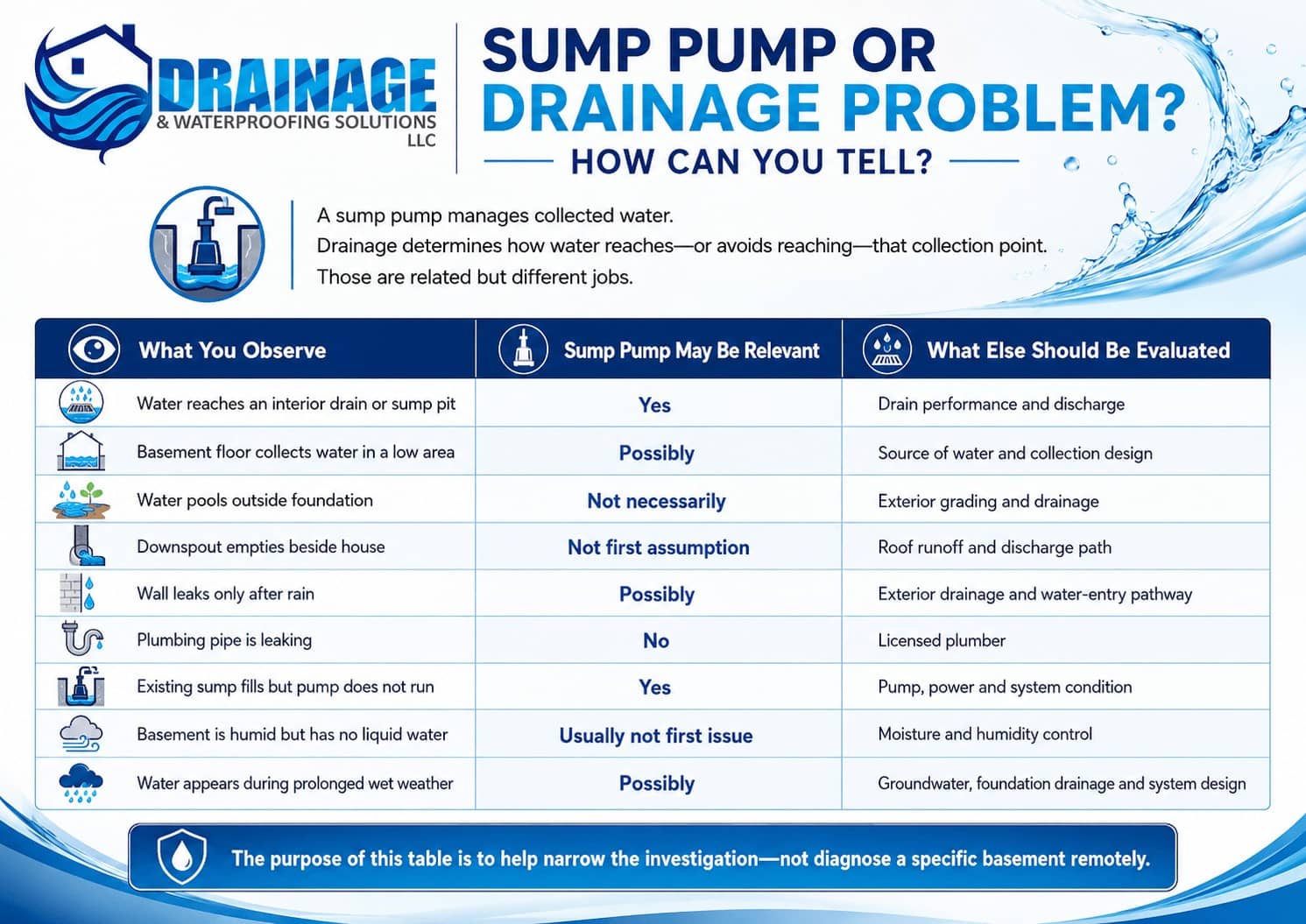
French Drains vs. Sump Pumps

French drains and sump pumps are often used together, but they do different jobs. A French drain collects and redirects water. A sump pump mechanically pumps collected water away when gravity drainage is not enough.

SystemWhat It DoesWhen It May Apply
French drainCollects and redirects groundwater or surface waterYard water, foundation water, soggy soil, retaining wall drainage
Sump pumpPumps collected water away from a low pointBasement or crawl space water that cannot drain by gravity
Interior drain systemCaptures water at the basement or crawl space perimeterActive water entering inside the home
Downspout drainMoves roof runoff farther from the foundationGutter water causing foundation moisture
Foundation waterproofingProtects below-grade foundation wallsWater entering through foundation walls

A professional inspection can determine whether the home needs a French drain, sump pump, or both.

French Drain Maintenance Tips

French drains are designed to be durable, but drainage systems still benefit from basic care. Homeowners should monitor how water moves after storms and watch for signs of clogging or poor discharge.

Helpful maintenance tips include:

  • Keep discharge outlets clear
  • Keep leaves and debris away from drains
  • Watch where downspouts discharge
  • Check the yard after heavy rain
  • Look for recurring puddles
  • Avoid driving heavy equipment over drain routes
  • Keep soil and mulch from washing into drainage areas
  • Monitor retaining walls after storms
  • Schedule inspections if moisture returns
  • Call for service if water stops draining properly

A well-installed system should move water away from the problem area. If water returns or a new wet area appears, the system should be inspected.

French Drains for Fayetteville, Hope Mills, Spring Lake, Raeford, and Cumberland County

Drainage & Waterproofing Solutions LLC serves Fayetteville and surrounding Central North Carolina communities. Fayetteville-area homes may need French drains because of heavy rain, low yard areas, clay or compacted soil, grading concerns, crawl space moisture, foundation seepage, and stormwater runoff.

French drains may be helpful for homes in and around:

  • Fayetteville
  • Hope Mills
  • Spring Lake
  • Raeford
  • Fort Liberty area
  • Eastover
  • Stedman
  • Vander
  • Cumberland County
  • Southern Pines
  • Garner
  • Raleigh
  • Cary
  • Apex
  • Durham
  • Wake Forest

Local experience matters because drainage plans should account for soil, slope, rainfall, foundation type, discharge route, and how water moves across the property.

How Drainage & Waterproofing Solutions LLC Helps Fayetteville Homeowners

Drainage & Waterproofing Solutions LLC is locally owned, family operated, and focused on helping homeowners protect their homes from water damage. The company provides French drains, basement waterproofing, basement moisture control, foundation waterproofing, sealed crawl spaces, crawl space and basement waterproofing, crawl space repair and encapsulation, retaining walls, and drainage system inspections.

Homeowners choose Drainage & Waterproofing Solutions LLC for:

  • French drains
  • Yard drainage correction
  • Basement waterproofing
  • Basement moisture control
  • Foundation waterproofing
  • Crawl space and basement waterproofing
  • Sealed crawl spaces
  • Crawl space repair and encapsulation
  • Retaining wall drainage
  • Drainage system inspections
  • Sump pump and discharge planning
  • Written plans and estimates
  • Durable, long-lasting solutions
  • Local Central North Carolina experience
  • Peace of mind

The goal is to solve the source of the water problem, not just cover the symptom.

Anonymized Examples of French Drain Situations

Every home is different, but these examples show why Fayetteville-area homeowners schedule French drain inspections and drainage work.

A Fayetteville homeowner with standing water near the foundation

A homeowner noticed water pooling beside the house after heavy rain. The soil stayed wet for days, and the crawl space smelled musty. A drainage inspection helped identify water movement toward the foundation and whether a French drain or related drainage correction was needed.

A Hope Mills homeowner with a soggy backyard

A homeowner had a backyard that stayed soft and muddy after storms. Grass struggled to grow, and water collected near a patio. A French drain evaluation helped determine whether groundwater, slope, or surface runoff was causing the problem.

A Spring Lake homeowner with basement seepage

A homeowner saw water stains along a basement wall after storms. The inspection focused on exterior water movement, downspout discharge, and whether a French drain, foundation waterproofing, or basement waterproofing system would be the right solution.

A Raeford homeowner with retaining wall drainage concerns

A homeowner noticed soil movement and wet areas near a retaining wall. The concern was not just the wall itself, but the water collecting behind and around it. A drainage plan helped determine whether a French drain could help relieve water pressure.

These examples are educational and not based on identifiable customers. Project cost, timeline, materials, and results depend on water source, soil, slope, drainage route, access, foundation condition, discharge location, and repair scope.

Schedule French Drain Installation in Fayetteville NC

If your Fayetteville yard stays wet, water pools near your foundation, your crawl space smells musty, your basement shows moisture, or your retaining wall area is holding water, Drainage & Waterproofing Solutions LLC can help identify the source and recommend a lasting solution.

Call (919) 508-7503 or request a free estimate from Drainage & Waterproofing Solutions LLC.

This article is for general information only. French drain recommendations depend on water source, soil conditions, slope, grading, foundation type, crawl space or basement moisture, discharge location, access, and previous drainage work. Waterproofing and drainage solutions should be evaluated by a qualified professional before repair or installation decisions are made.

FAQs About French Drains Fayetteville NC

What is a French drain?

A French drain is a drainage system that uses a sloped trench, gravel or drainage stone, filter fabric, and perforated pipe to collect and redirect water away from a problem area. It can help with soggy yards, foundation moisture, crawl space water, and retaining wall drainage.

How do I know if I need a French drain in Fayetteville NC?

You may need a French drain if your yard stays wet, water pools near the foundation, soil erodes, the crawl space smells musty, basement seepage appears after storms, or downspouts send water toward the home. A professional inspection can identify the source.

How much does a French drain cost in Fayetteville NC?

French drain cost depends on drain length, trench depth, soil, access, materials, discharge location, landscaping, and whether waterproofing, sump pumps, downspout routing, or crawl space drainage are also needed. A free estimate is the best way to understand the correct scope.

Can a French drain help with basement water?

Yes, a French drain may help when basement water is caused by groundwater, surface runoff, poor grading, downspouts, or water collecting near the foundation. Some homes may also need basement waterproofing, foundation waterproofing, or an interior drainage system.

Can a French drain help with crawl space moisture?

Yes. If crawl space moisture is connected to water collecting around the foundation or under the home, a French drain may help redirect water before it enters the crawl space. Crawl space waterproofing or encapsulation may also be recommended.

Do French drains need maintenance?

French drains benefit from basic maintenance. Homeowners should keep discharge outlets clear, watch for recurring puddles, monitor downspouts, and call for inspection if water stops draining properly. Clogs, debris, soil movement, or discharge issues can affect performance.

Where does French drain water go?

French drain water should discharge to a location where it will not return to the foundation, create erosion, flood a neighbor’s property, or cause a new drainage problem. The correct discharge route depends on the property and local conditions.

Is a French drain better than a sump pump?

A French drain and sump pump do different jobs. A French drain collects and redirects water, often using gravity. A sump pump mechanically pumps collected water away from a low area. Some homes need one system, while others need both.

Can a French drain help a retaining wall?

Yes. A French drain may help reduce water pressure behind or near a retaining wall by redirecting water away from the wall area. Retaining walls should be evaluated carefully because drainage, soil pressure, and wall condition all matter.

Who should I call for French drains Fayetteville NC?

Call Drainage & Waterproofing Solutions LLC at (919) 508-7503 for French drains in Fayetteville NC, Hope Mills, Spring Lake, Raeford, Cumberland County, Southern Pines, Garner, Raleigh, Cary, Apex, Durham, and surrounding Central North Carolina communities.

Sources

Posted in Basement Waterproofing, French Drains, Yard Drainage

Drainage System Inspections Raleigh NC: How Routine Checks Help Protect Basements, Crawl Spaces, Sump Pumps, and Foundations

July 9th, 2026
Drainage system inspections Raleigh NC by Drainage & Waterproofing Solutions LLC

Drainage System Inspections Raleigh NC: How Routine Checks Help Protect Basements, Crawl Spaces, Sump Pumps, and Foundations

Drainage system inspections Raleigh NC homeowners can trust help protect the home before small water-control issues become expensive basement, crawl space, foundation, or moisture problems. A drainage system may be installed correctly, but it still needs to keep working through heavy rain, clay soil movement, seasonal storms, debris, sump pump wear, discharge-line issues, and humidity changes.

For homeowners in Raleigh, Garner, Cary, Apex, Durham, Chapel Hill, Clayton, Fuquay-Varina, Holly Springs, Wake Forest, Wilson, Fayetteville, Southern Pines, and surrounding Central North Carolina communities, water management is not something to ignore after installation. A drainage system protects the home only when the system remains clear, active, and properly routed.

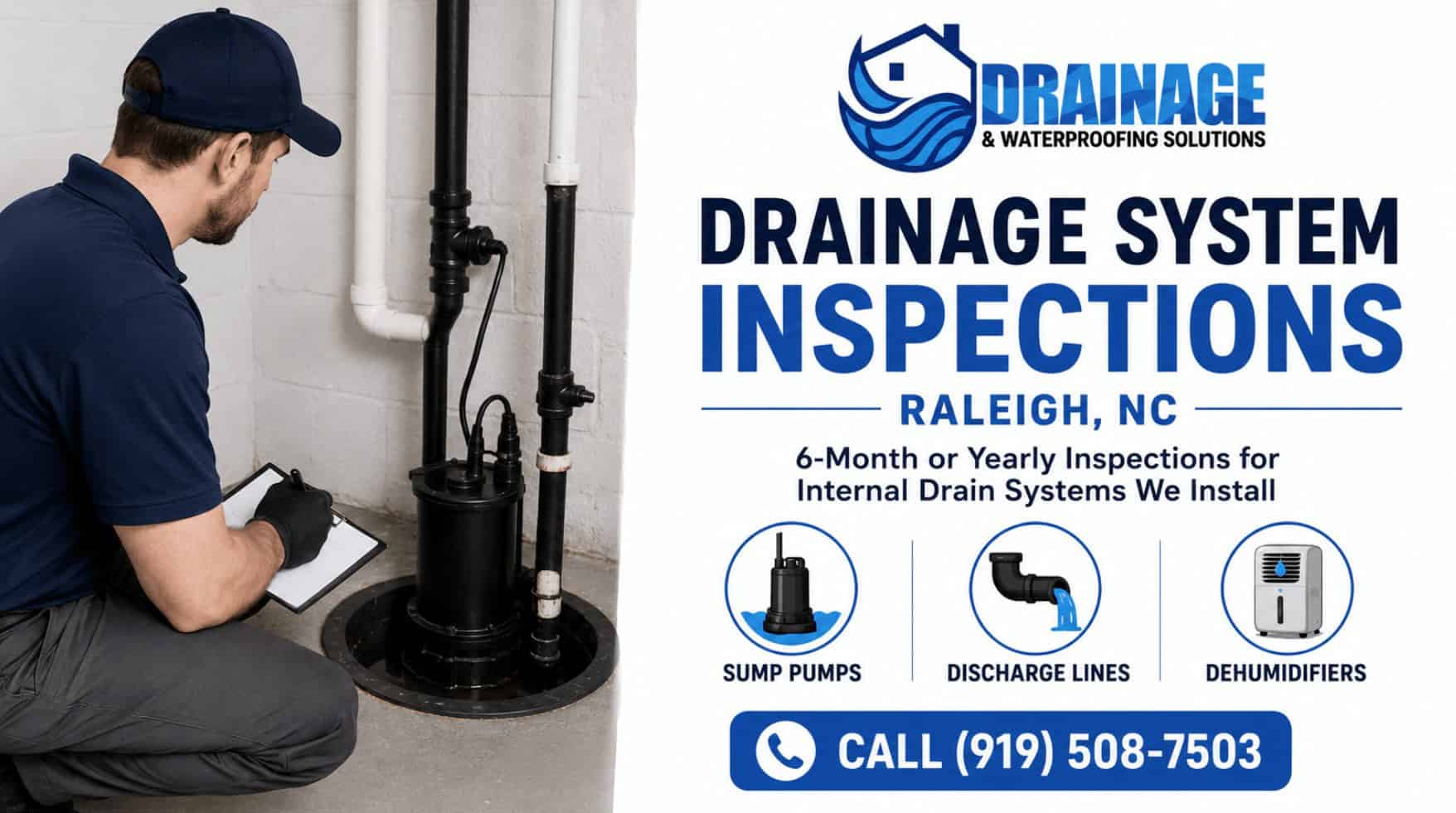
Drainage & Waterproofing Solutions LLC provides drainage system inspections for internal drain systems the company installs. These inspections can be scheduled on a 6-month or yearly basis and include a professional review of key waterproofing components such as internal drain systems, sump pumps, discharge lines, dehumidifiers, and related moisture-control equipment. The company is locally owned, family operated, and focused on helping homeowners protect their homes from water damage with practical, long-lasting solutions.

If your home has an internal drainage system, sump pump, basement waterproofing system, crawl space drainage, or dehumidifier setup, call (919) 508-7503 or request service from Drainage & Waterproofing Solutions LLC.

What Is a Drainage System Inspection?

A drainage system inspection is a professional review of the components that help move water away from vulnerable areas of the home. This may include internal drain systems, sump pumps, discharge lines, dehumidifiers, filters, moisture-control components, and visible signs that water is not moving as intended.

Drainage system inspections may include:

  • Internal drain system inspection
  • Drain line review
  • Piping and connection check
  • Clog or obstruction review
  • Sump pump test
  • Float switch check
  • Backup battery review when applicable
  • Discharge line inspection
  • Dehumidifier performance check
  • Filter replacement
  • Basement moisture review
  • Crawl space moisture review
  • Signs of water pooling
  • Signs of basement seepage
  • Signs of crawl space humidity
  • Maintenance recommendations
  • Repair recommendations when needed

The goal is not to wait until the basement floods or the crawl space smells musty. The goal is to confirm that the drainage and waterproofing system is still working before water damage appears.

Drainage System Inspections Raleigh NC: Why They Matter

Drainage system inspections Raleigh NC homeowners schedule on a routine basis can help protect the home from recurring moisture problems. Water intrusion is one of the most serious threats to basements, crawl spaces, foundation walls, floor systems, and stored belongings.

A properly installed drainage system may help direct water away from the foundation or collect water before it causes damage. But if the system becomes clogged, the sump pump fails, the discharge line backs up, or the dehumidifier stops working, the home may become vulnerable again.

Routine drainage inspections can help support:

  • Better basement protection
  • Better crawl space moisture control
  • Earlier detection of clogs
  • Sump pump reliability
  • Dehumidifier performance
  • Reduced risk of musty odors
  • Better foundation-adjacent protection
  • Longer system lifespan
  • Better storm-season readiness
  • Fewer surprise water problems
  • Peace of mind during heavy rain

A drainage system is not “set it and forget it.” Like other home systems, it should be checked and maintained.

Common Signs Your Drainage System Needs Inspection

Some drainage issues are obvious. Others develop quietly. A sump pump may still turn on but not discharge properly. A dehumidifier may run but not control humidity well. A drain line may be partially clogged before water backs up.

Common warning signs include:

  • Sump pump running more often than usual
  • Sump pump not turning on
  • Strange sump pump noises
  • Water pooling near the basement perimeter
  • Damp basement walls
  • Musty odors
  • Crawl space humidity
  • Standing water in the crawl space
  • Water stains after storms
  • Mold-like growth near damp areas
  • Dehumidifier not keeping humidity down
  • Dehumidifier filter looks dirty
  • Drainage system was installed more than 6–12 months ago
  • Discharge line appears blocked
  • Water discharges too close to the home
  • Basement feels humid
  • Crawl space insulation feels damp
  • Drain system gurgling or backing up
  • Previous waterproofing system has not been checked recently
  • Heavy storms are forecast
  • You are preparing to sell the home

If you notice these signs, a drainage system inspection can help identify whether maintenance, repair, sump pump service, discharge correction, dehumidifier work, or a larger waterproofing review is needed.

What Systems Should Be Inspected?

Drainage system inspections are most helpful when the home already has a waterproofing or moisture-control system in place. Drainage & Waterproofing Solutions LLC offers 6-month and yearly inspections for internal drain systems the company installs.

Systems and components that may need inspection include:

ComponentWhy It MattersWhat Homeowners Should Know
Internal drain systemCollects and directs water away from vulnerable basement or crawl space areasClogs or obstructions can reduce performance
Sump pumpPumps collected water out before it causes damageMechanical failure can leave the home vulnerable
Discharge lineCarries water away from the foundationPoor discharge can send water back toward the home
Backup batteryHelps during outages when applicableBattery condition should be checked before storms
DehumidifierHelps control moisture and humidityFilters and performance should be maintained
Crawl space drain systemHelps control water under the homeMust remain clear and properly routed
Basement drainage systemHelps manage perimeter waterShould be checked after storms and seasonally
Foundation drainage supportHelps move water away from foundation wallsDrainage problems may affect waterproofing performance

Every home is different. The inspection should be based on the systems installed, the moisture history, and the current condition of the basement or crawl space.

What Is Included in a Drainage System Inspection?

A professional drainage system inspection should focus on the system components that keep the basement or crawl space protected. Drainage & Waterproofing Solutions LLC describes inspections as an in-depth assessment of the key parts of the internal drain system.

A typical inspection may include:

  • Internal drain system inspection

The drain system is reviewed for clogs, obstructions, piping issues, connection concerns, leaks, damage, and proper water flow.

Drainage flow review

The technician checks whether water is being directed away from the home’s foundation as intended.

Sump pump test

The sump pump is tested to confirm that it turns on and moves water properly.

Float switch check

The float switch is reviewed because a stuck or failed float can prevent the pump from activating.

Discharge line inspection

The discharge line is checked to confirm water is leaving the system and not draining back toward the foundation.

Backup battery review when applicable

If the system includes a battery backup, the backup system should be checked for readiness.

Dehumidifier performance review

The dehumidifier is checked to confirm that it is removing moisture effectively.

Filter replacement

A dirty dehumidifier filter can reduce airflow and performance, so filter replacement may be included.

Moisture and warning-sign review

The technician looks for signs of water pooling, humidity, odors, staining, or system stress.

Maintenance and repair recommendations

If the inspection reveals an issue, the homeowner receives recommendations for repair or maintenance.

The purpose is simple: keep the drainage and waterproofing system working before water damage appears.

How Often Should Drainage Systems Be Inspected?

Drainage & Waterproofing Solutions LLC offers drainage system inspections on a 6-month or yearly basis for internal drain systems the company installs. The right schedule depends on your home, system age, moisture history, sump pump use, drainage demands, and storm exposure.

A 6-month inspection may make sense if:

  • The home has a history of basement water
  • The crawl space has had moisture problems
  • The sump pump runs often
  • The home is in a low area
  • Heavy storms affect the property
  • Water previously entered near foundation walls
  • The homeowner wants maximum peace of mind
  • The basement is finished or used for storage
  • The system is older or heavily used
  • The home is being prepared for sale
  • A yearly inspection may make sense if:
  • The drainage system is newer
  • The home has been dry since installation
  • The sump pump does not run often
  • The basement or crawl space is monitored
  • The homeowner wants routine preventive maintenance
  • The system is part of seasonal home care

The best inspection schedule is the one that keeps the system checked before storm season and before problems return.

Drainage System Inspection vs. Drainage System Repair

Inspection and repair are not the same service. An inspection is a professional review of the current system. A repair is the work needed if the inspection finds a problem.

ServiceBest ForWhat Homeowners Should Know
Drainage system inspectionRoutine maintenance, system review, early problem detectionHelps identify issues before they become expensive
Drainage system repairClogs, damaged piping, failed components, pump issuesMay be recommended after inspection
Sump pump servicePump performance, float switch, discharge problemsImportant before storm season
Dehumidifier serviceHumidity control and filter maintenanceHelps reduce musty odors and moisture
Basement waterproofingActive basement water or recurring seepageMay be needed if the system is missing or insufficient
Crawl space waterproofingStanding water, humidity, or moisture under the homeMay include drainage, vapor barrier, sump pump, or encapsulation
Foundation waterproofingWater entering through foundation wallsMay require exterior work and drainage support

An inspection gives the homeowner clarity. Repair only happens if the system needs it.

Why Sump Pump Inspection Matters

A sump pump is one of the most important parts of many basement and crawl space drainage systems. It collects water from the drain system and pumps it away before it can flood the home or create moisture problems.

A sump pump inspection may include:

  • Confirming the pump turns on
  • Checking the float switch
  • Listening for unusual noises
  • Checking for wear and tear
  • Reviewing the discharge line
  • Looking for debris in the pit
  • Confirming water is moving properly
  • Checking backup battery operation when applicable
  • Looking for signs of mechanical failure
  • Recommending service or replacement when needed

A sump pump can fail at the worst time: during heavy rain. Regular inspection helps reduce that risk.

Why Dehumidifier Inspection and Filter Changes Matter

A dehumidifier can be an important part of basement and crawl space moisture control. It helps keep humidity lower, reduces musty odors, and supports a cleaner environment.

A dehumidifier inspection may include:

  • Checking whether the unit turns on
  • Reviewing moisture-removal performance
  • Inspecting for mechanical issues
  • Replacing the filter
  • Checking airflow
  • Reviewing drainage or condensate routing
  • Looking for humidity warning signs
  • Recommending service when needed

A dirty filter can limit airflow and reduce performance. If the dehumidifier is part of your moisture-control system, it should be checked regularly.

Why Discharge Line Inspection Matters

A sump pump or drain system must send water somewhere safe. If the discharge line is clogged, crushed, disconnected, frozen, or routed poorly, water may not leave the home properly.

Discharge line problems can cause:

  • Water returning toward the foundation
  • Sump pump overwork
  • Basement or crawl space moisture
  • Yard pooling
  • Erosion near the outlet
  • Short cycling
  • Reduced pump performance
  • Recurring water problems after storms

The discharge route is just as important as the drain or pump. Water must be moved away from the home, not simply moved from one problem area to another.

How Much Does a Drainage System Inspection Cost?

Drainage & Waterproofing Solutions LLC lists drainage system inspections at $150 per appointment for 6-month or yearly inspections. This inspection fee applies to the routine system inspection service described on the company’s drainage system inspection page.

The cost may be affected if the inspection reveals that additional maintenance, repairs, pump replacement, drainage correction, dehumidifier service, or waterproofing work is needed. The inspection is designed to identify whether the system is operating properly and whether recommendations are needed.

For broader drainage or waterproofing problems outside a routine inspection, Drainage & Waterproofing Solutions LLC provides free estimates within a 60-mile radius of the Raleigh/Garner area, according to the company’s contact page.

What Homeowners Should Do Before a Drainage System Inspection

Most homeowners do not need to do much before an inspection. Simple preparation helps the technician access the system and understand any recent concerns.

Before a drainage system inspection:

  • Clear access to the sump pump
  • Clear access to the drain system area
  • Move stored items away from basement walls
  • Unlock crawl space access if needed
  • Share recent water concerns
  • Mention unusual sump pump noises
  • Point out musty odors
  • Share photos from recent storms
  • Mention power outages or backup pump concerns
  • Identify dehumidifier issues
  • Note whether the basement or crawl space feels humid
  • Keep pets secure during the visit
  • Move vehicles if they block access
  • Ask whether your system should be checked every 6 months or yearly

You do not need to diagnose the issue. The inspection is meant to confirm system performance and identify possible concerns.

How Long Does a Drainage System Inspection Take?

The timeline depends on the system type, access, crawl space or basement conditions, sump pump location, dehumidifier setup, discharge-line accessibility, and whether any problems are found.

Inspection TypeTypical ScopeTimeline Factors
Basic internal drain inspectionDrain lines, visible system areas, water-flow concernsAccess and system layout matter
Sump pump inspectionPump test, float switch, discharge reviewPit access and pump condition matter
Dehumidifier inspectionPerformance check and filter replacementUnit location and condition affect timing
Crawl space system reviewDrainage, moisture signs, sump or dehumidifier componentsCrawl space height and access matter
Basement system reviewInternal drain, sump pump, moisture signsFinished areas may limit visibility
Storm-readiness checkSystem performance before rainy seasonBest scheduled before heavy storm periods
Post-storm inspectionReview after unusual water activityRecent water signs may guide recommendations

Drainage & Waterproofing Solutions LLC can explain the expected inspection timeline when scheduling.

When to Schedule a Drainage System Inspection

Routine inspections are helpful because water problems often appear during the least convenient time. The best time to find a weak sump pump, dirty filter, or drainage obstruction is before the next heavy rain.

Good times to schedule include:

  • Every 6 months
  • Once per year
  • Before storm season
  • After a major rain event
  • Before finishing a basement
  • Before storing valuables in a basement
  • Before selling the home
  • After buying a home with a drainage system
  • When the sump pump sounds different
  • When the basement smells musty
  • When a crawl space feels humid
  • When water stains appear
  • When the dehumidifier filter has not been changed
  • When the discharge line seems blocked
  • When the system has not been checked recently

A drainage system inspection is a preventive step. It is much easier to maintain a working system than recover from a flooded basement or wet crawl space.

Drainage System Inspections for Raleigh, Garner, Cary, Durham, and Central NC

Drainage & Waterproofing Solutions LLC serves Raleigh, Garner, Cary, Apex, Chapel Hill, Clayton, Durham, Fayetteville, Fuquay-Varina, Holly Springs, Southern Pines, Wake Forest, Wilson, and surrounding Central North Carolina communities.

Local homes often benefit from drainage system inspections because of:

  • Heavy rainfall
  • Humid summers
  • Clay soil
  • Stormwater pooling
  • Yard drainage problems
  • Basement seepage history
  • Crawl space moisture
  • Older waterproofing systems
  • Sump pump dependency
  • Downspout discharge concerns
  • Finished basement storage
  • Home inspection findings
  • Foundation water pressure
  • Seasonal storms
  • Long-term home protection needs

A local drainage and waterproofing company understands how Central North Carolina soil, rain, grading, and home construction affect drainage systems.

How Drainage & Waterproofing Solutions LLC Helps Homeowners

Drainage & Waterproofing Solutions LLC is locally owned, family operated, and focused on helping homeowners protect their homes from water damage. The company provides drainage system inspections, basement waterproofing, basement moisture control, foundation waterproofing, French drains, crawl space repair, sealed crawl spaces, retaining walls, and related water-management services.

Homeowners choose Drainage & Waterproofing Solutions LLC for:

  • Drainage system inspections
  • Internal drain system review
  • Sump pump inspection
  • Discharge-line inspection
  • Dehumidifier inspection
  • Filter changes
  • Basement waterproofing
  • Basement moisture control
  • Foundation waterproofing
  • Crawl space and basement waterproofing
  • Sealed crawl spaces
  • Crawl space repair and encapsulation
  • French drains
  • Retaining walls
  • Written plans and estimates
  • Local Central North Carolina experience
  • Peace of mind

The goal is to keep the waterproofing system working before water damage appears.

Anonymized Examples of Drainage System Inspection Situations

Every home is different, but these examples show why Raleigh-area homeowners schedule drainage system inspections.

A Raleigh homeowner with a sump pump that sounded different

A homeowner noticed the sump pump making a different sound during rain. The basement did not flood, but the sound created concern before the next storm. A drainage system inspection helped review the pump, float switch, and discharge line.

A Garner homeowner with a finished basement

A homeowner had a finished basement and wanted peace of mind before storm season. Because finished materials can hide early moisture problems, a routine inspection helped confirm whether the system needed maintenance.

A Cary homeowner with a dehumidifier that was not keeping up

A homeowner noticed the basement felt humid even though the dehumidifier was running. Inspection helped review performance, airflow, and filter condition so the homeowner could understand whether maintenance was needed.

A Wake Forest homeowner preparing to sell

A homeowner wanted to show buyers that the drainage system was being maintained. A routine inspection helped identify system condition before the listing and gave the homeowner clearer next steps.

These examples are educational and not based on identifiable customers. Inspection results, repair needs, timelines, and recommendations depend on system type, access, moisture history, sump pump condition, discharge routing, dehumidifier condition, and home layout.

Schedule a Drainage System Inspection in Raleigh NC

If your home has an internal drain system, sump pump, crawl space drainage, dehumidifier, basement waterproofing system, or recurring moisture history, Drainage & Waterproofing Solutions LLC can help keep your system checked and ready.

Call (919) 508-7503 or schedule a drainage system inspection with Drainage & Waterproofing Solutions LLC.

This article is for general information only. Drainage system inspection recommendations depend on system type, system age, sump pump condition, discharge routing, dehumidifier performance, crawl space or basement conditions, water history, and property drainage. Waterproofing and drainage systems should be evaluated by a qualified professional before repair or replacement decisions are made.

FAQs About Drainage System Inspections in Raleigh NC

What is a drainage system inspection?

A drainage system inspection is a professional review of the components that help collect, move, pump, discharge, or control water around a basement or crawl space. It may include internal drains, sump pumps, discharge lines, dehumidifiers, filters, and signs of moisture or system stress.

How often should I schedule a drainage system inspection?

Drainage & Waterproofing Solutions LLC offers 6-month and yearly drainage system inspections for internal drain systems they install. A 6-month schedule may be helpful for homes with a history of water problems, heavy sump pump use, finished basements, or storm concerns.

How much does a drainage system inspection cost?

Drainage & Waterproofing Solutions LLC lists routine drainage system inspections at $150 per appointment for 6-month or yearly inspections. Additional repairs, pump service, dehumidifier work, or waterproofing recommendations would depend on what the inspection finds.

What does a sump pump inspection include?

A sump pump inspection may include testing the pump, checking the float switch, reviewing wear and tear, inspecting the discharge line, confirming water movement, and checking backup battery operation when applicable. The goal is to reduce the chance of pump failure during heavy rain.

Why does my dehumidifier need inspection?

A dehumidifier helps control basement or crawl space humidity. Inspection can help confirm that the unit is working, airflow is adequate, the filter is clean, and moisture is being removed effectively. A dirty filter can reduce performance.

Can a drainage system inspection prevent basement flooding?

A drainage system inspection cannot guarantee a basement will never flood, but it can help identify problems early. Clogs, sump pump issues, discharge problems, and dehumidifier performance issues may be corrected before they contribute to larger moisture problems.

Should I schedule an inspection before storm season?

Yes. Scheduling before storm season can help confirm that the sump pump, internal drain system, discharge line, dehumidifier, and related components are ready before heavy rain. Preventive maintenance is easier than emergency water cleanup.

Do I need an inspection if my basement has stayed dry?

Yes, routine inspections can still be helpful. A dry basement may mean the system is working well, but pumps, filters, lines, and drains can still wear, clog, or lose performance over time. Routine checks help maintain protection.

Can you inspect a crawl space drainage system?

Yes. Drainage & Waterproofing Solutions LLC can review crawl space moisture-control components, internal drain systems, sump pumps, dehumidifiers, and signs of standing water or humidity. Crawl space access and system type affect the inspection scope.

Who should I call for drainage system inspections Raleigh NC?

Call Drainage & Waterproofing Solutions LLC at (919) 508-7503 for drainage system inspections in Raleigh NC, Garner, Cary, Apex, Durham, Wake Forest, Holly Springs, Fayetteville, Southern Pines, and surrounding Central North Carolina communities.

Sources

Posted in Basement Moisture Control, Basement Waterproofing, Drainage System Inspections

Basement Moisture Control in Raleigh NC: How to Stop Dampness, Musty Odors, Mold Risk, and Recurring Water Problems

July 6th, 2026
Basement moisture control Raleigh NC by Drainage & Waterproofing Solutions LLC

Basement Moisture Control Raleigh NC: How to Stop Dampness, Musty Odors, Mold Risk, and Recurring Water Problems

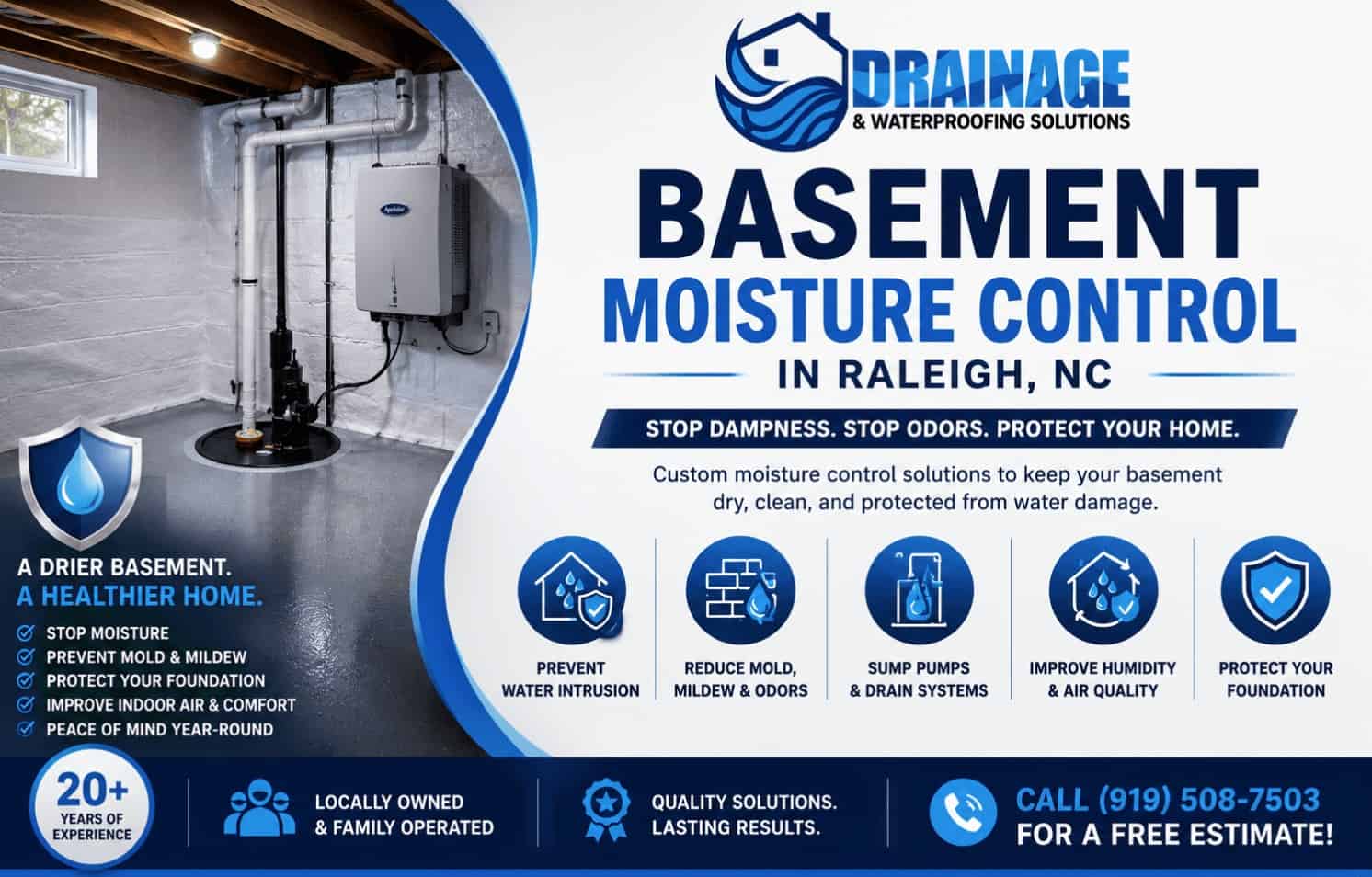
Basement moisture control Raleigh NC helps homeowners protect below-grade spaces from damp walls, musty odors, humidity, seepage, water stains, mold-like growth, damaged belongings, and long-term foundation concerns. A basement does not have to flood to have a moisture problem. Sometimes the first warning sign is a smell. Other times it is peeling paint, white powder on masonry, condensation, damp flooring, or a humid feeling that never fully goes away.

For homeowners in Raleigh, Garner, Cary, Apex, Durham, Chapel Hill, Clayton, Fuquay-Varina, Holly Springs, Wake Forest, Wilson, Fayetteville, Southern Pines, and surrounding Central North Carolina communities, basement moisture is common. Heavy rainfall, clay soil, high humidity, poor grading, foundation cracks, clogged gutters, short downspouts, and failed drainage systems can all push water toward a home.

Drainage & Waterproofing Solutions LLC helps homeowners with basement moisture control, basement waterproofing, foundation waterproofing, French drains, sealed crawl spaces, crawl space repair and encapsulation, retaining walls, and drainage system inspections. The company is locally owned, family operated, and focused on helping homeowners protect their homes from water damage with practical, long-lasting solutions.

If your basement smells musty, feels damp, shows water stains, has condensation, or gets wet after storms, call (919) 508-7503 or request a free estimate from Drainage & Waterproofing Solutions LLC.

What Is Basement Moisture Control?

Basement moisture control is the process of identifying where moisture is coming from and using the right combination of drainage, waterproofing, sealing, ventilation, dehumidification, and repair methods to reduce recurring dampness.

Basement moisture control may include:

  • Basement wall inspection
  • Foundation crack evaluation
  • Interior drainage planning
  • Exterior drainage evaluation
  • Sump pump planning
  • French drain installation
  • Basement waterproofing
  • Foundation waterproofing
  • Basement wall repairs
  • Wall sealants
  • Window and door sealing
  • Downspout discharge improvements
  • Yard drainage correction
  • Basement humidity control
  • Dehumidifier recommendations
  • Drainage system inspections
  • Crawl space and basement waterproofing

The goal is not to mask the smell or dry one spot temporarily. The goal is to identify the moisture source and create a plan that helps protect the basement, foundation, and surrounding drainage system.

Basement Moisture Control in Raleigh NC: Why It Matters

Basement moisture control in Raleigh NC matters because local homes often deal with a combination of rain, clay soil, humidity, groundwater, and drainage problems. Water can move through small foundation gaps, wall cracks, porous masonry, window wells, the wall-floor joint, or soil pressure around the foundation.

Moisture control can help support:

  • A drier basement environment
  • Reduced musty odors
  • Better protection for stored belongings
  • Reduced mold and mildew risk
  • Better indoor comfort
  • More confidence before finishing a basement
  • Better protection for foundation-adjacent areas
  • Reduced risk of recurring seepage
  • Peace of mind during storm season
  • Better home resale confidence
  • Long-term water-damage prevention

Basement moisture control is not one single product. It is a strategy. Some homes need active moisture control like sump pumps or dehumidifiers. Others need passive protection like sealing, drainage correction, wall repairs, or exterior waterproofing. Many homes need both.

Common Signs Your Basement Has a Moisture Problem

Basement moisture problems often appear gradually. A homeowner may notice a smell before seeing visible water. A wall may feel cool and damp. A corner may stain after storms. A finished basement may show bubbling paint or soft flooring before the full water source is obvious.

Common warning signs include:

  • Musty basement odors
  • Damp basement walls
  • Water stains
  • Efflorescence or white powder on masonry
  • Peeling paint
  • Bubbling wall coatings
  • Blistering drywall or trim
  • Condensation on pipes or walls
  • Damp carpet or flooring
  • Mold-like growth
  • High indoor humidity
  • Rust on metal items
  • Stored boxes feeling damp
  • Basement windows leaking
  • Water near the wall-floor joint
  • Puddles after heavy rain
  • Sump pump running often
  • Cracks in foundation walls
  • Poor yard drainage outside
  • Downspouts draining near the home
  • Crawl space moisture connected to basement dampness

If these signs appear, a drainage system inspection can help determine whether the moisture is coming from groundwater, poor grading, foundation seepage, window wells, plumbing, humidity, or a failed drainage system.

What Causes Basement Moisture in Raleigh Homes?

Basement moisture can come from several sources at once. That is why a single patch or coating may not solve the full problem. A basement wall may leak because exterior drainage is poor, groundwater is pressing against the foundation, and a small wall crack has become a pathway for moisture.

Common causes include:

  • Heavy rainfall
  • Clay soil holding water near the foundation
  • Poor grading
  • Downspouts discharging too close to the home
  • Clogged gutters
  • Foundation cracks
  • Porous concrete or masonry
  • Poorly sealed basement walls
  • Water draining under the basement floor
  • Failed foundation drains
  • Hydrostatic pressure
  • Basement window leaks
  • Gaps around doors or penetrations
  • Condensation from humid air
  • Poor ventilation
  • Plumbing leaks
  • Sump pump problems
  • Yard drainage problems
  • Landscaping that traps water
  • Previous repairs that did not solve the source

A lasting basement moisture control plan should address the source of moisture, not just the visible symptom.

Active vs. Passive Basement Moisture Control

Basement moisture control usually falls into two broad categories: active and passive. Active systems remove or manage moisture. Passive systems make it harder for moisture to enter in the first place.

Moisture Control TypeExamplesWhat Homeowners Should Know
Active moisture controlDehumidifiers, sump pumps, interior drains, diversion drainsHelps remove moisture or water after it appears
Passive moisture controlWall sealants, basement wall repairs, waterproofing, gutters, grading, window/door sealingHelps reduce moisture entry
Exterior drainageFrench drains, downspout routing, yard drainage correctionsHelps move water away before it reaches the foundation
Foundation waterproofingExterior wall protection, drainage board, foundation drainsHelps protect the wall from outside water pressure
Basement waterproofingInterior or exterior water-management systemsMay combine active and passive solutions
Drainage inspectionSite evaluation, water-source diagnosis, system reviewHelps determine what solution is actually needed

The best solution depends on the inspection. Many recurring basement moisture problems need both active and passive moisture control.

Basement Moisture Control vs. Basement Waterproofing

Basement moisture control and basement waterproofing are closely related, but they are not always the same scope. Moisture control can include humidity management, condensation reduction, sealing, drainage improvements, and dehumidification. Waterproofing focuses more directly on preventing or managing water intrusion.

ServiceBest ForWhat Homeowners Should Know
Basement moisture controlDampness, humidity, musty odors, condensation, light seepageOften includes diagnosis and a combination of solutions
Basement waterproofingWater intrusion, leaks, perimeter seepage, active water problemsMay include interior or exterior waterproofing systems
Foundation waterproofingWater entering through below-grade foundation wallsOften focuses on exterior wall protection and drainage
French drainsGroundwater, yard drainage, foundation water movementHelps redirect water away from problem areas
Sealed crawl spaceUnder-home moisture and humidityMay be needed when crawl space moisture affects the home
Drainage system inspectionUnclear moisture source or recurring issuesHelps diagnose before work begins

A homeowner may need basement moisture control, basement waterproofing, or a combination of both. The right plan depends on whether the issue is humidity, seepage, groundwater, drainage, cracks, or active leaking.

When Basement Moisture Control Is Needed

Basement moisture control may be needed when the basement is not flooding, but the space still feels damp, smells musty, or shows signs of recurring moisture. Waiting until there is standing water can make the repair more expensive and disruptive.

Basement moisture control may be appropriate when:

  • The basement smells musty
  • Humidity feels high
  • Walls feel damp
  • Water stains appear after rain
  • Paint or coatings peel
  • Efflorescence appears on masonry
  • A finished basement feels humid
  • Stored belongings are getting damp
  • Condensation appears on pipes
  • Mold-like growth appears
  • Small leaks keep returning
  • The sump pump runs often
  • You plan to finish the basement
  • A home inspection flagged moisture
  • Yard drainage sends water toward the home
  • Previous patch repairs did not last

Moisture control is especially important before finishing a basement. Drywall, flooring, insulation, and finished materials can hide water problems until damage becomes more costly.

Basement Moisture Control Process at Drainage & Waterproofing Solutions LLC

Basement moisture control in Raleigh NC should begin with inspection and diagnosis. The goal is to understand what is causing the moisture and recommend the right plan for the home.

A typical basement moisture control process may include:

  • Basement inspection

The team reviews walls, floors, corners, windows, doors, sump areas, cracks, stains, odors, humidity, and visible seepage.

Exterior drainage review

The inspection may include gutters, downspouts, grading, soil conditions, low spots, foundation drainage, and water flow around the home.

Moisture source diagnosis

Drainage & Waterproofing Solutions LLC evaluates whether moisture is coming from groundwater, surface water, foundation cracks, wall seepage, humidity, condensation, plumbing, or drainage failure.

Written plan and estimate

Homeowners receive a clear plan, price quote, and timeline so they understand what is being recommended and why.

Drainage correction when needed

If water is collecting around the foundation, the plan may include French drains, downspout routing, grading improvements, sump pump support, or foundation drainage.

Wall and crack repair when needed

Foundation cracks, damaged wall areas, or vulnerable joints may need repair before other moisture-control steps are added.

Active moisture-control planning

Depending on the home, solutions may include sump pumps, interior drains, diversion drains, or dehumidification.

Passive moisture-control work

The project may include wall sealants, waterproofing measures, exterior water diversion, basement window or door sealing, or related protection.

Final review and maintenance guidance

The team reviews the completed work and explains what homeowners should watch for during future storms.

The best results come from matching the solution to the source.

What Homeowners Should Do Before a Basement Moisture Inspection

Most homeowners do not need to diagnose the problem before calling. A few simple steps can help the inspection go more smoothly.

Before a basement moisture control inspection:

  • Clear access to damp walls and corners
  • Move boxes away from problem areas
  • Take photos of water during or after rain
  • Share where moisture appears first
  • Point out musty odors
  • Mention sump pump issues
  • Identify previous waterproofing work
  • Share home inspection reports if available
  • Note whether moisture appears seasonally
  • Check whether downspouts discharge near the foundation
  • Unlock access to crawl space areas if needed
  • Move outdoor items near problem foundation walls
  • Keep pets secure during the inspection
  • Ask whether drainage should be evaluated outside

You do not need to clean the basement completely. The inspection is meant to reveal the source of moisture and determine the best next step.

How Long Does Basement Moisture Control Take?

The timeline depends on the source of the moisture, project size, access, drainage needs, basement finish level, sump pump requirements, foundation condition, weather, and whether interior or exterior work is needed.

Project TypeTypical ScopeTimeline Factors
Moisture inspectionBasement and exterior drainage reviewUsually completed before quoting work
Humidity-control improvementDehumidifier planning, sealing, minor correctionsAccess and moisture source matter
Sump pump or drain supportActive water-management improvementsBasement layout and discharge route affect timing
Basement wall repairCracks, joints, or damaged wall areasRepair type and wall condition matter
Exterior drainage correctionDownspouts, French drains, grading, foundation water managementSoil, trenching, and discharge route affect timeline
Basement waterproofingInterior or exterior waterproofing systemScope depends on water source
Moisture control plus foundation waterproofingCombined interior and exterior protectionLarger projects may take several days or more

Drainage & Waterproofing Solutions LLC can explain the expected timeline after inspecting the basement and surrounding drainage.

How Much Does Basement Moisture Control Cost in Raleigh NC?

Basement moisture control cost in Raleigh NC depends on what is causing the moisture. A simple humidity issue may be less involved than a basement seepage problem caused by groundwater pressure or failed foundation drainage.

Cost FactorWhy It MattersWhat Homeowners Should Know
Moisture sourceHumidity, seepage, cracks, and groundwater require different solutionsDiagnosis drives the scope
Basement sizeLarger spaces require more labor and materialsSquare footage affects cost
Finished vs. unfinished spaceFinished basements may limit access and visibilityInspection clarifies options
Drainage needsFrench drains, sump pumps, or exterior grading may be neededWater must be moved away
Wall conditionCracks, porous masonry, or damaged areas add scopeRepair needs vary by home
Exterior accessTight spaces, landscaping, and soil affect workSite conditions matter
Active systemsSump pumps, dehumidifiers, or drains may be recommendedEquipment affects cost
Passive protectionSealants, waterproofing, repairs, and water diversion varyMaterial and labor affect price

Some moisture-control projects may be relatively limited. Larger basement waterproofing or drainage projects can range from several thousand dollars to five figures depending on access, water source, materials, and scope. A free estimate is the best way to understand the correct solution for your home.

Do You Need a Sump Pump, French Drain, or Waterproofing?

Some basement moisture problems can be improved with humidity control and sealing. Others need drainage and waterproofing. A sump pump, French drain, or waterproofing system may be recommended when moisture is caused by active water movement rather than indoor humidity alone.

A sump pump or drainage system may be needed when:

  • Water collects at the basement perimeter
  • Water appears after heavy rain
  • The basement floor gets wet
  • Groundwater pressure pushes water inside
  • Existing drains are clogged or failed
  • A low point needs water removal
  • Interior drainage needs discharge support
  • Exterior water needs to be redirected
  • A French drain may be recommended when:
  • Water pools near the foundation
  • Yard drainage sends water toward the home
  • Low areas stay soggy
  • Soil remains saturated after rain
  • Downspouts discharge near basement walls
  • Foundation moisture keeps returning
  • Foundation waterproofing may be recommended when:
  • Water enters through foundation walls
  • Exterior waterproofing has failed
  • Soil pressure is forcing moisture through masonry
  • Basement seepage returns after patch repairs
  • Exterior excavation is needed to protect the wall

The right solution may include one or more of these systems.

Basement Moisture Control Before Finishing a Basement

Basement moisture should be addressed before adding drywall, flooring, trim, insulation, storage systems, or finished living areas. Finishing a damp basement can hide water problems and create expensive repairs later.

Before finishing a basement, homeowners should check for:

  • Musty odors
  • Wall stains
  • Floor dampness
  • Efflorescence
  • Cracks
  • Sump pump problems
  • Window leaks
  • High humidity
  • Condensation
  • Water near the wall-floor joint
  • Poor exterior drainage
  • Downspout discharge issues
  • Past flooding history
  • Mold-like growth
  • Soft or damaged materials

A professional moisture inspection can help homeowners decide whether basement moisture control, basement waterproofing, foundation waterproofing, or drainage corrections are needed before the space is finished.

How Basement Moisture Affects the Rest of the Home

Moisture in the basement can affect more than the basement itself. Damp conditions can contribute to odors, humidity, damaged belongings, mold concerns, and problems that impact comfort throughout the home.

Potential effects include:

  • Musty indoor odors
  • Higher indoor humidity
  • Mold and mildew concerns
  • Damaged stored belongings
  • Rust on metal items
  • Peeling paint
  • Damp flooring
  • Finished basement damage
  • Foundation moisture concerns
  • Pest-friendly conditions
  • Sump pump overuse
  • Lower resale confidence
  • Buyer inspection concerns
  • Reduced peace of mind during storms

A dry basement supports a healthier, more comfortable, and more protected home environment.

Basement Moisture Control for Home Sales and Inspections

Basement moisture can become a major concern during home sales. Buyers may worry about water stains, foundation cracks, musty odors, mold-like growth, sump pump issues, or past water intrusion.

Basement moisture control may help before:

  • Listing the home
  • Buyer inspections
  • Appraisals
  • Finished basement projects
  • Flooring replacement
  • Storage improvements
  • Foundation repair planning
  • Renovation work
  • Storm season
  • Long-term home maintenance

A written inspection and estimate can help homeowners understand the scope and show that the issue is being handled professionally.

Basement Moisture Control for Raleigh, Garner, Cary, Durham, and Central NC

Drainage & Waterproofing Solutions LLC serves Raleigh, Garner, Cary, Apex, Chapel Hill, Clayton, Durham, Fayetteville, Fuquay-Varina, Holly Springs, Southern Pines, Wake Forest, Wilson, and surrounding Central North Carolina communities.

Local homes often need basement moisture control because of:

  • Heavy rainfall
  • Humid summers
  • Clay soil
  • Poor grading
  • Stormwater pooling
  • Downspouts discharging near the home
  • Foundation seepage
  • Basement wall cracks
  • Yard drainage problems
  • Older waterproofing systems
  • Failed foundation drains
  • Crawl space humidity
  • Finished basement concerns
  • Home inspection findings
  • Soggy soil near the foundation

A local drainage and waterproofing company understands how Central North Carolina soil, rain, grading, humidity, and home construction affect basement moisture.

How Drainage & Waterproofing Solutions LLC Helps Homeowners

Drainage & Waterproofing Solutions LLC is locally owned, family operated, and focused on helping homeowners protect their homes from water damage. The company brings deep experience in basement moisture control, basement waterproofing, foundation waterproofing, French drains, crawl space repair, sealed crawl spaces, retaining walls, and drainage system inspections.

Homeowners choose Drainage & Waterproofing Solutions LLC for:

  • Basement moisture control
  • Basement waterproofing
  • Foundation waterproofing
  • Crawl space and basement waterproofing
  • Sealed crawl spaces
  • Crawl space repair and encapsulation
  • French drains
  • Drainage system inspections
  • Retaining walls
  • Sump pump and drainage planning
  • Written plans and estimates
  • Long-lasting, durable solutions
  • Local Central North Carolina experience
  • Peace of mind

The goal is to solve the source of the moisture problem, not just cover the symptom.

Anonymized Examples of Basement Moisture Control Situations

Every home is different, but these examples show why Raleigh-area homeowners schedule basement moisture inspections and repairs.

A Raleigh homeowner with musty basement odors

A homeowner noticed a musty odor in the basement during humid months. No standing water was visible, but the walls felt damp and stored boxes were getting soft. An inspection helped identify humidity and drainage concerns so the homeowner could address the source.

A Garner homeowner with water stains after storms

A homeowner saw water stains along one basement wall after several heavy rains. The problem was not constant, but it returned during storms. The inspection focused on exterior drainage, foundation seepage, and basement moisture-control options.

A Cary homeowner preparing to finish a basement

A homeowner wanted to install flooring and finished walls but noticed occasional dampness near the wall-floor joint. Before investing in the remodel, they scheduled a moisture-control inspection to reduce the risk of hidden water damage.

A Wake Forest homeowner with recurring sump pump activity

A homeowner noticed the sump pump running often during rainy weather. The basement was not flooding, but the system seemed to be working harder than expected. A drainage evaluation helped determine whether additional water-management improvements were needed.

These examples are educational and not based on identifiable customers. Project cost, timeline, materials, and results depend on moisture source, basement size, foundation condition, drainage, access, soil, weather, and repair scope.

Schedule Basement Moisture Control in Raleigh NC

If your basement smells musty, feels humid, shows water stains, has condensation, or gets damp after storms, Drainage & Waterproofing Solutions LLC can help identify the source and recommend a lasting solution.

Call (919) 508-7503 or request a free estimate from Drainage & Waterproofing Solutions LLC.

This article is for general information only. Basement moisture control recommendations depend on moisture source, foundation type, soil conditions, grading, drainage, basement finish level, access, visible damage, and prior repairs. Waterproofing and drainage solutions should be evaluated by a qualified professional before work begins.

FAQs About Basement Moisture Control in Raleigh NC

What is basement moisture control?

Basement moisture control is the process of identifying and reducing dampness, humidity, seepage, condensation, and recurring water problems in a basement. It may include drainage corrections, sump pumps, dehumidifiers, wall repairs, waterproofing, sealing, French drains, or foundation waterproofing depending on the source.

How do I know if my basement has a moisture problem?

You may have a basement moisture problem if you notice musty odors, damp walls, water stains, efflorescence, peeling paint, condensation, mold-like growth, damp flooring, high humidity, or water after storms. A professional inspection can identify the source.

Is basement moisture control the same as basement waterproofing?

Not always. Basement waterproofing focuses on stopping or managing water intrusion. Basement moisture control may also include humidity control, condensation reduction, sealing, dehumidification, drainage improvements, and repairs. Many homes need a combination of both.

Can basement moisture control help with musty odors?

Yes. Basement moisture control may help reduce musty odors when the odor is caused by humidity, damp walls, seepage, condensation, or water intrusion. The best results come from correcting the moisture source instead of only masking the smell.

Do I need a sump pump for basement moisture?

You may need a sump pump if water collects inside the basement, drains toward a low point, or needs to be removed from an interior drainage system. Not every basement moisture issue requires a sump pump, so inspection matters.

Do I need a French drain for basement moisture?

You may need a French drain if groundwater, surface water, or yard drainage is sending water toward the foundation. French drains can help redirect water before it creates basement seepage, foundation pressure, or recurring dampness.

How long does basement moisture control take?

The timeline depends on the source of the moisture, basement size, drainage needs, foundation condition, sump pump requirements, wall repairs, exterior access, and weather. Smaller projects may be quicker, while larger drainage or waterproofing projects may take several days or more.

How much does basement moisture control in Raleigh NC cost?

Cost depends on moisture source, basement size, finished vs. unfinished space, drainage needs, wall condition, sump pump requirements, exterior access, and materials. A free inspection and written estimate are the best way to understand the correct scope.

Can basement moisture control protect a finished basement?

Yes. Basement moisture control can help reduce the risk of dampness, water stains, musty odors, damaged flooring, and hidden moisture before or after finishing a basement. Moisture concerns should be addressed before adding new finished materials.

Who should I call for basement moisture control in Raleigh NC?

Call Drainage & Waterproofing Solutions LLC at (919) 508-7503 for basement moisture control in Raleigh NC, Garner, Cary, Apex, Durham, Wake Forest, Holly Springs, Fayetteville, Southern Pines, and surrounding Central North Carolina communities.

Sources

Posted in Basement Moisture Control, Basement Waterproofing, Foundation Waterproofing, French Drains

Foundation Waterproofing Raleigh NC: How to Protect Your Home From Water Intrusion, Soil Pressure, and Long-Term Damage

July 3rd, 2026
Foundation waterproofing Raleigh NC by Drainage & Waterproofing Solutions LLC

Foundation Waterproofing Raleigh NC: How to Protect Your Home From Water Intrusion, Soil Pressure, and Long-Term Damage

Foundation waterproofing Raleigh NC homeowners can trust starts with understanding why water is reaching the foundation in the first place. In Central North Carolina, heavy rain, clay soil, poor grading, clogged or short downspouts, failed drains, crawl space moisture, basement seepage, and hydrostatic pressure can all push water toward the foundation.

When water collects around a home, it does not always create an obvious flood right away. Sometimes the first signs are subtle: a musty smell, damp basement wall, peeling paint, efflorescence, crawl space humidity, foundation cracks, soft soil near the home, or water stains after heavy rain. Over time, unmanaged water can affect the basement, crawl space, foundation walls, framing, indoor air comfort, and resale confidence.

Drainage & Waterproofing Solutions LLC helps homeowners with foundation waterproofing, basement waterproofing, basement moisture control, French drains, sealed crawl spaces, crawl space repair and encapsulation, retaining walls, and drainage system inspections. The company is locally owned, family operated, and brings more than 20 years of drainage and waterproofing experience to homes across Raleigh, Garner, Cary, Apex, Durham, Chapel Hill, Clayton, Fuquay-Varina, Holly Springs, Wake Forest, Wilson, Fayetteville, Southern Pines, and surrounding Central North Carolina communities.

If you are seeing damp foundation walls, basement seepage, crawl space moisture, standing water near the home, or drainage problems after storms, call (919) 508-7503 or request a free estimate from Drainage & Waterproofing Solutions LLC.

What Is Foundation Waterproofing?

Foundation waterproofing is the process of protecting foundation walls, below-grade areas, and water-prone sections of a home from moisture intrusion. The goal is to stop or manage water before it creates larger basement, crawl space, structural, mold, or drainage problems.

Foundation waterproofing may include:

  • Exterior foundation excavation
  • Foundation wall inspection
  • Crack and defect evaluation
  • Waterproofing membrane or coating
  • Drainage board or protection layer
  • Foundation drain installation
  • French drain installation
  • Interior drainage systems when needed
  • Sump pump planning
  • Downspout discharge improvements
  • Grading and yard drainage corrections
  • Basement moisture control
  • Crawl space waterproofing
  • Sealed crawl space planning
  • Drainage system inspection

The best solution depends on where water is coming from. Some homes need exterior foundation waterproofing. Others need interior drainage, French drains, downspout extensions, sump pump support, crawl space moisture control, or a combination of systems.

Foundation Waterproofing Raleigh NC: Why It Matters

Foundation waterproofing Raleigh NC services matter because local soil and weather conditions can put pressure on homes. Clay-heavy soil can hold water near a foundation. Heavy rain can overwhelm weak drainage. Short downspouts can dump roof water beside the home. Low spots in the yard can send stormwater toward the foundation instead of away from it.

Foundation waterproofing can help protect:

  • Basement walls
  • Crawl spaces
  • Foundation walls
  • Floor framing
  • Interior air comfort
  • Finished basement areas
  • Stored belongings
  • Mechanical systems
  • Home resale confidence
  • Long-term property value
  • Peace of mind during storms

Waterproofing is not just about stopping visible water. It is about controlling the water pathway so the home is protected before moisture becomes a recurring problem.

Common Signs Your Foundation Needs Waterproofing

Foundation water problems often show up in stages. A small damp area may become a larger seepage issue after several storms. A crawl space moisture problem may be connected to poor grading outside. A basement odor may point to hidden moisture near the foundation.

Common warning signs include:

  • Damp basement walls
  • Water stains on foundation walls
  • Musty odors
  • Efflorescence or white powdery residue
  • Peeling paint or bubbling wall coatings
  • Basement seepage after rain
  • Standing water near the foundation
  • Wet crawl space soil
  • Sagging crawl space insulation
  • Foundation cracks
  • Mold-like growth near damp areas
  • High indoor humidity
  • Sump pump running often
  • Water pooling near downspouts
  • Yard sloping toward the home
  • Soft soil beside the foundation
  • Damp masonry
  • Water entering where wall meets floor
  • Previous waterproofing that no longer works
  • Repeated wet carpet or damp flooring near basement walls

If these signs appear, a drainage system inspection can help determine whether the issue is caused by foundation seepage, poor drainage, groundwater pressure, downspouts, grading, crawl space humidity, or another source.

What Causes Foundation Water Problems in Raleigh Homes?

Foundation moisture usually has more than one cause. A home may have clogged gutters, short downspouts, clay soil, poor grading, and small foundation cracks at the same time. That is why a professional inspection matters.

Common causes include:

  • Heavy rainfall
  • Clay soil holding water near the home
  • Hydrostatic pressure
  • Poor grading
  • Downspouts discharging too close to the foundation
  • Clogged gutters
  • Failed foundation drains
  • Cracks in foundation walls
  • Porous masonry
  • Basement wall seepage
  • Crawl space moisture
  • Poor yard drainage
  • Soil settlement
  • Improper previous repairs
  • Landscaping trapping water near the home
  • Driveways or patios sloping toward the foundation
  • Sump pump failure
  • Missing or damaged waterproofing membrane
  • Water collecting in low areas
  • Stormwater moving toward the home

A lasting foundation waterproofing plan should address the water source, not just the wet spot inside the home.

Exterior vs. Interior Foundation Waterproofing

Exterior and interior waterproofing solve different problems. Exterior foundation waterproofing is designed to stop water before it enters the foundation wall. Interior drainage systems are designed to capture and manage water after it reaches the inside perimeter.

Waterproofing MethodBest ForWhat Homeowners Should Know
Exterior foundation waterproofingWater entering through foundation walls from outsideStops water closer to the source
Foundation drainsGroundwater collecting near the footingHelps move water away from the foundation
French drainsYard drainage, groundwater, foundation water movementCan redirect water before it reaches the home
Interior drainage systemsWater entering at basement perimeterManages water after it enters
Sump pump systemsLow areas where collected water must be removedOften works with interior or exterior drainage
Basement moisture controlDampness, humidity, condensation, and seepage concernsMay be part of a broader waterproofing plan
Sealed crawl space systemsCrawl space ground moisture and humidityHelps control moisture under the home

The right answer depends on the inspection. Some homes need exterior excavation and waterproofing. Others need drainage improvements, interior water management, or crawl space moisture control.

When Exterior Foundation Waterproofing Makes Sense

Exterior foundation waterproofing may be recommended when water is entering through foundation walls, the exterior waterproofing system has failed, the foundation wall is exposed for repair, or groundwater is repeatedly collecting against the structure.

Exterior foundation waterproofing may be appropriate when:

  • Basement walls are damp after rain
  • Water enters through foundation walls
  • Cracks are allowing seepage
  • Efflorescence appears on masonry
  • Soil stays wet beside the home
  • The yard slopes toward the foundation
  • Downspouts discharge near the house
  • Previous waterproofing has failed
  • Water returns after interior repairs
  • The homeowner wants to stop water before it enters
  • Foundation drains need replacement or repair
  • Exterior excavation is already planned

Exterior waterproofing can be more involved than interior drainage because it may require excavation, wall preparation, waterproofing materials, drainage systems, and backfilling. The benefit is that it targets the water before it enters the home.

Foundation Waterproofing Process at Drainage & Waterproofing Solutions LLC

Foundation waterproofing Raleigh NC projects should begin with inspection and diagnosis. The goal is to understand the water source, choose the right system, and provide a written plan before work begins.

A typical foundation waterproofing process may include:

  • On-site inspection

The team reviews the foundation, basement, crawl space, grading, gutters, downspouts, yard drainage, low spots, cracks, and visible water patterns.

Moisture source diagnosis

The inspection helps identify whether water is coming from groundwater, surface water, downspouts, foundation cracks, failed drains, crawl space moisture, or hydrostatic pressure.

Written plan and estimate

Drainage & Waterproofing Solutions LLC provides a detailed written plan, price quote, and estimated timeline so homeowners know what to expect.

Excavation when needed

Exterior foundation waterproofing may require digging along the affected foundation wall to expose the area that needs treatment.

Wall cleaning and preparation

The foundation wall may need to be cleaned and inspected before waterproofing materials are applied.

Crack and defect evaluation

Visible cracks, gaps, weak areas, or previous repair points are reviewed as part of the waterproofing plan.

Waterproofing system installation

Depending on the project, the solution may include waterproofing membrane, protective board, drainage matting, foundation drain installation, or related materials.

Drainage correction

Water must have a place to go. The plan may include French drains, footing drains, sump pump support, discharge routing, or grading improvements.

Backfill and site cleanup

After waterproofing and drainage work are installed, the excavated area is backfilled and the work area is cleaned.

Final review and maintenance guidance

The team reviews the completed project and explains what homeowners should watch for after heavy rain.

A strong foundation waterproofing project solves the moisture pathway instead of only treating the visible symptom.

What Homeowners Should Do Before Foundation Waterproofing Service

Most homeowners do not need to do heavy preparation before an inspection. A few steps can help the team understand the problem and access the work area.

Before a foundation waterproofing inspection or project:

  • Clear access to the basement or crawl space
  • Move items away from damp foundation walls
  • Take photos of water during or after storms
  • Share where water appears first
  • Point out musty odors
  • Mention previous waterproofing work
  • Identify sump pump concerns
  • Share home inspection reports if available
  • Move outdoor items near the affected foundation wall
  • Unlock gates if needed
  • Note downspout discharge locations
  • Identify areas where soil stays wet
  • Keep pets indoors during service
  • Ask whether excavation may be needed
  • Ask whether drainage should be corrected first

You do not need to diagnose the problem yourself. The purpose of a professional inspection is to find the source and explain the next steps.

How Long Does Foundation Waterproofing Take?

The timeline depends on project type, foundation access, excavation needs, soil conditions, wall length, drainage requirements, weather, sump pump needs, and whether the project includes basement or crawl space work.

Project TypeTypical ScopeTimeline Factors
Foundation inspectionReview water source, grading, drainage, basement, crawl spaceUsually completed before quoting work
Small seepage repairLimited foundation wall or crack-related moistureAccess and water source affect timing
Exterior foundation waterproofingExcavation, wall prep, waterproofing, drainage, backfillSoil, wall length, and drainage design matter
Foundation drain installationDrainage pipe, gravel, discharge planningExcavation and discharge route affect timing
Interior drainage systemBasement perimeter drainage and sump pump planningBasement layout and finishing affect scope
Foundation waterproofing plus French drainExterior waterproofing and yard drainage correctionLarger drainage plan may take longer
Crawl space and foundation moisture projectCrawl space drainage, vapor barrier, foundation water correctionMay require multiple steps

Drainage & Waterproofing Solutions LLC can explain the expected timeline after inspecting the home and surrounding drainage.

How Much Does Foundation Waterproofing Cost in Raleigh NC?

Foundation waterproofing cost in Raleigh NC depends on the water source, foundation wall length, excavation depth, soil conditions, drainage design, material selection, sump pump needs, crawl space or basement access, and whether yard drainage corrections are needed.

Cost FactorWhy It MattersWhat Homeowners Should Know
Water sourceGroundwater, surface water, and wall seepage require different solutionsDiagnosis drives the scope
Wall lengthLonger waterproofing areas require more labor and materialsLinear footage affects cost
Excavation depthDeeper foundations require more excavation workAccess and safety matter
Soil conditionsClay soil, roots, and tight access can affect laborSite conditions matter
Drainage systemFrench drains, footing drains, or sump systems may be neededWaterproofing must move water away
Basement finishFinished walls may limit interior visibilityInspection helps clarify options
Crawl space accessCrawl space moisture may connect to foundation waterUnder-home conditions affect planning
Material choiceMembranes, drainage boards, and drain systems varyMaterial quality affects durability
Existing damageCracks, failed drains, or previous repairs can add scopeRepair needs vary by home

Minor drainage corrections may cost less than full exterior excavation. Larger foundation waterproofing projects can range from several thousand dollars to five figures depending on access, depth, drainage, materials, and scope. A free estimate is the best way to understand the correct solution for your home.

Do You Need a French Drain With Foundation Waterproofing?

Some homes need a French drain with foundation waterproofing. Waterproofing protects the wall, but water still needs a path away from the structure. A French drain or foundation drain can help redirect groundwater or surface water before it continues pressing against the foundation.

A French drain may be recommended when:

  • Water pools near the foundation
  • Soil stays saturated after rain
  • The yard slopes toward the home
  • Downspouts discharge too close to the house
  • Groundwater collects near the footing
  • Basement seepage appears after storms
  • Crawl space water appears after heavy rain
  • Low areas remain soggy
  • Existing drains are clogged or failed
  • Foundation waterproofing needs drainage support

Drainage and waterproofing work best together. A waterproofing membrane without proper drainage may still leave water sitting against the foundation.

Foundation Waterproofing vs. Basement Waterproofing

Foundation waterproofing and basement waterproofing are closely related, but they are not always the same scope. Foundation waterproofing focuses on protecting the foundation wall and exterior water pressure. Basement waterproofing may include interior drainage, sump pumps, wall treatments, vapor control, and water management inside the basement.

ServiceBest ForWhat Homeowners Should Know
Foundation waterproofingWater entering through below-grade foundation wallsOften involves exterior wall protection and drainage
Basement waterproofingBasement leaks, perimeter water, sump pump needsMay include interior and exterior solutions
Basement moisture controlDampness, humidity, musty odors, condensationHelps manage moisture, not just visible leaks
French drainsGroundwater or surface water moving toward the foundationHelps redirect water away
Drainage system inspectionUnclear water source or recurring water issuesHelps diagnose before work begins
Sealed crawl spaceCrawl space ground moisture and humidityHelps protect under-home areas

A homeowner may need one service or a combination. The right plan depends on where water is coming from and where it is going.

How Foundation Water Problems Affect the Rest of the Home

Foundation water problems can affect more than the foundation wall. Water can move into basements, crawl spaces, framing, stored belongings, insulation, and indoor air.

Potential effects include:

  • Basement seepage
  • Musty indoor odors
  • Mold concerns
  • Wet insulation
  • Crawl space humidity
  • Wood rot concerns
  • Efflorescence
  • Paint and coating failure
  • Sump pump overuse
  • Foundation cracks worsening over time
  • Damp flooring near walls
  • Finished basement damage
  • Stored belongings getting wet
  • Pest-friendly moisture conditions
  • Home inspection concerns
  • Lower buyer confidence during resale

Addressing foundation water early can help protect the home before small signs become larger repairs.

Foundation Waterproofing for Home Sales and Inspections

Foundation water problems often become negotiation issues during home sales. Buyers may be concerned by damp walls, musty odors, foundation cracks, crawl space moisture, water stains, or sump pump problems.

Foundation waterproofing may help before:

  • Listing the home
  • Buyer inspections
  • Appraisals
  • Repair negotiations
  • Finished basement updates
  • Flooring replacement
  • Crawl space improvements
  • Foundation repair planning
  • Long-term home maintenance
  • Storm season preparation

A professional inspection and written plan can help homeowners understand the issue, document the recommended solution, and move forward with more confidence.

Foundation Waterproofing for Raleigh, Garner, Cary, Durham, and Central NC

Drainage & Waterproofing Solutions LLC serves Raleigh, Garner, Cary, Apex, Chapel Hill, Clayton, Durham, Fayetteville, Fuquay-Varina, Holly Springs, Southern Pines, Wake Forest, Wilson, and surrounding Central North Carolina communities.

Local homes often need foundation waterproofing because of:

  • Heavy rainfall
  • Humid summers
  • Clay soil
  • Poor grading
  • Stormwater pooling
  • Downspout discharge near the home
  • Foundation seepage
  • Basement moisture
  • Crawl space humidity
  • Yard drainage problems
  • Older waterproofing systems
  • Failed foundation drains
  • Tree roots and landscaping
  • Home inspection findings
  • Soggy soil near the foundation

A local drainage and waterproofing company understands how Central North Carolina soil, rainfall, grading, and home construction affect foundation walls.

How Drainage & Waterproofing Solutions LLC Helps Homeowners

Drainage & Waterproofing Solutions LLC is locally owned, family operated, and focused on helping homeowners protect their homes from water damage. The company brings more than 20 years of experience in foundation waterproofing, drainage, basement moisture control, crawl space repair, sealed crawl spaces, French drains, retaining walls, and drainage inspections.

Homeowners choose Drainage & Waterproofing Solutions LLC for:

  • Foundation waterproofing
  • Basement waterproofing
  • Basement moisture control
  • Crawl space and basement waterproofing
  • Sealed crawl spaces
  • Crawl space repair and encapsulation
  • French drains
  • Drainage system inspections
  • Retaining walls
  • Sump pump and drainage planning
  • Written plans and estimates
  • Long-lasting, durable solutions
  • Local Central North Carolina experience
  • Peace of mind

The goal is to solve the source of the water problem, not just cover the symptom.

Anonymized Examples of Foundation Waterproofing Situations

Every home is different, but these examples show why Raleigh-area homeowners schedule foundation waterproofing inspections and repairs.

A Raleigh homeowner with damp basement walls

A homeowner noticed damp areas along one basement wall after heavy rain. The wall did not flood, but moisture returned during storms. Inspection showed water collecting near the outside foundation wall. A foundation waterproofing and drainage plan helped address the source instead of only treating the inside wall.

A Garner homeowner with soggy soil near the foundation

A homeowner had soggy soil beside the house and musty basement air. Downspouts were discharging too close to the foundation, and the yard did not drain well. The plan included drainage correction and foundation moisture protection.

A Cary homeowner preparing to finish a basement

A homeowner wanted to finish part of the basement but noticed occasional seepage near the wall-floor joint. Before investing in finished walls and flooring, they scheduled a waterproofing inspection to identify the moisture source and protect the project.

A Wake Forest homeowner with crawl space and foundation moisture

A homeowner noticed crawl space humidity and water staining along a foundation wall. Because the problem involved both exterior drainage and under-home moisture, the recommended plan included drainage evaluation and crawl space moisture control.

These examples are educational and not based on identifiable customers. Project cost, timeline, materials, and results depend on foundation type, water source, drainage, wall condition, access, soil, weather, and repair scope.

Schedule Foundation Waterproofing in Raleigh NC

If your basement walls are damp, your crawl space smells musty, your foundation shows water stains, or your yard sends water toward the home after storms, Drainage & Waterproofing Solutions LLC can help identify the source and recommend a lasting solution.

Call (919) 508-7503 or request a free estimate from Drainage & Waterproofing Solutions LLC.

This article is for general information only. Foundation waterproofing recommendations depend on water source, foundation type, soil conditions, grading, drainage, basement or crawl space conditions, access, and visible damage. Waterproofing and drainage solutions should be evaluated by a qualified professional before work begins.

FAQs About Foundation Waterproofing Raleigh NC

What is foundation waterproofing?

Foundation waterproofing is the process of protecting foundation walls and below-grade areas from water intrusion. It may include exterior excavation, wall preparation, waterproofing membranes, drainage systems, French drains, sump pump planning, grading improvements, or interior drainage depending on the water source.

How do I know if my foundation needs waterproofing?

You may need foundation waterproofing if you see damp basement walls, musty odors, efflorescence, water stains, foundation cracks, crawl space moisture, standing water near the home, or seepage after storms. A professional inspection can identify the moisture source.

Is exterior foundation waterproofing better than interior drainage?

Exterior waterproofing stops water closer to the source, while interior drainage manages water after it reaches the inside perimeter. One is not always better than the other. The right solution depends on where water is coming from and how it is moving around the home.

Do I need a French drain with foundation waterproofing?

You may need a French drain if groundwater, surface water, or yard drainage is contributing to foundation moisture. Waterproofing protects the wall, but drainage helps move water away from the foundation so pressure does not continue building against the home.

How long does foundation waterproofing take?

The timeline depends on foundation access, excavation depth, wall length, drainage needs, soil conditions, weather, and whether crawl space or basement work is included. Smaller projects may take less time, while larger exterior waterproofing projects may take several days or more.

How much does foundation waterproofing in Raleigh NC cost?

Cost depends on water source, wall length, excavation depth, drainage design, soil conditions, access, materials, sump pump needs, and whether basement or crawl space work is included. A free inspection and written estimate are the best way to understand the right scope.

Can foundation waterproofing help with basement moisture?

Yes. Foundation waterproofing may help when basement moisture is caused by water entering through foundation walls or collecting outside the home. Basement moisture control, interior drainage, French drains, or sump pump systems may also be needed depending on the source.

Can foundation waterproofing help protect a crawl space?

Yes. If crawl space moisture is connected to foundation water, poor yard drainage, or groundwater pressure, foundation waterproofing and drainage correction may help. A sealed crawl space or crawl space repair plan may also be recommended.

Do you provide written estimates for foundation waterproofing?

Yes. Drainage & Waterproofing Solutions LLC provides on-site inspections, written plans, price quotes, and estimated timelines so homeowners understand the recommended waterproofing or drainage solution before work begins.

Who should I call for foundation waterproofing Raleigh NC?

Call Drainage & Waterproofing Solutions LLC at (919) 508-7503 for foundation waterproofing in Raleigh NC, Garner, Cary, Apex, Durham, Wake Forest, Holly Springs, Fayetteville, Southern Pines, and surrounding Central North Carolina communities.

Sources

Posted in Basement Waterproofing, Foundation Waterproofing, French Drains

Basement Waterproofing Raleigh: How to Protect Your Home From Water Damage, Crawl Space Moisture, and Foundation Problems

June 8th, 2026

Basement waterproofing Raleigh homeowners can trust starts with understanding where the water is coming from, why it is reaching the home, and what type of drainage or waterproofing system will solve the problem for the long term. In central North Carolina, heavy rain, clay-rich soil, grading issues, clogged drains, hydrostatic pressure, and crawl-space moisture can all contribute to basement leaks, foundation problems, mold concerns, and standing water around the property.

For homeowners in Raleigh, Garner, Wake County, and the surrounding Triangle area, water problems are not something to ignore. A small leak, musty smell, damp crawl space, or soggy yard can become a larger issue if water continues to collect near the foundation. The EPA emphasizes that moisture control is the key to mold control and recommends drying water-damaged areas quickly to reduce mold risk.

Drainage & Waterproofing Solutions LLC helps homeowners protect their basements, crawl spaces, foundations, and yards with professional drainage and waterproofing services. The company serves Raleigh, Garner, and surrounding North Carolina communities and positions itself as locally owned, family-operated, and backed by 20+ years of experience.

Whether you are dealing with water in the basement, pooling near the foundation, crawl-space humidity, or erosion in the yard, the right solution should be based on a careful inspection—not guesswork.

What Causes Basement Water Problems in Raleigh Homes?

Basement water problems in Raleigh are often caused by poor yard drainage, clogged or undersized drainage systems, hydrostatic pressure, foundation cracks, grading problems, saturated soil, or water collecting near basement walls. Because many homes in the Triangle experience heavy rain and dense soil conditions, water can build up around the foundation and eventually find a path inside.

Water follows the easiest path. When the ground around a home becomes saturated, pressure can build against basement walls and foundation footings. Over time, that pressure may push water through cracks, seams, porous concrete, window wells, basement floors, or wall-floor joints.

Common causes of basement water include:

  • Poor grading that slopes toward the home
  • Downspouts discharging too close to the foundation
  • Clogged yard drains or buried drainage lines
  • Missing or failing French drains
  • Hydrostatic pressure around basement walls
  • Foundation cracks or gaps
  • Improperly controlled crawl-space moisture
  • Sump pump failure or lack of a sump system
  • Older exterior waterproofing that has worn down
  • Water collecting near retaining walls or low spots in the yard

The goal of basement waterproofing is not simply to hide the symptoms. The goal is to control water at the source, redirect it safely, and protect the home from repeated moisture intrusion.

Why Basement Waterproofing Raleigh Homes Matters

Basement waterproofing Raleigh homes matters because water intrusion can affect indoor air quality, structural materials, stored belongings, finished living space, and long-term property value. Even minor seepage can lead to musty odors, mold growth, wood damage, and foundation stress if the water source is not corrected.

Moisture problems rarely improve on their own. If rainwater, groundwater, or runoff keeps collecting near the home, the foundation is forced to absorb repeated wet-dry cycles. This can contribute to cracks, shifting soil pressure, water staining, efflorescence, and persistent dampness.

Homeowners often call for help after noticing:

  • Water stains on basement walls
  • Standing water after heavy rain
  • A musty basement smell
  • Damp carpet or flooring
  • White powdery residue on concrete
  • Cracks in foundation walls
  • Mold or mildew concerns
  • Rust on appliances or metal storage shelves
  • High indoor humidity
  • Water pooling near the foundation outside

A basement is part of the home’s foundation system. When water enters repeatedly, it can affect comfort, health, safety, storage, resale confidence, and peace of mind.

Signs You May Need Basement Waterproofing or Drainage Repair

You may need basement waterproofing or drainage repair if you see water stains, damp walls, peeling paint, musty smells, mold growth, cracks, puddles, wet flooring, or pooling water near the foundation. These signs usually mean water is entering, collecting, or failing to drain away from the home properly.

Some warning signs are obvious, such as basement flooding after a storm. Others are subtle. A faint odor, slightly damp wall, or small crack can point to a larger drainage issue outside the home.

Basement Warning Signs

  • Water on the floor after rain
  • Damp walls or wall-floor seams
  • Mold or mildew smell
  • Efflorescence on concrete
  • Peeling paint or bubbling wall coatings
  • Rusting metal supports, appliances, or shelving
  • Cracks that widen over time
  • Sump pump running constantly
  • Finished basement materials feeling damp

Exterior Warning Signs

  • Standing water near the house
  • Soil washing away from the foundation
  • Mulch floating away after storms
  • Downspout water dumping beside the home
  • Soggy lawn areas that do not dry
  • Water flowing toward basement windows
  • Erosion near retaining walls
  • Muddy walkways or low spots

Crawl-Space Warning Signs

  • Musty smells inside the home
  • Damp insulation
  • Wet soil under the house
  • Sagging vapor barrier
  • Condensation on ductwork
  • Wood discoloration
  • Pest activity
  • High indoor humidity

A professional drainage system inspection can identify whether the issue is coming from roof runoff, grading, surface water, groundwater, foundation cracks, crawl-space moisture, or an aging drainage system.

How Professional Basement Waterproofing Works

Professional basement waterproofing works by identifying how water reaches the home and then using the right combination of drainage, waterproofing, sealing, sump systems, grading correction, or crawl-space moisture control. The best solution depends on whether water is entering from outside, rising from below, or collecting inside due to humidity or condensation.

A proper waterproofing plan usually starts with an on-site evaluation. Drainage & Waterproofing Solutions’ site states that its process includes a personal inspection, a detailed written plan, a written cost quote, and an estimated project timeline.

A complete basement waterproofing plan may include:

  1. Inspection of the water source: The team looks at the basement, crawl space, foundation, yard slope, gutters, downspouts, soil conditions, drainage exits, and signs of repeated water movement.
  2. Drainage design: The solution may include interior drain systems, exterior drains, French drains, sump systems, catch basins, discharge lines, or grading corrections.
  3. Foundation protection: Depending on the property, foundation waterproofing may include exterior waterproofing, foundation drains, membrane systems, crack repair, or water diversion.
  4. Moisture control: Basement humidity, crawl-space moisture, and vapor migration may require sealing, vapor barriers, dehumidification, or encapsulation.
  5. System installation: Drainage lines, gravel beds, sump pumps, sealed crawl-space systems, or foundation waterproofing components are installed based on the approved plan.
  6. Final review and maintenance guidance: The homeowner should understand how the system works, where water drains, what to monitor, and whether seasonal or annual inspections are recommended.

Interior vs. Exterior Basement Waterproofing

Interior basement waterproofing manages water that reaches the inside perimeter of the basement and directs it to a safe discharge point. Exterior basement waterproofing focuses on stopping or redirecting water before it enters by improving foundation drainage, exterior membranes, grading, and yard drainage.

Both approaches can be useful, but they solve different problems.

Waterproofing Approach Best For What It Usually Involves
Interior drainage system Water entering at wall-floor joints or basement perimeter Interior drain channel, gravel, sump pump, discharge line
Exterior foundation waterproofing Water pushing against basement walls or foundation exterior Excavation, waterproofing membrane, foundation drain, backfill
French drain system Yard pooling, groundwater movement, water near foundation Trench, perforated pipe, gravel, fabric, discharge location
Sump pump system Water collection below basement level Basin, pump, discharge line, possible backup system
Crawl-space sealing Moisture rising from soil under the home Vapor barrier, sealing, drainage, humidity control
Grading correction Surface water flowing toward the home Soil reshaping, swales, downspout extensions, drainage routing

Many Raleigh and Garner homes need more than one approach. For example, a basement leak may require both an interior drain system and improved exterior grading. A damp crawl space may need both a sealed crawl space and exterior drainage improvements.

What Is a French Drain?

A French drain is a drainage system that uses a sloped trench, gravel, filter fabric, and perforated pipe to collect water and redirect it away from a problem area. French drains are commonly used to reduce yard pooling, protect foundations, manage groundwater, and move water away from basements or crawl spaces.

For many homeowners, French drains are one of the most practical ways to protect a home from repeated drainage problems. Drainage & Waterproofing Solutions describes its French drain systems as high-performance drainage systems designed to redirect water away from the foundation and reduce basement flooding, yard pooling, and structural concerns.

A properly installed French drain may help with:

  • Standing water in the yard
  • Water near foundation walls
  • Soggy lawn areas
  • Basement seepage related to groundwater
  • Crawl-space dampness
  • Drainage around retaining walls
  • Water flowing toward patios, walkways, or driveways

A French drain is not simply a pipe in the ground. It must be placed at the right depth, slope, and location. It also needs appropriate gravel, fabric, and a safe discharge point. If it is too shallow, poorly sloped, undersized, or clogged with soil, it may not solve the problem.

Yard Drainage Solutions Raleigh Homeowners Should Consider

Yard drainage solutions Raleigh homeowners may need include French drains, catch basins, downspout extensions, swales, grading corrections, retaining wall drainage, sump discharge improvements, and underground drainage lines. The right solution depends on how water moves across the property during and after heavy rain.

The North Carolina Department of Environmental Quality describes stormwater programs as part of statewide efforts to manage runoff and protect surface waters. While residential yard drainage is different from municipal stormwater management, the underlying principle is similar: water must be controlled, directed, and discharged responsibly.

Common yard drainage problems include:

  • Water sitting in low spots for days
  • Drainage flowing toward the foundation
  • Runoff from neighboring properties
  • Downspouts overwhelming small drains
  • Erosion on slopes
  • Muddy side yards
  • Water collecting near crawl-space vents
  • Drain lines that no longer discharge properly

A good yard drainage plan should protect the foundation, preserve landscaping, reduce erosion, and move water to an appropriate outlet without creating problems elsewhere.

Foundation Waterproofing and Foundation Drainage

Foundation waterproofing protects below-grade walls and footings from water intrusion, while foundation drainage redirects groundwater away from the structure. Together, these systems help reduce hydrostatic pressure, basement seepage, soil saturation, and long-term moisture stress around the home.

Drainage & Waterproofing Solutions offers foundation waterproofing for homeowners who want lasting peace of mind and protection from water damage. The company’s website emphasizes foundation waterproofing as a way to safeguard homes and improve long-term protection.

Foundation drainage may include:

  • Exterior foundation drain systems
  • Gravel drainage beds
  • Waterproof membranes
  • Drainage board
  • Sump or daylight discharge routing
  • Foundation crack repair where appropriate
  • Soil grading improvements
  • Downspout and roof runoff management

Foundation waterproofing is especially important when water is collecting against the home. Even if the basement leak appears small, the pressure outside may be much larger than what is visible inside.

What Is a Sealed Crawl Space?

A sealed crawl space is a crawl space that has been improved with moisture-control measures such as a vapor barrier, sealed vents or openings, drainage corrections, insulation planning, and humidity control. The purpose is to reduce ground moisture, damp air, mold-supporting conditions, and energy loss under the home.

Crawl spaces are often overlooked because they are out of sight. But a damp crawl space can affect the air, floors, insulation, ductwork, and comfort inside the home. The U.S. Department of Energy’s Building America Solution Center notes that bulk water drainage issues and moisture control should be addressed before retrofitting a vented crawl space to an unvented, insulated crawl space.

A sealed crawl space may be worth considering if you notice:

  • Musty odors indoors
  • Damp insulation
  • Soft or uneven floors
  • Condensation on ductwork
  • Standing water under the home
  • High humidity
  • Pest activity
  • Mold or mildew concerns
  • Allergy-like irritation tied to damp indoor air

North Carolina crawl-space requirements include attention to ground vapor retarders and drainage to low spots when applicable. The North Carolina code reference notes a minimum 6-mil polyethylene vapor retarder or equivalent over exposed earth in crawl spaces, with joints lapped not less than 12 inches.

For homeowners, the key point is simple: moisture under the home should be controlled before it spreads into bigger comfort, air-quality, or structural concerns.

Basement Moisture Control vs. Basement Waterproofing

Basement moisture control focuses on humidity, condensation, dampness, and vapor movement, while basement waterproofing focuses on stopping or managing water intrusion. Many homes need both because liquid water and airborne moisture can create separate but related problems.

Basement moisture control may involve:

  • Identifying condensation vs. seepage
  • Improving drainage around the foundation
  • Sealing vulnerable areas
  • Managing humidity
  • Using appropriate dehumidification
  • Addressing crawl-space moisture sources
  • Checking sump pump performance
  • Improving air movement where appropriate

A basement can feel damp even if no standing water is visible. Humidity can also enter through porous concrete, crawl spaces, foundation gaps, or air leaks. The EPA’s guidance that moisture control is central to mold prevention is especially relevant for basements and crawl spaces.

How Long Does Basement Waterproofing Take?

Basement waterproofing can take one day to several days depending on the size of the basement, the source of water, the type of drainage system, excavation needs, sump pump installation, crawl-space work, and weather conditions. Larger foundation waterproofing or exterior drainage projects may take longer because they involve digging, grading, and system testing.

Typical timelines may look like this:

Project Type Typical Timeline
Drainage inspectionSame day
Small yard drainage correction1–2 days
French drain installation1–3 days for many residential projects
Interior basement drainage system1–3 days depending on basement size
Sump pump installationOften 1 day depending on scope
Crawl-space sealing1–4 days depending on conditions
Exterior foundation waterproofingSeveral days or more depending on excavation depth and access
Retaining wall drainageVaries by wall size, slope, and site conditions

The final timeline should always be based on a property-specific evaluation. A reputable contractor should explain what will be done, how long it should take, what areas will be disturbed, and what the homeowner should expect before, during, and after the project.

How Much Does Basement Waterproofing Cost in Raleigh?

Basement waterproofing cost in Raleigh depends on the severity of the water problem, the size of the basement, the type of system needed, whether excavation is required, sump pump needs, crawl-space conditions, foundation access, and drainage discharge requirements. Small repairs may cost much less than full exterior waterproofing or large drainage redesigns.

Because water problems vary so much by property, pricing should be based on an inspection rather than a generic estimate.

Factors that affect cost include:

  • Basement size and layout
  • Interior vs. exterior waterproofing
  • Drain length and depth
  • Need for a sump pump
  • Foundation crack repair
  • Soil and access conditions
  • Crawl-space size and moisture level
  • Downspout or roof runoff issues
  • Need for grading or retaining wall drainage
  • Material quality and warranty coverage

Drainage & Waterproofing Solutions states that it provides free estimates and written cost quotes as part of its inspection process.

For homeowners comparing estimates, the cheapest quote is not always the best long-term choice. A low-cost patch may fail if it does not address the water source. The better question is: Will this system solve the actual drainage problem and protect the home over time?

What Happens During a Drainage System Inspection?

A drainage system inspection evaluates how water moves around the property, where it collects, whether existing drains are working, and what improvements are needed to protect the basement, crawl space, yard, and foundation. The inspection helps determine whether the home needs cleaning, repair, replacement, redesign, or a new drainage system.

A professional inspection may include:

  • Checking existing French drains
  • Looking at downspouts and discharge points
  • Evaluating yard slope
  • Inspecting basement water stains
  • Checking crawl-space moisture
  • Looking for foundation cracks
  • Reviewing sump pump function
  • Identifying clogged or collapsed lines
  • Finding low areas where water collects
  • Checking whether water flows toward or away from the home

Drainage & Waterproofing Solutions notes that it offers 6-month and yearly inspections for internal drain systems it installs.

This matters because a drainage system is not something homeowners can always evaluate from the surface. A buried line may be clogged, crushed, back-pitched, blocked by roots, or overwhelmed during heavy rain.

Do Retaining Walls Affect Drainage?

Retaining walls can affect drainage because they hold back soil, redirect runoff, and may collect water pressure behind the wall if drainage is not built correctly. A retaining wall without proper drainage can contribute to erosion, water pooling, wall movement, and excess water near the foundation.

If your property has slopes, terraces, or soil movement, retaining walls may be part of a larger water-management plan. However, the wall itself should not trap water. It should work with drainage systems that move water safely away from vulnerable areas.

Retaining wall drainage may include:

  • Gravel backfill
  • Drainage pipe
  • Weep holes
  • Filter fabric
  • Proper slope and discharge
  • Connection to broader yard drainage

Retaining walls are not just landscaping features. When they are near basements, crawl spaces, garages, or foundations, they can influence how water moves around the home.

When Should You Call a Professional?

You should call a professional if water enters your basement, your crawl space stays damp, your yard holds water for days, cracks appear in foundation walls, a sump pump fails, or musty odors return after cleaning. Water problems are easier to correct before they damage finished materials, framing, insulation, or the foundation.

Call sooner if you notice:

  • Basement flooding after storms
  • Repeated seepage in the same area
  • Water near electrical systems or appliances
  • Mold growth or strong musty odor
  • Cracks that are widening
  • Crawl-space standing water
  • Sagging or wet insulation
  • Foundation settlement concerns
  • Drainage flowing toward the home
  • Sump pump failure during rain

Emergency drainage help may be especially important after heavy storms, repeated flooding, or sudden water intrusion. Homeowners should avoid entering flooded areas when electrical hazards, sewage backup, structural instability, or contaminated water may be present.

What Homeowners Can Do Before the Inspection

Before a waterproofing inspection, homeowners can take photos of water intrusion, note when leaks occur, check downspouts, clear visible debris, identify musty areas, and list past repairs. This information helps the contractor understand the pattern of water movement and design a better solution.

Helpful preparation steps include:

  • Take photos during or after rain
  • Note whether water appears immediately or hours later
  • Check whether gutters are overflowing
  • Watch where downspouts discharge
  • Mark basement leak locations
  • Note any musty smells or damp rooms
  • Save records of previous waterproofing work
  • Check whether the sump pump runs during storms
  • Identify any recent landscaping or grading changes

Do not cover up water stains before the inspection. The stain pattern can help show where water entered and whether it moved from the wall, floor, window, pipe, or joint.

Why Choose Drainage & Waterproofing Solutions LLC?

Drainage & Waterproofing Solutions LLC is a locally owned, family-operated drainage and waterproofing company serving Raleigh, Garner, Wake County, and central North Carolina. The company focuses on French drains, basement waterproofing, foundation waterproofing, sealed crawl spaces, drainage inspections, retaining walls, and moisture-control solutions.

The company’s site highlights local service, personal inspections, written plans, written cost quotes, estimated timelines, and free estimates. Its BBB profile lists the company as BBB Accredited, with an A+ rating, and describes it as a waterproofing and foundation repair company serving central NC.

Homeowners choose Drainage & Waterproofing Solutions because the team focuses on:

  • Local Raleigh and Garner drainage conditions
  • Practical, property-specific solutions
  • French drain and foundation drainage expertise
  • Crawl-space moisture protection
  • Basement waterproofing systems
  • Written plans and clear estimates
  • Long-lasting, warranted solutions
  • Family-operated service
  • Peace of mind for homeowners

This is especially important for water problems because the right solution depends on diagnosing the source—not simply installing the same product on every property.

Real-World Homeowner Scenarios

The Raleigh Homeowner With a Wet Basement Corner

A homeowner notices one basement corner gets wet after heavy rain. The visible leak is small, but outside the home, downspouts discharge near the foundation and the soil slopes inward. A professional plan may include downspout extensions, exterior drainage improvements, and an interior drainage solution if water is already reaching the wall-floor joint.

The Garner Homeowner With a Damp Crawl Space

A family notices musty smells and higher humidity inside the home. The crawl space has damp soil, falling insulation, and condensation on ductwork. A sealed crawl-space plan may include drainage correction, a vapor barrier, sealing, and moisture control to help protect the home from below.

The Wake County Homeowner With a Soggy Yard

A property has standing water for days after storms. The lawn is muddy, landscaping is washing out, and water is collecting near the foundation. A French drain, catch basin, grading correction, or discharge redesign may be needed to move water away from the home safely.

These examples are common because water problems often start outside before homeowners see symptoms inside.

Service Area: Raleigh, Garner, Wake County, and the Triangle

Drainage & Waterproofing Solutions serves homeowners in Raleigh, Garner, Wake County, and surrounding central North Carolina communities. Service-area language matters because drainage problems are local: soil, slope, rain patterns, lot grading, foundation type, and neighborhood runoff all affect the right solution.

Common local service needs include:

  • Basement waterproofing Raleigh
  • Basement waterproofing Garner NC
  • French drains Wake County
  • Yard drainage solutions Raleigh
  • Sealed crawl space Raleigh
  • Sealed crawl space Garner NC
  • Foundation waterproofing central NC
  • Drainage system inspections Raleigh
  • Crawl-space moisture control Wake County
  • Retaining wall drainage Triangle area

Homeowners can schedule service through the Contact Us page or explore more homeowner education through the company’s News and Insights section.

Schedule a Basement Waterproofing or Drainage Evaluation

If you are dealing with basement water, a damp crawl space, foundation moisture, yard pooling, or drainage problems near your home, schedule a professional evaluation before the issue gets worse.

Drainage & Waterproofing Solutions can inspect the problem, explain what is causing it, and recommend a practical plan for long-term protection.

Schedule a free evaluation: Contact Drainage & Waterproofing Solutions

Explore services: Drainage & Waterproofing Solutions LLC

Learn more: News and Insights

FAQs About Basement Waterproofing Raleigh Homeowners Ask

How much does basement waterproofing cost in Raleigh?

Basement waterproofing cost in Raleigh depends on the water source, basement size, system type, sump pump needs, excavation requirements, and drainage discharge plan. A small repair may cost much less than a full foundation drainage or exterior waterproofing project. The best next step is a professional inspection and written estimate.

How do I know if I need a French drain?

You may need a French drain if water pools in your yard, collects near the foundation, enters your basement, or keeps your crawl space damp after rain. A French drain can redirect groundwater or surface water away from vulnerable areas when it is properly designed, sloped, and discharged.

Can basement waterproofing fix a basement after it floods?

Basement waterproofing can help prevent repeat flooding when the system addresses the actual cause of the water intrusion. After a flood, the area should be dried safely, damaged materials should be evaluated, and the water source should be identified before repairs or waterproofing work begins.

Do you install interior and exterior foundation drains?

Drainage & Waterproofing Solutions provides drainage and waterproofing services that may include interior and exterior foundation drainage depending on the home’s needs. The right approach depends on where water is entering, foundation access, soil conditions, and whether the problem is surface water, groundwater, or hydrostatic pressure.

What are the signs I need a sealed crawl space?

Signs you may need a sealed crawl space include musty odors, damp insulation, standing water, condensation on ductwork, high indoor humidity, pest activity, wood discoloration, or soft floors. A sealed crawl space can help control ground moisture and reduce damp conditions under the home.

Is crawl-space moisture dangerous?

Crawl-space moisture can contribute to mold-supporting conditions, wood damage, pest activity, insulation problems, and poor indoor comfort. Because air from below the home can influence living areas, crawl-space moisture should be evaluated and corrected rather than ignored.

What is a drainage system inspection?

A drainage system inspection checks how water moves around the property and whether existing drains, downspouts, French drains, sump pumps, or discharge lines are working properly. It can identify clogged lines, poor grading, failed drains, foundation risks, and areas where water may be collecting.

Do you offer emergency drainage services?

Homeowners dealing with active water intrusion, flooding, or urgent drainage problems should contact Drainage & Waterproofing Solutions directly to ask about the fastest available appointment. Water near electrical systems, sewage, structural damage, or unsafe conditions should be treated as urgent.

Is basement waterproofing covered by a warranty?

Warranty coverage depends on the type of system, materials, scope of work, and written agreement. Drainage & Waterproofing Solutions emphasizes durable, long-lasting, warranted solutions rather than broad “lifetime guarantee” claims. Homeowners should review warranty terms before work begins.

What is the best long-term solution for basement water?

The best long-term solution is the one that controls the real water source. That may include French drains, foundation waterproofing, sump pumps, crawl-space sealing, grading improvements, downspout correction, or a combination of systems. A professional inspection is the most reliable way to choose the right plan.

Sources

Posted in Basement Moisture Control, Basement Waterproofing

Beat the Basement Blues: Essential 2026 Drainage Tips for Raleigh Homeowners

May 8th, 2026

Summer 2026 is shaping up to bring above-average rainfall to the Triangle area, with NOAA predicting heightened hurricane activity and persistent afternoon thunderstorms through peak season. For homeowners in Raleigh, Garner, and across Wake County, this means increased pressure on your home’s defenses against water intrusion. That familiar musty smell in the basement, damp spots on crawl space walls, or water pooling near your foundation after a heavy rain aren’t just annoyances—they’re warning signs that could lead to costly structural damage, mold growth, and decreased property value if left unaddressed.

The good news? You don’t have to wait for flooding to take action. Proactive drainage and waterproofing solutions tailored to our local clay soil, aging infrastructure, and seasonal weather patterns can give you genuine peace of mind. As a family-operated business serving central North Carolina since 2010, we’ve helped thousands of Triangle homeowners transform water-worried spaces into dry, usable areas—whether that’s reclaiming a basement for storage, eliminating crawl space moisture, or stopping foundation cracks from worsening.

In this practical guide, we’ll share ten actionable tips specifically for Raleigh-area homeowners to beat the basement blues this summer. Each tip focuses on what you can do now to protect your home, while showing exactly how our localized expertise in French drains, foundation waterproofing, sealed crawl spaces, and drainage inspections delivers lasting protection—without the jargon or high-pressure sales tactics.

Why Summer 2026 Requires Special Drainage Planning for Raleigh Homes

Before diving into solutions, it’s important to understand what makes this year’s drainage challenges unique for our community—and why generic advice won’t cut it.

Record-breaking rainfall patterns: Climate models indicate the Southeast U.S. could see 10-15% more precipitation than average in 2026, with the Triangle particularly vulnerable to slow-moving storm systems that dump inches of rain over 24-48 hours. Unlike quick summer showers, these prolonged events saturate the ground completely, overwhelming natural drainage.

Hurricane season amplification: While we’re inland, tropical systems often retain significant moisture as they move through central NC. Hurricane-season remnants (typically August-October) have caused some of Raleigh’s worst flooding events in recent years, overwhelming municipal drainage and exposing weaknesses in residential systems.

The clay soil challenge: Much of Wake County sits on expansive clay soil—a double-edged sword for homeowners. When dry, it’s stable and supportive. But when wet, it swells significantly, exerting hydrostatic pressure against foundation walls. This pressure is a primary driver of basement seepage and crawl space moisture, especially in older neighborhoods where drainage systems weren’t designed for today’s rainfall volumes.

Aging infrastructure considerations: Many Raleigh homes built before 2000 feature outdated perimeter drains or rely solely on damp-proofing (a thin asphalt coating) rather than true waterproofing. As these systems deteriorate, they become ineffective channels for water rather than barriers against it.

Rising water tables from development: Continued growth across the Triangle alters natural groundwater flow. New construction, pavement, and drainage changes in one neighborhood can inadvertently increase water pressure on adjacent properties—something we see frequently in developing areas like North Raleigh and eastern Wake County.

Understanding these hyperlocal factors is the first step to effective protection. That’s why partnering with a company that lives and works in our community—knows the specific soil belts around Lake Johnson, understands the drainage patterns near Umstead Park, and has repaired foundations in historic Oakwood—makes all the difference.

Tip #1: Schedule a Drainage Inspection Before the Rainy Season Starts

The single most effective step you can take this summer is getting a professional drainage inspection before the peak rain months hit. Think of it like a physical for your home’s water management system—identifying small issues before they become emergencies.

What a thorough inspection includes:

  • Exterior foundation walk to check for cracks, settling, or water staining
  • Gutter and downspout evaluation (are they directing water 5+ feet from the foundation?)
  • Yard grading assessment (does slope encourage water away from your home?)
  • Interior basement/crawl space check for moisture signs, efflorescence, or mold
  • Evaluation of existing drainage systems (if any) for functionality
  • Soil probing to understand water table depth and composition

Why timing matters: Scheduling now (late spring/early summer) gives you critical lead time. If issues are found, you can address them during drier weeks when excavation work is cleaner, faster, and less likely to disturb your landscaping. Waiting until after the first major storm often means dealing with saturated soil, which complicates repairs and can increase costs by 20-30%.

Real Raleigh example: Last June, we inspected a home in North Hills where the homeowner noticed mild dampness after rains. We discovered clogged exterior French drains and negative grading toward the foundation. By addressing both in early July—before the height of hurricane season—they avoided what could have been a flooded basement during Tropical Storm Idalia’s remnants in August.

Pro Tip: Book inspections for weekday mornings when possible. Our technicians can spend more time explaining findings and answering questions without rushing to the next appointment—and you’ll get a detailed, prioritized action plan the same day.

Tip #2: Understand the Best Times for Installation Work

While emergencies demand immediate action, planned drainage or waterproofing projects yield better outcomes when scheduled with Raleigh’s seasonal rhythms in mind. Rushing excavation during peak saturation can lead to complications, while thoughtful timing ensures durability.

Ideal windows for common services:

  • French drain installation (exterior): Late spring through early fall (April–October) works best. Avoid periods of prolonged rain when trench walls risk collapsing. Summer months are ideal for monitoring how new systems handle actual storm events.
  • Interior basement waterproofing: Can be performed year-round since it’s inside, but consider scheduling during drier months if you need to access exterior walls for crack repair.
  • Crawl space encapsulation: Late winter through spring is optimal—lower humidity makes sealing materials adhere better, and you’ll finish before summer’s peak moisture drive.
  • Foundation crack repair: Early morning during cooler months prevents rapid curing of epoxy/ polyurethane injections in direct summer sun, which can weaken bonds.

How we adapt to Raleigh’s unpredictability: Our team monitors hyperlocal forecasts—not just city-wide rain chances, but neighborhood-specific radar trends. If a stalled front is predicted to dump 3+ inches on western Wake County, we’ll proactively reschedule exterior work for eastern zones where conditions are drier. This flexibility prevents rushed jobs and ensures your investment lasts.

Homeowner action step: When requesting quotes, ask contractors: “How do you adjust schedules for unexpected rain?” and “What’s your policy if we hit water during excavation?” Reputable providers will have clear, safety-first protocols—not just “we’ll power through.”

Tip #3: Start with the Simplest Fixes: Grading and Gutters

Before considering major installations, address the two most common—and frequently overlooked—contributors to basement water: improper grading and gutter failures. These DIY-friendly steps cost little but deliver outsized protection.

The grading rule of thumb: Soil should slope away from your foundation at a minimum of 6 inches over the first 10 feet. This creates a natural barrier that directs rainwater toward your yard’s drainage paths instead of pooling against walls.

  • How to check: Use a 4-foot level and tape measure. Place one end on the foundation, the other outward. The gap between level soil and your tool should be at least 6 inches at the 10-foot mark.
  • Quick fix: Add topsoil near the foundation and taper it outward. Avoid using mulch alone—it washes away. For larger corrections, we offer affordable regrading services that preserve established landscaping.

Gutter downspout discipline: Downspouts must empty at least 5 feet from your foundation—and ideally onto a splash block or into a buried drain line that carries water further out.

  • Common mistake: Short extensions that dump water right next to the house. During a 1-inch rain, a 1,500 sq ft roof sheds ~900 gallons—enough to saturate soil quickly if not diverted.
  • Easy upgrade: Install hinged or flip-up downspout extensions (available at any hardware store) that swing out during rain and tuck away when dry. For invisible solutions, we bury corrugated drain pipe connected to your downspouts.

Why this matters in Raleigh: Our clay soil drains slowly. Even minor grading issues or gutter failures create persistent wet zones that, over weeks, translate into seepage. Fixing these first often resolves 30-40% of minor moisture problems—saving you from unnecessary major work.

Tip #4: Learn the Subtle Signs (Before You See Standing Water)

Water intrusion rarely starts with a flooded basement. It begins with subtle clues many homeowners dismiss as “normal for an old house” or “just humidity.” Recognizing these early gives you a critical window to intervene before damage accelerates.

Watch for these early warnings:

  • Musty or mildew smells: Especially noticeable after rain or in humid weather—this indicates mold growth hidden behind walls or under flooring.
  • Efflorescence: White, chalky powder on basement walls or floor. It’s not mold—it’s mineral deposits left when water evaporates through concrete, proving moisture is passing through.
  • Sticky doors or windows: Wood swelling from absorbed moisture in the air—often a crawl space or basement humidity issue before leaks appear.
  • Condensation on pipes or tanks: In basement utility areas, persistent “sweating” indicates high relative humidity from hidden moisture sources.
  • Warped or buckling flooring: Especially along perimeter walls—water wicking up from the foundation is damaging subfloors from below.
  • Insect activity: Silverfish, centipedes, or even termites drawn to damp environments can signal moisture problems before you see water.

What to do when you spot signs: Don’t wait for flooding. Document where and when you notice them (e.g., “efflorescence appears on northwest wall after heavy rains”), then schedule an inspection. Early intervention often means simpler, less invasive solutions—like improving exterior drainage rather than installing interior perimeter systems.

Tip #5: Match the Solution to Your Specific Problem (Not Just the Symptom)

Not all water issues are the same—and applying a “one size fits all” approach wastes money and fails to address root causes. Effective waterproofing starts with diagnosing why water is entering, not just that it is.

Common Raleigh scenarios and matched solutions:

  • Water seeping through basement walls at floor level: Usually indicates hydrostatic pressure from rising groundwater or poor exterior drainage. Best fix: Exterior French drain system to intercept water before it reaches the foundation, combined with proper wall waterproofing.
  • Water coming through mortar joints or wall cracks: Suggests surface water runoff or lateral pressure. Best fix: Exterior excavation to clean and seal walls, install drainage board, and ensure proper grading—often paired with French drains.
  • Persistent dampness in crawl space with mold on joists: Points to ground moisture evaporation and poor ventilation. Best fix: Full crawl space encapsulation with vapor barrier, sealed vents, and dehumidification.
  • Water appearing only after prolonged rain: Suggests slow saturation of clay soil creating lateral pressure. Best fix: Exterior French drain to lower the water table near the foundation, reducing pressure.
  • Sudden flooding during storms: Often means overwhelmed or broken existing drainage. Best fix: Camera inspection of current systems to identify clogs or collapses, then repair or replace.

Why guessing leads to wasted money: Installing an interior sump pump when the real issue is negative grading is like putting a bandage on a broken leg—it manages the symptom but ignores the cause. You’ll spend money on equipment and electricity year-round while the underlying problem worsens. A proper diagnosis ensures your solution targets the actual water pathway.

Tip #6: Consider Crawl Space Encapsulation for Whole-Home Health

If your home has a crawl space (common in Raleigh ranchers and split-levels), it’s likely the hidden source of many moisture problems—even if you never go down there. Up to 50% of the air you breathe upstairs comes from your crawl space, making its condition critical for indoor air quality and structural integrity.

What encapsulation involves:

  • Installing a heavy-duty vapor barrier (typically 10-20 mil polyethylene) on the floor and up the foundation walls
  • Sealing all vents and penetrations to prevent humid air inflow
  • Conditioning the space with a dehumidifier or connecting it to your HVAC system
  • Insulating walls (in some cases) to improve energy efficiency

Benefits beyond dryness:

  • Mold prevention: Eliminates the damp, dark environment mold needs to thrive
  • Improved air quality: Reduces allergens and musty smells circulating through your home
  • Energy savings: Sealed crawl spaces stabilize temperatures, reducing HVAC workload
  • Floor protection: Prevents wood rot and warping of hardwoods above
  • Pest deterrent: Makes the space inhospitable to termites, rodents, and insects

Raleigh-specific consideration: Our high humidity makes encapsulation particularly valuable here. Unlike drier climates where vented crawl spaces might work, our moisture-laden air constantly seeks entry—sealing creates a controlled environment that fights back.

Maintenance note: Encapsulation isn’t “set and forget.” Check your dehumidifier’s filter quarterly and ensure the barrier remains intact (no tears from storage or pests). We include annual encapsulation checks in our maintenance plans for lasting performance.

Tip #7: Address Foundation Cracks Early—They’re Rarely Just Cosmetic

Hairline cracks in foundation walls are common in Raleigh homes due to soil settling and clay expansion. But not all cracks are equal, and ignoring the wrong ones can lead to structural issues, water highways, and expensive repairs down the line.

When to worry about cracks:

  • Width: Anything wider than 1/8 inch (about the thickness of two stacked quarters) warrants professional evaluation
  • Direction: Horizontal cracks or those that stair-step along concrete blocks often indicate serious pressure issues and need immediate attention
  • Location: Cracks near corners, under windows, or where walls meet floors are stress points that frequently leak
  • Growth: Mark the end of a crack with pencil and check monthly—if it’s getting longer, active movement is occurring
  • Water evidence: Any dampness, staining, or efflorescence at the crack means it’s an active leak path

How we repair them properly:

  • For active leaks: Polyurethane injection that expands to fill the void and remains flexible to accommodate minor movement
  • For structural stabilization: Epoxy injection that bonds concrete permanently (used when water isn’t currently active but cracking indicates stress)
  • For prevention: Carbon fiber straps applied over cracks to reinforce walls against future bowing

Why DIY kits often fail: Over-the-counter hydraulic cement or epoxy patches typically only address the surface. Without proper pressure injection to fill the entire crack depth, water finds a way around or behind the repair—leading to recurring issues and false confidence.

Tip #8: Always Ask About Warranties—And Read the Fine Print

In an industry where promises vary wildly, a strong warranty isn’t just paperwork—it’s proof a company stands behind its work. But not all warranties are created equal, so knowing what to look for protects your investment.

What a meaningful waterproofing warranty should cover:

  • Materials and labor: Protection against product failure and installation errors
  • Transferability: Critical if you plan to sell—warranties that follow the home add resale value
  • Clear terms: Specific coverage for seepage through walls/floors, not vague “defects” language
  • Reasonable duration: 10-20 years is standard for quality exterior drainage and foundation repairs; lifetime claims are often marketing exaggerations
  • Exclusions spelled out: Understand what’s not covered (e.g., damage from new plumbing leaks, extraordinary events like sinkholes)

Red flags to watch for:

  • Warranties that require annual “re-inspections” at your cost to remain valid
  • Coverage that excludes “acts of God” but doesn’t define what that means for NC weather
  • Vague language like “protection against water” without specifying entry points or conditions
  • Companies unwilling to provide the warranty document before you sign a contract

Our approach: We provide a clear, transferable warranty detailing exactly what’s covered (e.g., “seepage through foundation walls or floor joints due to hydrostatic pressure”) for 20 years on exterior French drain systems and 25 years on foundation wall repairs. We’re happy to review it with you during your estimate—no pressure, just transparency.

Tip #9: Plan for Power Outages with Sump Pump Battery Backups

If your solution includes a sump pump (common for basements with high water tables or interior drainage systems), don’t overlook its Achilles’ heel: electricity. During the very storms when you need it most—hurricane remnants, summer thunderstorms with high winds—power outages are frequent. A pump without power is just a hole in your floor.

Why battery backups are non-negotiable in Raleigh:

  • Frequency: Wake County averages 6-8 significant power outages per year from storms alone, not counting heat-related grid strains
  • Timing correlation: The strongest thunderstorms (with damaging winds) often knock out power as they dump rain—exactly when your pump should be working hardest
  • Consequences of failure: Even 30-60 minutes without pumping during peak inflow can mean inches of water on your basement floor

How battery backups work:

  • A separate battery unit (usually mounted near the pump) takes over instantly when main power fails
  • Runs for 4-7 hours on average—enough to outlast most storm-related outages
  • Includes automatic charging when power returns and alerts for battery maintenance
  • Some systems combine battery power with WiFi monitoring for real-time status updates

Installation note: Best added during initial sump pump setup, but can be retrofitted to existing systems. We recommend units with at least 75 AH capacity for Raleigh homes—enough to handle prolonged outages during tropical weather.

Real impact: During the July 2025 thunderstorm outbreak that left parts of Garner without power for 12+ hours, homes with battery-backed sump pumps stayed dry while neighbors suffered preventable flooding—all because their primary pumps had no juice when the rain hit hardest.

Tip #10: Choose a Local Expert Who Speaks Raleigh’s Language

National chains and out-of-town contractors may offer flashy ads, but they lack the nuanced understanding of what makes Triangle-area homes unique—from our specific soil belts to municipal regulations and common construction eras. Partnering with a local team means solutions tailored to your block, not a generic template.

What “local expertise” means for drainage work:

  • Soil knowledge: Understanding how the Cecil soil belt (south and west Raleigh) behaves differently from the Appling belt (northeast) or the Urban Land complex downtown
  • Regulatory familiarity: Knowing Wake County’s stormwater runoff requirements and City of Raleigh’s erosion control standards for excavation work
  • Common construction eras: Recognizing that 1970s ranchers often have inadequate original drains, while 1990s builds may rely on failing dimple board
  • Neighborhood-specific issues: Awareness that areas near Crabtree Creek see higher water tables, or that Glenwood Avenue’s clay pockets create unique lateral pressure challenges
  • Weather pattern intuition: Knowing that storms hitting Durham often weaken before Raleigh, but those coming from the Gulf via I-95 corridor bring sustained moisture

How to verify local credibility:

  • Ask for references from your neighborhood or ZIP code
  • Check if they’re active in local business associations (Garner Chamber of Commerce, Raleigh Downtown Partnership)
  • Look for consistent BBB accreditation with detailed, recent reviews (not just a star rating)
  • Ensure they’ll pull proper permits—and explain what they involve—rather than suggesting “we don’t need them for this”

The peace of mind factor: When your technician can point to a similar job they did three streets over last month—and show you photos of the outcome—you gain confidence no national sales pitch can match. You’re not just hiring a service; you’re partnering with a neighbor who understands that protecting your home means protecting your community’s character.

Your 2026 Raleigh Drainage Action Plan

Use this checklist to start protecting your home this week:

Immediate steps (do these today):
☐ Walk your foundation perimeter with a flashlight after dusk—look for staining, cracks, or pooling water
☐ Test your grading: Place a level on the soil 5 feet out from your foundation—does it slope away?
☐ Check downspouts: Are they extending at least 5 feet from the house, and are extensions secure?
☐ Smell your basement and crawl space: Any mustiness or dampness indicates active moisture
☐ Clear debris from gutters and downspout cages—clogs start small but cause big problems

This week:
☐ Schedule a free drainage inspection with our team (mention this blog for priority summer scheduling)
☐ Take photos of any concerning areas to share with our technician
☐ Ask friends or neighbors in your area about their drainage experiences—local knowledge is powerful

This month:
☐ Review your homeowner’s policy: Does it cover water damage from seepage or sump pump failure? Consider adding a rider if not
☐ Research encapsulation options if you have a crawl space—even if you’re not ready to act, know your choices
☐ Set a calendar reminder to re-check grading and gutters after the first major summer storm


Frequently Asked Questions About Raleigh Drainage & Waterproofing

How much does a French drain cost in Raleigh?

Exterior French drain installation typically ranges from $2,500 to $6,000 for most Raleigh homes, depending on lineal footage, depth, and accessibility. Factors that affect price include: need for sod removal and replacement, proximity to landscaping features, and whether we need to navigate around utility lines. We provide detailed, itemized quotes after inspection—no ballpark figures that change later.

Absolutely—and we specialize in post-flood remediation. Our process includes: water extraction, structural drying, identifying the source of intrusion (not just pumping it out), and implementing a permanent solution. Acting quickly after flooding minimizes mold risk and prevents secondary damage to drywall and framing.

Yes, and we approach it comprehensively. Simply spraying mold doesn’t solve the underlying moisture problem that caused it. Our crawl space services focus on elimination: sealing vapor barriers, installing dehumidification, addressing water entry points, and—only if necessary—applying EPA-approved antimicrobial treatments to surfaces that can’t be fully dried.

It’s a thorough evaluation of your home’s current water management—both what’s working and what’s failing. We check exterior grading, gutter performance, existing drains (if any) with camera technology when needed, interior moisture signs, and soil conditions. The goal isn’t to sell you a service—it’s to give you a clear, prioritized understanding of your home’s specific needs and options.

We specialize in both—and often recommend a combination for maximum protection. Exterior French drains prevent water from reaching the foundation. Interior perimeter drains (under the basement floor) manage any water that does penetrate, directing it to a sump pump. Which is right for you depends on your home’s construction, water table depth, and specific entry points—something we determine during your inspection.

All our drainage and waterproofing solutions include transferable warranties. Exterior French drain systems carry a 20-year warranty against clogging or failure due to installation or materials. Foundation crack repairs with epoxy or polyurethane carry 10-25 year warranties depending on the method and conditions. We provide the full warranty document for review before any work begins.

Make This Summer Your Dryest Yet: Protect Your Raleigh Home Today

Water worries don’t have to define your home ownership experience. With the right proactive steps—rooted in our local climate, soil, and construction realities—you can transform anxiety into assurance. That damp smell in the basement doesn’t have to be a seasonal inevitability. That crawl space doesn’t have to be a moisture trap. Those foundation cracks don’t have to be countdown timers to disaster.

As a family-owned business deeply rooted in the Triangle community since 2010, we measure our success not in square feet waterproofed, but in the genuine relief homeowners feel when they know their foundation is sound, their air is healthy, and their investment is protected against our region’s unique water challenges. We’ve helped Raleigh homeowners from Five Points to Knightdale, from Cary to Wake Forest, reclaim their spaces and their peace of mind—and we’re ready to do the same for you.

Take the first step today:
Schedule Your Free Drainage Inspection – Our technicians will provide a clear, no-obligation assessment of your home’s specific needs

Have questions about your situation?
Call Our Team Directly – We’re happy to discuss your concerns and explain options in plain language

Want to learn more about our approach?
Explore Our Service Pages – See detailed explanations of French drains, basement waterproofing, sealed crawl spaces, and more

Posted in Basement Waterproofing

Triangle Clay, Big Storms & Foundation Stress: A Pro Waterproofing Plan

October 9th, 2025

Raleigh is a Clay‑and‑Cloudbursts city. The Piedmont’s shrink–swell clays can heave when saturated and contract hard in drought; meanwhile, short, intense rain bursts are trending up across the Triangle. Put those together and you get seasonal movement, hydrostatic pressure at the wall, and water seeking the path of least resistance—into basements and crawlspaces. Foundation waterproofing Raleigh isn’t a weekend chore; it’s an engineered response to geology and rainfall, delivered by specialists who know local soils and municipal rules. (deq.nc.gov)


Why foundation waterproofing Raleigh is a different problem set

Shrink–swell clay in the Triangle (Triassic Basin geology)

Much of Wake and neighboring counties sit on Triassic Basin sediments—red siltstones, mudstones, and clay‑rich soils with significant shrink–swell potential. These clays absorb water and expand, then shrink and crack as they dry, stressing foundations and opening pathways for seepage. North Carolina’s Geological Survey flags Triassic basins and the Carolina terrane as areas with the greatest expansive‑soil potential statewide. (deq.nc.gov)

Heavier downpours and short‑duration rain bursts

Raleigh’s hourly rainfall intensity has increased markedly since 1970. Climate Central’s analysis shows about a 22% rise in hourly intensity for Raleigh–Durham—exactly the kind of “too much, too fast” rain that overloads yard drains, swales, and footing drains. Regional and national assessments (EPA and NCA4) confirm heavier precipitation is a growing risk driver. This is the hydrologic backdrop for foundation waterproofing Raleigh—design for surges, not averages. (climatecentral.org)


What professional foundation waterproofing entails in Raleigh homes

Code context—waterproofing vs. dampproofing (IRC R406)

Under the International Residential Code, exterior walls that retain earth must be protected. “Dampproofing” resists soil moisture; “waterproofing” withstands liquid water and is required where high water tables or severe soil‑water conditions exist. In practice, many Triangle lots warrant waterproofing assemblies with positive drainage, because expansive clays and intense downpours create episodes of hydrostatic pressure even when the seasonal water table is moderate. Final decisions follow the prescriber/permit context and site conditions. (codes.iccsafe.org)

Exterior membranes + subsurface drainage as an integrated system

Durable outcomes come from systems, not single products. A professional design typically pairs:

Raleigh maintains a Stormwater Design Manual and homeowner guidance pages because drainage touches public as well as private infrastructure; plans must respect easements, rights‑of‑way, and discharge rules. That municipal context is one reason “DIY fixes” underperform—and why we route projects through inspection, design, and permitted build. (raleighnc.gov)

Where French drains, sump systems, and discharge planning fit

In Raleigh’s clay, surface grading alone rarely solves persistent intrusion. Subsurface measures—perimeter (French) drains, interior capture with sump pumping, and back‑up power—provide pressure relief and reliable egress for stormwater. FEMA guidance recognizes sump pumps as standard mitigation for below‑grade spaces in flood‑vulnerable settings; the key is correct specification and a robust discharge path. In our plans, French drains aren’t a “band‑aid”; they’re one engineered component inside a sealed, code‑aligned assembly. (fema.gov)

Prefer to see service detail instead of theory? Explore our Basement Waterproofing hub, French Drains, and Waterproofing Services pages for what we design and build—then book Drainage System Inspections to start the process.


Red‑flag symptoms that warrant a same‑week inspection

Each points to either pressure at the wall, inadequate discharge, or both—classic triggers for foundation waterproofing Raleigh with a subsurface plan, not cosmetic patches. Raleigh’s Stormwater team also notes that intense, short‑duration storms can spike creek levels and flood‑adjacent parcels; many homeowners discover issues only after one of these bursts. (raleighnc.gov)

Next step: book a professional Drainage System Inspection and route the report to design within a week.


Our diagnostic workflow and plan building

Foundation + site survey

Our inspections combine interior and exterior readings: wall plumbness, moisture mapping, slab/joint conditions, and soil contact profiles. Outside, we assess backfill composition, settlement, and likely clay heave zones. We also confirm whether the lot lies near flood‑eligible areas per Raleigh’s public resources and whether private drainage easements constrain options—details that shape a compliant, durable plan. (raleighnc.gov)

Water path mapping (surface, subsurface, municipal interfaces)

Raleigh’s programs (e.g., Drainage Assistance) exist because runoff and public conveyances intersect with private parcels. Our team coordinates discharge routes that respect city requirements and the site’s limits. The design manual updates (2024+) underscore how dynamic local standards can be; our aim is to keep your fix aligned with today’s expectations and tomorrow’s rainfall. (raleighnc.gov)

Ready for a plan? Contact the team: Contact Us. Learn who will be on‑site on About Us, and browse field notes on News.


Local scenarios and likely remedies

Raleigh (inside the I‑440 beltline)

Older homes with mixed drainage retrofits often show wall dampness during quick hitters—storms that dump an inch or two in an hour. Given the 22% rise in hourly intensity since 1970, we typically pair an exterior waterproofing assembly with new footing drains and daylight or code‑compliant discharge. In tight urban lots, interior capture with pump redundancy may be the most practical way to manage peak inflows. (climatecentral.org)

Cary & Apex (Piedmont clay with newer subdivisions)

Builder‑grade damp‑proof coatings, landscaping over drains, and settlement can converge into seepage within 3–8 years. Here, foundation waterproofing Raleigh standards still apply: redesign to waterproofing‑grade membranes, protect the drainage layer, and preserve outlet capacity. Municipal easements and HOA stormwater rules often influence discharge—plan accordingly with professional design. (raleighnc.gov)

Garner & Clayton (fast growth on clayey sites)

Triassic sediments and high‑intensity storms make hydrostatic pressure the main villain. We often specify vented, protected drains, targeted relief points, and pump systems with documented test schedules; homeowners receive inspection logs to support future real‑estate transactions. Raleigh’s NWS office posts year‑by‑year climate plots—useful context when evaluating historic “worst weeks.” (weather.gov)

Durham & Chapel Hill (Triassic Basin edge conditions)

On the Durham sub‑basin margins, soil variability is real—tight clays interbedded with coarser layers. That variability is why we instrument during rain events, then finalize the assembly. The North Carolina Geological Survey’s Triassic guidance backs the caution: soils and shallow bedrock can complicate percolation and drainage performance. (deq.nc.gov)


What it costs to wait (and why pro, not patchwork)

Shrink–swell cycles leverage any weakness. A seasonal crack becomes a wet wall, becomes a moldy stud bay, becomes a flooring demo. FEMA and NFIP materials also remind owners that basements are high‑risk spaces within the flood hierarchy; without mitigation and documentation, damage and insurance complexity climb fast. Professionally designed foundation waterproofing Raleigh prevents that cascade—and it’s the only approach that aligns with code, municipal expectations, and a future of heavier downpours. (fema.gov)

Book your assessment:


FAQ (Schema‑Ready)

Q1. What’s the difference between dampproofing and waterproofing for my foundation?
Dampproofing resists soil moisture; waterproofing resists liquid water and is required where high water tables or severe soil‑water conditions exist under IRC R406. In the Triangle’s clay and heavy bursts, full waterproofing with managed discharge is often the durable choice. (codes.iccsafe.org)

Q2. Why are Raleigh homes especially prone to seepage after short storms?
Expansive Piedmont clays and Triassic Basin soils hold water, build pressure at the wall, and then drain slowly. Rising hourly rainfall intensity compounds the load on drains and pumps. (deq.nc.gov)

Q3. Do I need a “French drain,” a sump pump, or both?
That depends on wall construction, backfill, and discharge options. Many foundation waterproofing Raleigh plans pair protected footing drains with interior capture and pump redundancy for peak events. FEMA recognizes pumps as standard mitigation for below‑grade spaces. (fema.gov)

Q4. Can I tie my system into city stormwater?
It depends on your lot, easements, and current rules. Raleigh’s stormwater pages and Design Manual govern how private systems interact with public infrastructure. We design to be compliant and durable. (raleighnc.gov)

Q5. My home is near a creek. Does that change the plan?
Yes. The City’s flood‑risk guidance notes rapid level rises during intense rain. We factor floodplain status, safe discharge, and redundancy into design—and we document it for future buyers and insurers. (raleighnc.gov)

Q6. Is this something a handy homeowner can do?
No. This is not DIY. Raleigh sites require code‑aware design, correct materials, and compliant discharge. Hire a specialist with inspection, design, and installation under one roof.

Q7. How fast can you assess and propose a plan?
Our Drainage System Inspections queue moves quickly after large storms; we triage based on risk signs and get you a written plan.

Q8. Do you cover towns beyond Raleigh?
Yes—Cary, Apex, Garner, Clayton, Durham, Chapel Hill and nearby. See About Us for service areas and team info.


Sources

City of Raleigh — Stormwater Design Manual (Raleigh NC)

Posted in Basement Waterproofing, Blog

The Ultimate Guide to Basement Waterproofing Solutions for North Carolina Homes (2025)

July 1st, 2025

Homeowners in North Carolina often overlook one of the most critical areas of home maintenance: basement waterproofing solutions. Yet, with unpredictable summer storms, rising humidity levels, and the ever-present risk of flooding, protecting your home from water damage is no longer optional—it’s essential. This blog explores the best strategies for basement waterproofing solutions in North Carolina, why local conditions demand action, and how Drainage & Waterproofing Solutions, LLC can help you safeguard your investment.


Understanding the Risks of Moisture Intrusion

Basement waterproofing in North Carolina begins with understanding the state’s unique geography and climate. The Piedmont and Coastal Plains regions, especially around Raleigh, Durham, Fayetteville, and Chapel Hill, feature heavy clay soils. These soils expand with moisture and contract in dry periods, placing strain on foundation walls.

Understanding the significance of basement waterproofing solutions is vital for homeowners to ensure long-term safety and comfort in their living spaces.

Combine this with increasingly frequent rainstorms, tropical weather events, and aging infrastructure, and you have a perfect recipe for water seepage, basement flooding, and foundation damage.


Common Signs of Water Damage in Basements

Ignoring these signs could lead to costly repairs and highlight the necessity of effective basement waterproofing solutions.

Many homeowners are unaware of water issues until significant damage occurs. Look for these signs:

Catching these signs early can help you avoid thousands of dollars in repairs.


Why North Carolina Basements Are Especially Vulnerable

Waterproofing a basement in North Carolina with proper basement waterproofing solutions presents unique challenges. Unlike arid states, our region experiences year-round humidity and heavy rainfall.


Exterior Waterproofing: First Line of Defense

Exterior solutions target water before it enters the home. These include:

Understanding and implementing effective basement waterproofing solutions can safeguard your home.

Drainage & Waterproofing Solutions, LLC offers custom installations based on your home’s layout and elevation.


Interior Waterproofing: Crucial Backup Protection

Even the best exterior methods can’t guarantee 100% protection. That’s why interior waterproofing matters. This includes:

Our team installs high-performance solutions built to last—even during North Carolina’s worst weather events.


Crawl Space Encapsulation: Don’t Ignore What’s Below

Homes with crawl spaces are also at risk. Water can enter these areas and lead to wood rot, mold, and pest infestations. Crawl space encapsulation includes:

Many homeowners are now opting for basement waterproofing solutions to mitigate these issues effectively.

Choosing the right basement waterproofing solutions can save you money in the long run.

Investing in advanced basement waterproofing solutions is crucial for preserving your property.

Encapsulation not only protects structural elements but also improves indoor air quality—vital for families with allergies or respiratory issues.


Drainage Problems Lead to Foundation Issues

Unchecked water intrusion often leads to issues that basement waterproofing solutions can resolve.

Preventative waterproofing and proper drainage stop problems before they start.


Mold and Health Hazards in Damp Basements

Moist environments are ideal for mold growth. Spores can spread through your HVAC system and affect air quality throughout your home. Health risks include:

By keeping your basement dry, you not only protect your home—you protect your health.


Benefits of Hiring a Professional Waterproofing Contractor

DIY methods like painting waterproofing sealant on basement walls are temporary at best. A professional approach includes:

Drainage & Waterproofing Solutions, LLC brings years of expertise in working with North Carolina’s soil, climate, and housing styles. We offer tailored strategies—not one-size-fits-all kits.


Implementing basement waterproofing solutions not only protects your structure but also adds value to your home.

Basement Waterproofing is an Investment

While upfront costs vary depending on the solution, basement waterproofing pays for itself by:

It’s crucial to prioritize basement waterproofing solutions to maintain a healthy living environment.

With various basement waterproofing solutions available, selecting the right one is essential for effective protection.

In 2025, protecting your home from extreme weather is no longer optional—it’s proactive homeownership.


Case Study: Raleigh Home Saved from Repeated Flooding

One Raleigh client faced recurring water problems after every storm. Their basement flooded three times in one year. After our inspection, we installed:

Since our installation, the homeowner has experienced zero basement flooding—even during hurricane-level rainfall.

Make the smart choice for your home by investing in reliable basement waterproofing solutions today.


Key Stats That Show the Importance of Waterproofing

FactorImpact
NC Annual Rainfall45–50 inches (NOAA)
Average Cost of Mold Remediation$2,000–$6,000
Average Basement Waterproofing ROI30%–50% at resale (Remodeling Magazine)
Foundation Repair from Water Damage$10,000–$30,000
Health Cost from Mold Exposure$200+ per medical visit

FAQs About Basement Waterproofing in North Carolina

Q1: How do I know if I need basement waterproofing?
A: Look for signs like musty smells, water stains, or mold. If unsure, schedule a free inspection.

Q2: What is the average cost of basement waterproofing in NC?
A: Costs range from $3,000 to $12,000 depending on solution type, basement size, and severity of water damage.

Q3: Is basement waterproofing covered by homeowners insurance?
A: Typically no, unless the water damage was caused by a sudden event. Preventative waterproofing is a personal investment.

Q4: Can I waterproof my basement in winter or summer?
A: Yes. Professionals work year-round. Winter is often a great time due to reduced backlog.

Q5: How long does waterproofing take?
A: Most installations are completed in 2–5 days depending on project scope.


Ultimately, the advantages of basement waterproofing solutions underscore their importance for homeowners.

Utilizing modern basement waterproofing solutions can enhance your home’s appeal and function. Always consider the long-term benefits of basement waterproofing solutions for your property. For a safe living environment, investing in basement waterproofing solutions must be a top priority. Contact Drainage & Waterproofing Solutions, LLC to explore customized basement waterproofing solutions that fit your specific needs. Let’s ensure your basement is protected with the best basement waterproofing solutions available. Keep your home safe and dry with effective basement waterproofing solutions.

Call to Action

Water damage doesn’t wait. Don’t let moisture problems cost you time, money, or peace of mind. Contact Drainage & Waterproofing Solutions, LLC for a free consultation and quote. Whether you’re in Raleigh, Durham, Fayetteville, or Chapel Hill—we’ve got the tools and experience to protect your home.

📞 Schedule your waterproofing evaluation today.

🛠️ Your foundation deserves the best.

Sources
Learn About Mold

NOAA Annual Rainfall Data – North Carolina

Posted in Basement Waterproofing

How to Prevent Basement Water Damage in Raleigh: Expert Waterproofing Tips

June 2nd, 2025

Protect Your Home from Costly Water Intrusion Before It Starts

Heavy rains, poor drainage, and Raleigh’s clay-rich soil can all spell trouble for your foundation. Without protection, your home is vulnerable to basement water damage in Raleigh, leading to mold, musty odors, and expensive repairs. Fortunately, there are proven steps homeowners can take to keep their basements dry, healthy, and fully protected — even during North Carolina’s wettest seasons.

Whether you’re dealing with a damp crawl space or planning ahead to avoid disaster, these expert waterproofing tips will help you secure your foundation and maintain your home’s long-term value.


Why Raleigh Homes Are Prone to Basement Moisture Issues

Raleigh’s climate features a humid subtropical mix — hot summers, frequent storms, and year-round precipitation. That, combined with dense, slow-draining clay soil, creates perfect conditions for water to collect around the foundation.

As hydrostatic pressure builds, it forces water through tiny cracks in basement walls, floors, and joints. Left unchecked, this leads to:


1. Inspect and Clean Your Gutters Regularly

Clogged gutters are one of the most overlooked causes of basement leaks. When gutters overflow, water spills near your foundation instead of being carried away.

Solution:
Clean your gutters at least twice a year. Check downspouts to make sure water flows 4–6 feet away from your home. Use downspout extenders if needed.


2. Grade Your Yard Away from the House

Water should naturally flow away from your home. But over time, landscaping settles or erodes, creating inward slopes.

Solution:
Ensure soil slopes downward at least 6 inches within the first 10 feet around your foundation. Use topsoil and compact it for proper runoff.


3. Seal Foundation Cracks Promptly

Even hairline cracks let water seep into basements under pressure. These tiny gaps widen over time with temperature changes and ground movement.

Solution:
Use professional-grade epoxy or polyurethane injections to seal foundation cracks. DIY sealants are often temporary and fail to stop moisture long term.


4. Install an Interior or Exterior Drainage System

When your home has persistent water problems, drains are your best defense.

Interior French Drains:
Installed along the inside perimeter, these channels collect water and route it to a sump pump.

Exterior French Drains:
Placed outside your foundation, these systems divert water before it reaches your basement walls.

Both options are effective — but interior systems are often less expensive and easier to maintain.


5. Use a Sump Pump for Heavy Rain Protection

A sump pump is your home’s backup plan. When groundwater rises or leaks enter, it collects water in a pit and pumps it safely away.

Solution:
Install a submersible pump with a battery backup. Test it monthly to ensure it’s working before storms arrive.


6. Consider Basement Waterproofing Membranes

For full protection, homeowners can install waterproof membranes on the outside or inside of foundation walls.

These systems:

Professionally installed barriers are ideal for homes with chronic seepage or below-grade foundations.


7. Don’t Forget About Crawl Spaces

If your home has a crawl space instead of a basement, moisture is still a concern. Water vapor seeps from the ground and causes rot, mold, and poor air quality.

Solution:
Encapsulate your crawl space with a vapor barrier, insulation, and dehumidification system.


FAQs About Basement Water Damage

Q: How do I know if I have water damage in my basement?
A: Signs include musty odors, damp walls, cracked concrete, mold growth, or visible water.
Source

Q: Can basement water damage affect my home’s value?
A: Yes. Homes with visible moisture issues or mold often sell for less and require repairs during inspection.
Source

Q: Are sump pumps required by code in Raleigh?
A: While not mandatory for all homes, they’re recommended in areas with high water tables or poor drainage.

Q: Can waterproofing stop mold?
A: It prevents the moisture mold needs to grow. Additional treatment may be needed if mold is already present.


When to Call a Raleigh Waterproofing Expert

If you’ve noticed damp spots, water stains, or foundation cracks, now is the time to act. Ignoring early signs of basement water damage in Raleigh often leads to larger problems that cost more to fix.

Our team at Drainage & Waterproofing Solutions LLC specializes in:

With decades of experience and a deep understanding of Raleigh’s unique soil and weather patterns, we help homeowners protect what matters most — their homes and families.


📞 Call now or request a free on-site estimate. Let’s make sure your basement stays dry and damage-free, no matter what North Carolina’s weather brings.

Posted in Basement Waterproofing

4 Common Basement Waterproofing Mistakes Homeowners Must Avoid

April 21st, 2025

A dry basement is critical to your home’s health. Unfortunately, many homeowners unknowingly make basement waterproofing mistakes that lead to water damage, mold, and costly repairs. Whether you’re planning a DIY fix or hiring a contractor, understanding these common errors can save you time, money, and frustration.


Mistake 1: Neglecting Exterior Grading

The slope of your yard determines how water drains around your home. If the ground slopes toward your foundation, water collects near the walls. This pressure forces moisture through cracks or porous concrete, leading to wet basements.

Instead, regrade the landscape so it slopes away from the house. Aim for a drop of at least 6 inches over the first 10 feet. Proper grading directs rainwater safely away before it becomes a problem.

Pro Tip: Combine grading with downspout extensions to push water even further.


Mistake 2: Improper Gutter Installation

Gutters serve as your home’s first defense against rainwater. However, poorly installed or clogged gutters cause water to overflow and pool at the base of your foundation.

Make sure gutters are:

Clean gutters at least twice a year and inspect for rust or loose joints. Investing in gutter guards can also reduce debris buildup.


Mistake 3: Ignoring Hairline Cracks in Foundation

Many people think small cracks are harmless. However, water finds even the tiniest entry points. These cracks widen over time due to water expansion during freeze-thaw cycles.

You should seal hairline cracks with hydraulic cement or epoxy injections. These materials bond well and prevent further deterioration.

If you see efflorescence (a white powdery substance), that’s a sign water is passing through and depositing minerals.


Mistake 4: Poor Sump Pump Maintenance

Sump pumps protect basements from flooding, especially during storms. Yet many homeowners forget to test them regularly. A failed pump often results in basement water damage.

Check the pump by pouring water into the pit and ensuring it activates. Also, clean the intake screen and test the backup power source.

Replace sump pumps every 7–10 years, and always keep a battery backup or water-powered alternative in case of a power outage.


FAQs About Basement Waterproofing Mistakes

What happens if I ignore water in my basement?

Water promotes mold growth, damages structural components, and lowers your home’s value. Long-term exposure causes wood rot and foundation decay.

Can I waterproof my basement from the inside?

Yes. Interior methods like sealants and drainage systems help, but exterior solutions are more effective in preventing water from reaching your foundation.

Are DIY waterproofing solutions reliable?

Some are, like crack sealing and installing dehumidifiers. However, deeper problems require professional help to ensure long-term protection.

Source:
U.S. Environmental Protection Agency – Mold Prevention Tips

How do I know if I need a drainage system?

Signs include water stains, standing water, musty odors, and peeling paint. A waterproofing specialist can assess the situation and recommend proper drainage options.


Final Thoughts

Avoiding basement waterproofing mistakes is crucial for protecting your home. Exterior grading, functional gutters, crack repair, and sump pump maintenance are simple but essential steps. Preventing water problems is always cheaper than fixing them later.

At Drainage & Waterproofing Solutions, we specialize in diagnosing and correcting moisture issues before they cause lasting harm.


Call to Action

Not sure if your basement is fully protected?
📞 Call Drainage & Waterproofing Solutions today for a professional evaluation or book a consultation online.

Posted in Basement Waterproofing

Say Goodbye To Wet Basements With Foundation Waterproofing

July 10th, 2024

The Ultimate Guide to Foundation Waterproofing

Ensuring a dry and healthy basement is crucial for the integrity of your home. Foundation waterproofing is the best defense against water damage, mold, and structural issues. Here’s everything you need to know to protect your home effectively.

The Importance of Foundation Waterproofing

1. Prevent Structural Damage: Water can weaken your foundation, leading to cracks and structural instability. Waterproofing helps maintain the strength and safety of your home.

2. Avoid Mold and Mildew: A damp basement is a breeding ground for mold and mildew, which can cause health issues. Waterproofing keeps your basement dry, reducing the risk of mold growth.

3. Increase Home Value: A well-maintained, dry basement adds to the overall value of your property. Potential buyers will appreciate the added protection and reduced risk of water damage.

4. Protect Personal Belongings: Basements often serve as storage spaces. Waterproofing ensures your belongings are safe from water damage.

Common Waterproofing Methods

1. Exterior Waterproofing: This involves excavating around the foundation to apply a waterproof membrane, ensuring water is kept out from the outside. It’s highly effective but can be costly and labor-intensive.

2. Interior Waterproofing: Interior methods, such as sealants and coatings, provide a barrier on the inside walls and floors. While easier and less expensive, they are often less effective than exterior methods.

3. Drainage Systems: Installing a French drain or a sump pump system helps manage water that infiltrates your basement. These systems redirect water away from the foundation, keeping your basement dry.

4. Crack Injections: For minor leaks and cracks, epoxy or polyurethane injections can seal the gaps. This is a quick and affordable solution for small-scale water intrusion.

Signs You Need Foundation Waterproofing

1. Visible Cracks: Cracks in your foundation walls or floors are clear indicators of potential water issues. Addressing these early can prevent more significant damage.

2. Dampness or Wet Spots: Persistent damp spots or water puddles in your basement are signs that waterproofing is needed. Ignoring these can lead to mold growth and structural damage.

3. Musty Odors: A musty smell in your basement often indicates mold or mildew. This is a clear sign that your basement is retaining moisture and needs waterproofing.

4. Peeling Paint or Wallpaper: If you notice paint or wallpaper peeling off your basement walls, it’s a sign that water is seeping through and affecting the interior surfaces.

DIY vs. Professional Waterproofing

While some waterproofing tasks can be tackled as DIY projects, professional services ensure thorough and long-lasting protection. Here’s why hiring experts is often the better choice:

1. Expertise and Experience: Professionals have the knowledge and experience to identify the root cause of water issues and apply the most effective solutions.

2. Advanced Tools and Techniques: Waterproofing companies use specialized tools and techniques that are often beyond the reach of DIY enthusiasts. This ensures a higher quality of work and better results.

3. Comprehensive Solutions: Professionals provide a full range of services, from initial assessment to complete waterproofing solutions, ensuring all potential issues are addressed.

4. Warranty and Support: Reputable waterproofing companies offer warranties and ongoing support, giving you peace of mind and protection for years to come.

Maintaining Your Waterproofed Basement

1. Regular Inspections: Conduct periodic inspections of your basement to catch any new cracks or signs of moisture early.

2. Keep Gutters Clean: Ensure your gutters and downspouts are clean and directing water away from your foundation. This prevents excess water from accumulating around your home.

3. Manage Landscaping: Proper landscaping can help direct water away from your foundation. Ensure the ground slopes away from your home and avoid planting water-intensive plants near the foundation.

4. Monitor Humidity Levels: Use a dehumidifier in your basement to keep humidity levels in check. This helps prevent condensation and moisture buildup.

Final Thoughts

Foundation waterproofing is essential for maintaining a dry, healthy, and structurally sound home. By understanding the importance, methods, and maintenance tips, you can protect your basement from water damage effectively. For the best results, consider hiring a professional waterproofing service like Drainage & Waterproofing Solutions, LLC, to ensure your home remains safe and dry.

Posted in Basement Moisture Control, Basement Waterproofing, Uncategorized

Preventing Mold And Mildew: Basement Moisture Control Strategies For Raleigh Residents

June 11th, 2024
Preventing Mold And Mildew Basement Moisture Control Strategies For Raleigh Residents

Mold and mildew are types of fungi that thrive in damp and humid environments. Areas like basements are particularly vulnerable to them. These microscopic organisms can cause various problems for homeowners. Mold and mildew can damage the structure of your home, weakening walls, floors, and ceilings. They can also create unsightly stains and produce a musty odor that is hard to eliminate. More importantly, mold and mildew can pose significant health risks. They can trigger allergies, respiratory issues, and other health problems. Understanding the dangers they present is crucial for maintaining a healthy and safe home environment.

How To Prevent Mold and Mildew in Basements

Proper Ventilation

Proper ventilation is key to preventing mold and mildew in your basement. Ensuring a steady flow of air helps reduce moisture buildup in damp-prone areas. Install exhaust fans to expel humid air and bring in fresh air from outside. Windows should be opened regularly to promote air circulation. Additionally, using a ventilation system or HVAC unit can help maintain an optimal humidity level throughout your basement.

Use of Dehumidifiers

Dehumidifiers are effective tools for controlling basement moisture. These devices extract excess humidity from the air and make the environment less hospitable for mold and mildew. Choose a dehumidifier with the appropriate capacity for your basement size. It is essential to maintain the unit regularly by emptying the water reservoir and cleaning the filters. Running a dehumidifier continuously in particularly damp seasons can significantly reduce moisture levels.

Waterproofing the Basement

Waterproofing your basement prevents moisture intrusion. Start by applying a waterproof sealant to the walls and floors. It can block water from seeping through. Installing a waterproof membrane outside the foundation can provide an additional layer of protection. Address any leaks or seepage points promptly. Also, gutters and downspouts should direct water away from the foundation. Professional waterproofing services may be necessary for basements with persistent water issues.

Sealing Cracks and Gaps

Sealing cracks and gaps in your basement is essential to prevent water from entering and creating a damp environment. Inspect your basement walls and floors for any visible cracks. Use a high-quality concrete sealant or epoxy to fill these gaps. Pay special attention to areas around windows, doors, and utility penetrations. Regularly inspecting and maintaining these seals can prevent moisture infiltration and the growth of mold and mildew.

Installing a Sump Pump

A sump pump is an effective solution for basements prone to flooding or high groundwater levels. This device is installed in a sump pit at the lowest point of your basement. When water accumulates in the pit, the sump pump activates and pumps the water out away from your home. Regularly maintaining the sump pump, checking the discharge line for clogs, and ensuring the pump is functioning correctly are crucial during heavy rains or floods.

Regular Maintenance and Inspections

Regular maintenance and inspections are vital for preventing mold and mildew in your basement. Conduct thorough inspections at least twice a year. Look for signs of water damage, leaks, or condensation. Also, clean and maintain gutters, downspouts, and drainage systems to ensure they are directing water away from your foundation. Additionally, promptly address all issues to prevent minor problems from becoming significant concerns.

Proper Landscaping and Drainage

Proper landscaping and drainage can significantly reduce the risk of basement moisture problems. Ensure that the ground around your home slopes away from the foundation. The water should be directed away from your basement. Install French drains or other drainage systems to manage surface water effectively. Keep landscaping features, like flower beds and shrubs, at a reasonable distance from the foundation to prevent water from pooling near your home.

Using Mold-Resistant Products

Using mold-resistant products in your basement can help prevent mold growth. Opt for mold-resistant drywall, insulation, and paint. They are designed to prevent mold development. These products are particularly beneficial in areas prone to high humidity and moisture. Additionally, using moisture-resistant flooring materials can reduce the risk of mold growth compared to carpet or wood.

Proper Storage Solutions

Proper storage solutions can help keep your basement dry and mold-free. Store items in plastic bins with tight-fitting lids instead of cardboard boxes. Cardboard boxes can absorb moisture and harbor mold. Also, keep stored items elevated off the floor on shelves or pallets to protect them from potential water damage. Clutter should be avoided so that it does not impede air circulation and create hidden areas where mold and mildew can thrive.

Controlling Indoor Humidity

Indoor humidity levels should be controlled to prevent mold and mildew. Aim to keep your basement’s humidity below 60%, using a hygrometer to monitor levels. In addition to using dehumidifiers, ensure that any appliances that generate moisture are kept properly. Immediately fix any plumbing leaks, and avoid drying wet clothes in the basement. These steps can help maintain a dry and mold-free environment.

Keeping your basement free of mold and mildew is essential for a healthy home. By addressing moisture issues proactively, you can protect your property and your family’s well-being. For Raleigh residents seeking expert help, Best Drainage and Waterproofing Solutions, LLC offers top-notch services to ensure your basement stays dry and safe. Do not wait for problems to escalate! Contact the professionals at Best Drainage and Waterproofing Solutions, LLC today at (919) 508-7503 and enjoy peace of mind.

Posted in Basement Moisture Control, Basement Waterproofing

Common Causes Of Basement Moisture In Raleigh, NC, And How Waterproofing Can Help

March 26th, 2024
Common Causes Of Basement Moisture In Raleigh, NC, And How Waterproofing Can Help

Basement moisture is a prevalent issue that plagues homeowners, particularly in regions like Raleigh, North Carolina, characterized by humid climates and occasional heavy rainfall. The accumulation of moisture in basements can lead to various problems, including mold growth, structural deterioration, and compromised indoor air quality. Understanding the common causes of basement moisture and employing effective waterproofing solutions is imperative for safeguarding homes against these detrimental effects.

Poor Drainage

Inadequate drainage around the foundation of a home is one of the primary culprits behind basement moisture. Raleigh’s propensity for heavy rain exacerbates this issue, as improper drainage systems allow water to accumulate around the foundation, ultimately seeping into the basement. Factors such as improperly sloped landscaping and clogged gutters further compound the problem.

How Waterproofing Can Help:

Cracks in the Foundation

Cracks in the foundation walls or floor serve as common entry points for moisture infiltration into basements. These cracks develop over time due to factors like soil settlement, shifting, or hydrostatic pressure exerted by surrounding water.

How Waterproofing Can Help:

High Humidity Levels

Raleigh’s humid climate contributes to elevated humidity levels within basements, particularly in poorly ventilated spaces. Excessive humidity fosters condensation on walls and surfaces, creating an ideal environment for mold and mildew proliferation.

How Waterproofing Can Help:

Groundwater Seepage

Areas with high water tables are susceptible to groundwater seepage into basements through foundation cracks or utility penetrations. This phenomenon becomes more pronounced following periods of heavy rainfall or during extended wet weather spells.

How Waterproofing Can Help:

Inadequate or Aging Waterproofing Systems

Over time, waterproofing systems can deteriorate, losing their effectiveness and leaving basements vulnerable to moisture intrusion. In some instances, homes may have been constructed without adequate waterproofing measures, exacerbating the issue.

How Waterproofing Can Help:

The Dangers of Leaving Basement Moisture Unattended

Ignoring basement moisture issues can lead to a myriad of serious consequences for homeowners. Some of the dangers of leaving basement moisture unattended include:

Why Choose Us

When it comes to waterproofing your basement, selecting the right contractor is paramount. At Drainage & Waterproofing Solutions, LLC, we distinguish ourselves through:

Contact Us Today For Expert Basement Waterproofing Services in Raleigh, NC

Basement moisture poses a significant threat to the integrity and habitability of your home. At Drainage & Waterproofing Solutions, LLC, we specialize in providing comprehensive waterproofing solutions tailored to the unique needs of Raleigh homeowners. Whether you’re grappling with drainage issues, foundation cracks, or excessive humidity, our expert team is here to assist you.

Don’t allow basement moisture to compromise your home’s safety and comfort. Reach out to us today to schedule a consultation and embark on the journey toward a dry and healthy basement environment. Trust Drainage & Waterproofing Solutions, LLC to safeguard your basement against moisture-related woes, ensuring lasting protection and peace of mind for years to come.

Posted in Basement Moisture Control, Basement Waterproofing, Blog, Waterproof

Five Ways to Help Waterproof Your Basement

July 19th, 2021

Five Ways to Help Waterproof Your Basement

Have you decided to waterproof your basement? An experienced contractor offers valuable technical assistance completing this project. Dry, comfortable premises contribute to the long term value of real estate in North Carolina. Consider exploring some of these important waterproofing technologies soon.

The Importance of Careful Planning to Waterproof Your Basement

Before discussing basement moisture control & waterproofing measures, it seems important to mention one key point. The steps required to waterproof a basement vary, based upon the circumstances. Every project remains unique.

For example, one homeowner may struggle to correct seasonal flooding caused by water intrusions. Another might obtain the best waterproofing results installing a rooftop gutter system. A third residence might simply require sump pump maintenance. Before you waterproof your basement, consider discussing this project in depth with an experienced contractor. This precaution usually helps save time, money, and aggravation.

Five Ways to Help Waterproof Your Basement

In North Carolina, several basement waterproofing measures enjoy wide popularity. It may prove helpful to explore some of these projects with your waterproofing contractor:

One: Install a Sump Pump

One popular way to help waterproof a basement involves adding a sump pump. Choose either an above-drain pedestal model or a below-drain submersible pump. Your contractor can help you select the best type for your basement floor plan.

Gravity causes leaking water to flow towards the lowest point in a home. Placing a sump pump in this location offers a way to force water down a drain. It helps prevent the formation of stagnant pools of standing water indoors. Many homes in North Carolina benefit significantly from this technology.

Two: Add a Rooftop Gutter System to Your Home

Occasionally, damp basements result from inadequate rooftop guttering systems. This problem sometimes surprises homeowners. Yet in North Carolina, residential roofs often receive high volumes of rain. It proves vitally important to channel this moisture away from the perimeter of the home.

When you waterproof your basement, always pay close attention to the condition of the surrounding ground. Does water saturate the soil adjoining your home’s basement? Has this situation allowed water to seep into the home? Would adding a new rooftop gutter and downspout system to your residence correct this problem? A waterproofing expert can help answer these questions.

Three: Construct an Interior Basement Drain

You may also decide to waterproof your basement by building a new interior basement drain. This step requires the assistance of a skilled contractor. You’ll want to ensure the construction project won’t accidentally damage your home’s foundation.

In many cases, adding an interior basement drainage system works very well. This step may help prevent basement flooding, in fact. The project often proves highly cost-effective over the long term. Invest in preventing basement water damage.

Four: Install a Dehumidifier

Sometimes the installation of a dehumidifier greatly assists basement waterproofing. However, first it is very important to identify the most likely cause of a damp basement. Hot, humid conditions in North Carolina sometimes contribute to water condensation. The installation of a dehumidifier may solve this problem.

Dehumidifiers today fall across a spectrum of prices. Therefore, consider asking your waterproofing contractor to assist you. More often than not, an experienced contractor supplies turnkey services installing basement dehumidifiers.

Five: Waterproof Your Basement Doors And Windows

Water seeping indoors through doors and windows also causes wet basements. Not every homeowner in NC encounters this problem. Residential floorplans, prevailing weather conditions, and landscaping features differ, of course. Yet water intrusions potentially produce significant damage unless corrected.

To waterproof your home in this situation, consider asking an experienced waterproofing contractor to inspect the basement. Many technologies offer effective assistance preventing water seepage through below-ground level windows or doors. Typical solutions may involve replacing doors and windows and/or installing window wells.

Waterproof Your Basement This Year

Selecting a skilled waterproofing company remains perhaps the single most important step in securing effective residential waterproofing. Have you decided to waterproof a basement or a crawl space this year? If so, Drainage & Waterproofing Solutions, LLC offers valuable assistance. We serve clients across the Greater Raleigh Area. Our service zone includes Southern Pines and Fayetteville, NC.

We welcome the opportunity to serve as your waterproofing contractors. To discuss your project, simply contact our company. Call us at 919-508-7503. We look forward to speaking with you soon!

Five Ways to Help Waterproof Your Basement

Posted in Basement Waterproofing, Dehumidifiers, Residential Waterproofing, Sump Pumps, Uncategorized

Use a Waterproofing Basement Repair Company to Accomplish Five Popular Projects

May 12th, 2021
waterproofing basement repair company

Today, economic hardships caused by the coronavirus pandemic prompt many households to explore ways to earn additional money. Finishing or remodeling a basement may ultimately increase the value of realty. Consider asking an experienced waterproofing basement repair company for assistance with this project.

In North Carolina, Drainage & Waterproofing Solutions, LLC offers skilled services. We realize a fully finished, useful basement tends to increase property values. You’ll want to ensure this type of project remains waterproof, however. Disastrous consequences occur when NC realty owners attempt to improve leaking or damp basements without addressing waterproofing first.

Important Precautions

Consider consulting with a waterproofing basement repair company before initiating any of these popular projects. Homeowners may discover they increase the value of their realty by exploring these exciting building modifications. Of course, not every project proves suitable in every site.

Before starting any of these projects, experts recommend taking two important steps. First, consult with an experienced real estate attorney about your plans. It may prove necessary to comply with zoning laws, municipal regulations, and HOA rules. Occasionally, homeowners discover they cannot finish (or remodel) their realty for a desired purpose.

Second, all of these projects do require an investment. It usually makes sense to discuss remodeling funding in advance with specialists. Create a realistic budget before starting construction. Taking this step may prevent disappointment at a later date.

Five Popular Basement Building Projects

Currently, property owners in the Raleigh Area often search for smart home improvements. Finishing or remodeling a basement sometimes furthers this goal. Homeowners frequently explore these exciting projects:

1. Finish Your Basement to Expand The Size of Your Home

In many cases, improving an unfinished basement provides a way to increase the value of your reality. Also, the scope of the project usually hinges upon the size of the available unfinished space. The homeadvisor.com website reports finishing a basement of 400 to 1500 square feet on average costs $18,395.

2. Remodel Your Basement to Create a Rental Apartment

In some places, homeowners can rent a finished basement to tenants. This capability may help generate extra income. Also, possessing a floorplan with a separate outside entrance usually matters.

3. Install a New Home Office in Your Basement

Do you work extensively from home? Sometimes NC property owners remodel basements to create home offices. The cost varies widely. Expect to pay between $10,000 and $30,000 for this project.

4. Create a Basement Beauty Salon

Licensed beauticians sometimes install hair salons in residential basements. This project requires close adherence to zoning laws. Also, the cost of this remodeling covers a broad spectrum. Consider starting on a small scale, and expanding as your business grows.

5. Outfit Your Basement to Serve as a Commercial Kitchen

Installing a commercial kitchen assists many small businesses. Caterers, bakeries, and meal delivery firms sometimes use this strategy. Furthermore, creating a commercial kitchen may offer an alternative to operating a food truck. The cost of building a commercial kitchen in Winston-Salem stands at approximately $149.47 per square foot. Always check local ordinances and health department rules carefully before launching this project!

Why Dry, Waterproof Basements Matter

Why should you call upon a waterproofing basement repair company before undertaking finishing or remodeling? Basically, damp, wet conditions will destroy fine craftsmanship. Even elegant remodeling sustains harm if the premises do not remain waterproof!

Every year, some homeowners in North Carolina sustain preventable losses due to water damage. You must repair moist, wet conditions in order to enjoy the benefits of construction projects. Water damages wood, drywall, carpeting, and many other building materials. Also, by including waterproofing measures in a basement renovation project, you’ll increase the chance of long-term success. A waterproofing basement repair company contributes solid value.

By working closely with this type of contractor, a homeowner may avoid water damage due to waterproofing failures. Water causes wood to rot and warp. Moist conditions may lead to mold and mildew formation. Also, these problems usually require a remodeler to completely replace installations. The bottom line: address waterproofing concerns before launching a basement finishing or remodeling project!

Obtain Waterproofing Basement Repair Company Services

Drainage & Waterproofing Solutions, LLC assists real estate owners in North Carolina. We offer experienced waterproofing basement repair company services. Call us to ensure your basement supplies dry, waterproof living spaces. Before beginning any home remodeling project, it makes sense to prevent dampness and leaks.

Our company serves residents of Raleigh, NC. We also assist customers in outlying areas, including Southern Pines and Fayetteville. Contact us at (919)508-7503. We look forward to helping you!

Posted in Uncategorized, Basement Waterproofing

Basement Waterproofing Company to Help You Prepare For Heavy Rains

October 12th, 2020

Prepare For Heavy Rains

Have you prepared your property to withstand damage from heavy rains? Our basement waterproofing company assists homeowners in performing this type of planning. No one can prevent some types of flood losses, of course. However, advanced emergency preparedness frequently helps minimize injuries to lovely homes in Raleigh, NC.

Our Basement Waterproofing Company is Preparing Raleigh, North Carolina Homes for Heavy Rain

This part of North Carolina receives an average of 45.8 inches of rain annually. In fact, you can look forward to 108 rainy days here during a typical year. Additionally, with frequent downpours, property owners need to maintain effective waterproofing to remain comfortable.

Basement Waterproofing Company

Rain As a Cause of Flooding

Rain in North Carolina may cause local flooding. Many factors enter into this situation. Also, the Federal Emergency Management Agency (“FEMA”)lists rain as a common source of floods. Today, flooding remains the single most frequent type of natural disaster reported in the USA.

In many locations, persistent rains contribute to waterlogged soils. This problem may result in seasonal water runoff issues. Also, basements and underground crawl spaces sometimes sustain floods when rain saturates the surrounding ground.

A Basement Waterproofing Company: One Useful Resource

Consulting with a basement waterproofing company offers assistance in implementing solutions for leaky basements. Even short-term basement flooding proves inconvenient and potentially costly. A skilled waterproofing expert may suggest a number of affordable ways to improve basement waterproofing.

Nine Smart Flood Preparation Precautions

Consider using some of these tips to help protect your home (and your loved ones) during floods caused by heavy rains. Not all these suggestions pertain to every home or business during every rainstorm. Yet these guidelines could prove lifesaving:

Check to determine whether your property requires flood insurance.

Even inland buildings sometimes lie within flood planes. Visit this FEMA government website to determine if your home or business proves eligible for federal flood insurance.

Maintain roofs, gutters, and downspouts in good repair.

By keeping roofs, gutters, and downspouts in well-maintained conditions, property owners avoid some types of rain damage. Water leaking indoors through the roof sometimes penetrates into basements.

Waterproof basements and low-lying crawl spaces.

Water flows downhill, towards the lowest point in a building. Consequently, waterproofing basements and underground crawl spaces usually proves wise. A basement waterproofing company offers help installing sump pumps in these locations.

“Inspect and test basement sump pumps at least once annually”, says local Waterproofing Company

Even top-quality equipment eventually wears out. Consider having basement sump pumps checked over on a regular basis.

Heed any evacuation orders.

Never ignore mandatory evacuation orders. Some types of flooding occur rapidly. Taking action to leave the area could prove lifesaving.

Sign up to receive community warnings and alerts.

Many municipalities provide phone alerts to residents about weather-related concerns or other disasters. Additionally, consider signing up to receive these notices. Also, you’ll ensure you learn about threats in your neighborhood.

Store valuable documents in waterproof containers.

Consider storing important documents and photos in a waterproof (and fireproof) home safe. Also, taking this step might prevent disappointment if a flood occurs.

Never drive across a flooded roadway.

Did you know, even foot-high flowing water can transport a vehicle off a roadway? Experts advise never driving on flooded roads.

Avoid wading through floodwater whenever possible.

FEMA also recommends not wading through floodwaters whenever possible. Frequently, these waters contain dangerous debris and/or contaminants. Additionally, they may also conceal damaged electrical cords, and thus pose an electrocution risk. Avoid flooded basements.

Consulting With a Basement Waterproofing Company

An experienced basement waterproofing company offers a variety of helpful services. Also, do you need assistance in installing or checking a sump pump? Would adding an interior basement drain enhance waterproofing? Could the installation of a new retaining wall or French Drain promote better water runoff?

Request help from a basement waterproofing company in creating a comfortable, dry basement. Potentially, a variety of strategies promote basement waterproofing. Also, no one can prevent flooding 100% of the time. Yet making advanced preparations frequently helps reduce expensive damage from these events.

Schedule an Appointment Now With Our Basement Waterproofing Company

Would you appreciate consulting with an experienced basement waterproofing company? Drainage & Waterproofing Solutions LLC offers a full spectrum of services. Also, we frequently help customers develop tailored waterproofing solutions for basement flooding caused by heavy rains. Yet we also offer many other useful waterproofing services. We supply free estimates.

To schedule an appointment with us, simply contact us now online or by phone. Also, we serve customers across the Greater Raleigh Area. Our coverage zone includes Southern Pines, Fayetteville, and outlying communities. Lastly, Call 919-508-7503 or 919-235-5219 today!

Posted in Basement Moisture Control, Basement Waterproofing, Uncategorized