French Drains Fayetteville NC: How to Stop Yard Water, Foundation Moisture, Crawl Space Problems, and Soil Erosion
July 13th, 2026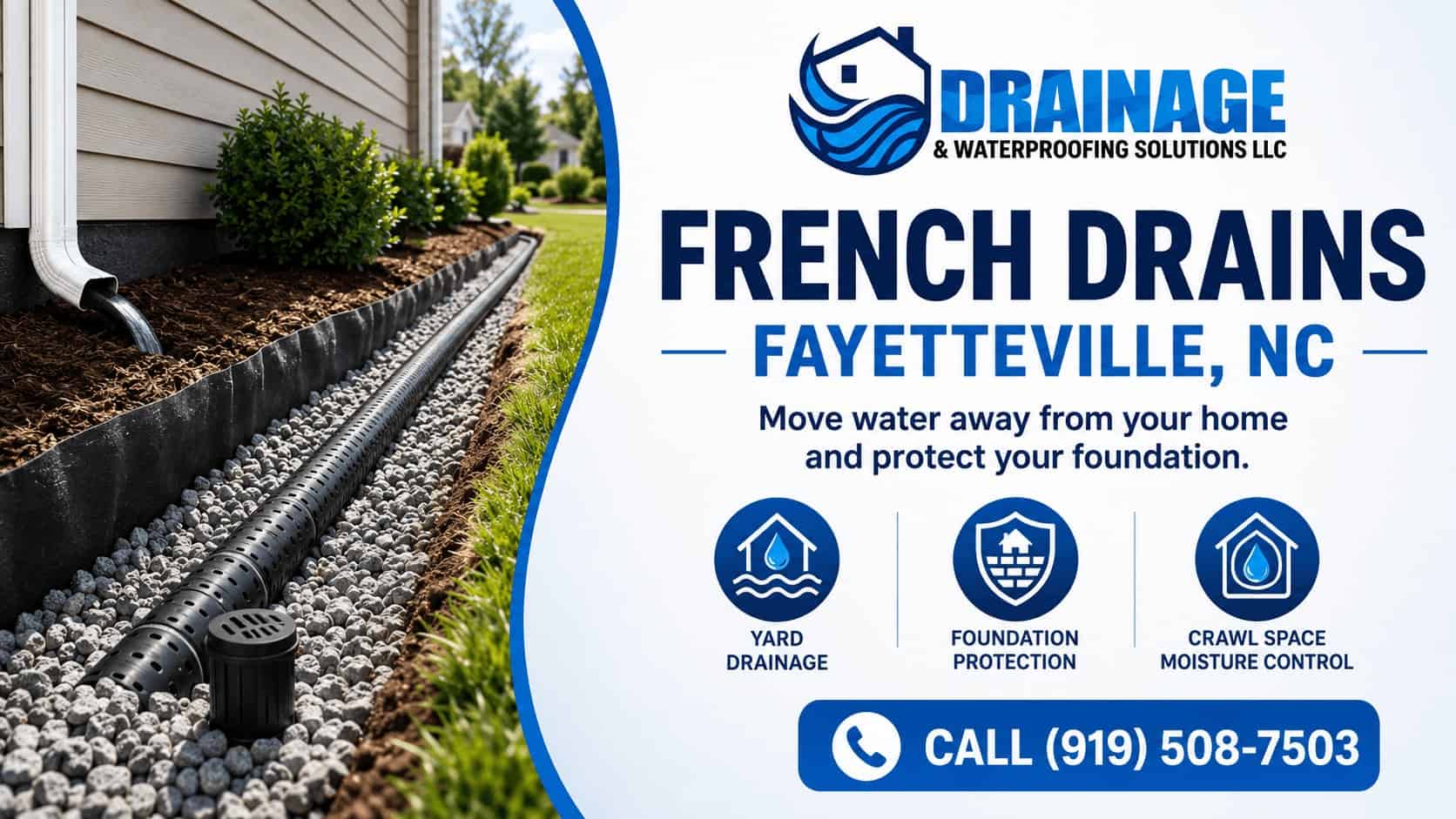
French Drains Fayetteville NC: How to Stop Yard Water, Foundation Moisture, Crawl Space Problems, and Soil Erosion
French drains Fayetteville NC homeowners can trust are designed to move unwanted water away from the home before it creates bigger problems around the foundation, basement, crawl space, driveway, retaining wall, or yard. In Fayetteville and surrounding Cumberland County communities, heavy rain, clay soil, grading issues, low yard areas, clogged downspouts, and stormwater runoff can leave homeowners dealing with soggy soil, standing water, basement seepage, crawl space moisture, and foundation concerns.
A wet yard may seem like a landscaping problem at first. But when water repeatedly collects near the home, the problem can become more serious. Water may press against foundation walls, seep into a basement, enter a crawl space, wash out soil, damage landscaping, weaken retaining wall areas, or keep the ground too saturated around the structure.
Drainage & Waterproofing Solutions LLC helps Fayetteville homeowners with French drains, yard drainage, basement waterproofing, foundation waterproofing, basement moisture control, crawl space and basement waterproofing, sealed crawl spaces, retaining walls, and drainage system inspections. The company is locally owned, family operated, and brings more than 20 years of drainage and waterproofing experience to homes across Fayetteville, Raleigh, Garner, Cary, Apex, Durham, Chapel Hill, Clayton, Fuquay-Varina, Holly Springs, Wake Forest, Wilson, Southern Pines, and surrounding Central North Carolina communities.
If your Fayetteville yard stays wet after rain, your crawl space smells musty, your basement shows water stains, or water collects near your foundation, call (919) 508-7503 or request a free estimate from Drainage & Waterproofing Solutions LLC.
What Is a French Drain?
A French drain is a drainage system that helps collect and redirect groundwater or surface water away from problem areas. It usually includes a sloped trench, gravel or drainage stone, filter fabric, and perforated drainage pipe that moves water toward a safer discharge location.
French drains may help with:
- Standing water in the yard
- Soggy soil near the foundation
- Water pooling beside the home
- Crawl space moisture
- Basement seepage after rain
- Foundation water pressure
- Downspout drainage problems
- Low spots in the lawn
- Water collecting near patios
- Drainage issues near driveways
- Retaining wall drainage
- Soil erosion
- Wet walkways
- Stormwater runoff
- Repeated puddling after heavy rain
The goal is to give water a controlled path away from the home instead of allowing it to sit against the foundation or collect in low areas.
French Drains Fayetteville NC: Why They Matter
French drains Fayetteville NC homeowners install can help protect the home from repeated moisture problems. Fayetteville properties may experience heavy rainfall, compacted soil, clay-heavy areas, uneven grading, stormwater runoff, and drainage challenges around older and newer homes.
When water does not drain correctly, it can create problems such as:
- Wet crawl spaces
- Basement moisture
- Foundation seepage
- Musty odors
- Mold-like growth
- Wood rot concerns
- Yard erosion
- Retaining wall pressure
- Damaged landscaping
- Soft soil near the home
- Water pooling near walkways
- Soggy areas that stay wet for days
- Increased pressure against foundation walls
A French drain is not just a landscaping feature. It is a water-management solution that can help protect the home from moisture before water reaches the basement, crawl space, or foundation.
Common Signs You May Need a French Drain
Many Fayetteville homeowners notice drainage problems after a storm. The yard may hold water for several days, the soil may stay muddy, or water may collect near the home every time it rains.
Common signs include:
- Standing water in the yard
- Soggy soil that does not dry
- Water pooling near the foundation
- Crawl space moisture after storms
- Musty odors under the home
- Basement seepage after heavy rain
- Water stains on foundation walls
- Soil erosion near the house
- Mulch washing away
- Puddles near patios or walkways
- Downspouts dumping water near the foundation
- Water flowing toward the home
- Wet spots near retaining walls
- Driveway edge erosion
- Low yard areas holding water
- Mold-like growth in damp areas
- Wet crawl space insulation
- Sump pump running often
- Yard areas that cannot support grass
- Previous drainage fixes that did not last
If these signs keep returning, a drainage system inspection can help determine whether the home needs a French drain, downspout correction, foundation drainage, grading improvement, sump pump, or another waterproofing solution.
What Causes Yard Drainage Problems in Fayetteville Homes?
Yard drainage problems often come from several issues working together. A yard may have heavy soil, poor slope, short downspouts, and a low area where runoff collects after every storm.
Common causes include:
- Heavy rainfall
- Clay or compacted soil
- Poor grading
- Downspouts discharging too close to the home
- Low spots in the yard
- Water flowing from neighboring properties
- Driveways or patios directing water toward the house
- Retaining walls without proper drainage
- Soil settlement
- Clogged drainage systems
- Failed previous drains
- Landscaping that traps water
- Crawl space moisture
- Foundation seepage
- Yard erosion
- Stormwater runoff
- Water collecting near walkways
- Slope changes from construction or landscaping
A French drain may help when water needs a controlled path away from a problem area. The right design depends on slope, soil, discharge location, foundation proximity, and where the water is coming from.
French Drain vs. Yard Drain vs. Foundation Drain
French drains are often discussed alongside yard drains and foundation drains. These systems may work together, but they are not always the same.
| Drainage Solution | Best For | What Homeowners Should Know |
|---|---|---|
| French drain | Groundwater, soggy soil, yard drainage, foundation water movement | Uses gravel, fabric, and perforated pipe to redirect water |
| Yard drain | Surface water collecting in low lawn areas | Often captures water from specific surface areas |
| Foundation drain | Water collecting near below-grade foundation walls | Helps move water away from the footing or foundation area |
| Downspout drainage | Roof runoff discharging too close to the home | Moves gutter water away from the foundation |
| Interior drain system | Water entering basement or crawl space perimeter | Manages water after it reaches the home |
| Sump pump system | Collected water that needs mechanical removal | Often works with interior or exterior drainage |
A Fayetteville home may need one system or a combination. The inspection should identify whether the main issue is surface water, groundwater, roof runoff, foundation pressure, or crawl space moisture.
Interior vs. Exterior French Drains
French drains may be installed outside the home or as part of an interior water-management system. The correct option depends on where water is entering and whether the goal is to stop water before it reaches the home or manage water after it gets inside.
| Drain Type | Best For | What Homeowners Should Know |
|---|---|---|
| Exterior French drain | Yard water, groundwater, foundation water movement | Helps redirect water before it reaches the home |
| Interior drainage system | Basement or crawl space water at the perimeter | Captures water after it enters or reaches the inside edge |
| Foundation drain | Water collecting near foundation footing | Often supports foundation waterproofing |
| Retaining wall drain | Water pressure behind retaining walls | Helps reduce pressure and erosion near walls |
| Downspout drain extension | Roof runoff near the foundation | Often one of the first drainage corrections to consider |
Exterior drainage is usually preferred when water can be redirected before reaching the home. Interior drainage may be needed when water is already entering through the basement or crawl space perimeter.
When a French Drain Makes Sense
A French drain may make sense when water repeatedly collects in the same area or moves toward the home instead of away from it. It is especially useful when grading alone cannot solve the problem.
A French drain may be appropriate when:
- Water pools near the foundation
- The yard stays soggy after rain
- A crawl space gets wet during storms
- Basement seepage appears after heavy rain
- Downspouts overload one area
- A retaining wall has water pressure behind it
- Soil is washing away
- A low yard area cannot dry
- Foundation walls show moisture signs
- Water flows toward the home
- Previous drainage work failed
- Sump pump discharge needs better routing
- Drainage needs to be hidden underground
- Homeowners want a durable drainage solution
The best French drain design depends on where water enters, how the yard slopes, where water can safely discharge, and what parts of the home need protection.
French Drain Installation Process at Drainage & Waterproofing Solutions LLC
French drain installation in Fayetteville NC should begin with inspection and planning. The drain must be placed correctly, sloped correctly, and discharged correctly to work as intended.
A typical process may include:
- Property and drainage inspection
The team reviews the yard, foundation, basement, crawl space, downspouts, low areas, soil conditions, retaining walls, and water-flow patterns.
Water source diagnosis
The inspection helps determine whether water is coming from roof runoff, groundwater, surface water, neighboring slopes, failed drains, or foundation seepage.
Drainage plan and estimate
Drainage & Waterproofing Solutions LLC provides a written plan, price quote, and expected timeline so homeowners understand the recommended solution.
Drain route layout
The drain location is planned based on slope, water source, home layout, utilities, landscaping, discharge location, and foundation concerns.
Trench excavation
A trench is excavated along the planned route. Depth and width depend on the drainage problem, soil, slope, and project type.
Filter fabric placement
Filter fabric may be used to help reduce soil intrusion into the drainage stone and pipe.
Drainage stone installation
Gravel or drainage stone helps water move toward the perforated pipe and through the system.
Perforated pipe installation
A properly sloped perforated pipe collects and moves water away from the problem area.
Discharge routing
Water must discharge to an appropriate location where it does not return to the foundation or create a new problem.
Backfill and site cleanup
The system is covered and the work area is cleaned. Surface restoration depends on the project scope and site conditions.
Final review and homeowner guidance
The team explains what was installed, what to watch for, and how to maintain drainage performance.
A French drain works best when the entire system is designed around the property, not installed as a one-size-fits-all trench.
What Homeowners Should Do Before a French Drain Estimate
Most homeowners do not need to diagnose the problem before calling. A few simple steps can make the inspection more useful.
Before a French drain estimate:
- Take photos after heavy rain
- Note where water appears first
- Mark areas that stay wet longest
- Check where downspouts discharge
- Look for soil erosion
- Mention basement or crawl space moisture
- Share any prior drainage work
- Point out retaining wall concerns
- Unlock gates if needed
- Clear access to crawl space or basement areas
- Move outdoor items near problem areas
- Identify where water currently flows
- Share inspection reports if available
- Ask whether foundation waterproofing is also needed
Photos from storms can be very helpful because drainage problems may not be visible on a dry day.
How Long Does French Drain Installation Take?
The timeline depends on the length of the drain, trench depth, soil conditions, access, slope, drainage route, landscaping, discharge location, and whether the project includes foundation waterproofing, sump pump work, or crawl space drainage.
| Project Type | Typical Scope | Timeline Factors |
|---|---|---|
| Small yard drain | Short drainage route for a limited wet area | Soil, access, and discharge route matter |
| Foundation-area French drain | Drainage near the home or footing area | Foundation access and excavation affect timing |
| Crawl space drainage support | Drainage tied to under-home moisture control | Crawl space access and water source matter |
| Retaining wall drainage | Drainage behind or near a retaining wall | Wall structure and soil pressure matter |
| Downspout drainage upgrade | Routing roof water away from the home | Distance and discharge location affect scope |
| Full property drainage correction | Multiple wet areas or larger drainage plan | May take several days depending on complexity |
| French drain plus waterproofing | Drainage and foundation protection together | Larger projects require more planning |
Drainage & Waterproofing Solutions LLC can explain the expected timeline after reviewing the property.
How Much Does a French Drain Cost in Fayetteville NC?
French drain cost in Fayetteville NC depends on project length, trench depth, soil conditions, access, slope, discharge location, gravel, pipe, filter fabric, landscaping, and whether the project also includes foundation waterproofing, crawl space drainage, sump pump work, or downspout routing.
| Cost Factor | Why It Matters | What Homeowners Should Know |
|---|---|---|
| Drain length | Longer drains require more labor and materials | Linear footage affects cost |
| Trench depth | Deeper drainage may require more excavation | Depth depends on water source |
| Soil type | Clay, roots, and compacted soil affect labor | Fayetteville soil conditions can vary |
| Access | Fences, slopes, tight spaces, and landscaping affect work | Easier access can reduce complexity |
| Discharge route | Water must be sent to an appropriate location | Poor discharge can create new problems |
| Foundation proximity | Drains near the home require careful planning | Foundation protection may be part of the scope |
| Materials | Pipe, stone, fabric, and fittings affect durability | Material quality matters |
| Additional work | Sump pumps, downspouts, grading, or waterproofing may be needed | The water source drives the plan |
Simple drainage corrections may cost less than larger excavation and waterproofing projects. Many French drain projects range from several thousand dollars to more depending on length, access, materials, and drainage complexity. A free estimate is the best way to understand the right scope for your Fayetteville home.
Do French Drains Help With Basement or Crawl Space Moisture?
Yes, a French drain can help with basement or crawl space moisture when the source is water collecting around the foundation, groundwater moving toward the home, downspouts discharging too close, or yard drainage pushing water into the structure.
A French drain may support:
- Basement waterproofing
- Crawl space waterproofing
- Foundation waterproofing
- Basement moisture control
- Sealed crawl space planning
- Sump pump performance
- Retaining wall drainage
- Yard drainage correction
However, a French drain may not be the only solution. If water is already entering the basement or crawl space, the home may also need interior drainage, sump pump support, foundation waterproofing, crack repair, or crawl space encapsulation.
French Drains and Retaining Wall Drainage
Retaining walls need drainage because water can build pressure behind the wall. Without drainage, the soil behind the wall may become heavy, saturated, and unstable. Over time, this can contribute to wall movement, erosion, or drainage problems around the yard.
French drains may help retaining wall areas by:
- Reducing water buildup behind the wall
- Helping redirect groundwater
- Reducing soil saturation
- Lowering pressure on the wall area
- Protecting landscaping near the wall
- Helping control erosion
- Moving water toward a safer discharge point
A retaining wall is not just a visual feature. It must manage soil and water. Drainage should be part of the design or repair plan.
French Drains vs. Sump Pumps
French drains and sump pumps are often used together, but they do different jobs. A French drain collects and redirects water. A sump pump mechanically pumps collected water away when gravity drainage is not enough.
| System | What It Does | When It May Apply |
|---|---|---|
| French drain | Collects and redirects groundwater or surface water | Yard water, foundation water, soggy soil, retaining wall drainage |
| Sump pump | Pumps collected water away from a low point | Basement or crawl space water that cannot drain by gravity |
| Interior drain system | Captures water at the basement or crawl space perimeter | Active water entering inside the home |
| Downspout drain | Moves roof runoff farther from the foundation | Gutter water causing foundation moisture |
| Foundation waterproofing | Protects below-grade foundation walls | Water entering through foundation walls |
A professional inspection can determine whether the home needs a French drain, sump pump, or both.
French Drain Maintenance Tips
French drains are designed to be durable, but drainage systems still benefit from basic care. Homeowners should monitor how water moves after storms and watch for signs of clogging or poor discharge.
Helpful maintenance tips include:
- Keep discharge outlets clear
- Keep leaves and debris away from drains
- Watch where downspouts discharge
- Check the yard after heavy rain
- Look for recurring puddles
- Avoid driving heavy equipment over drain routes
- Keep soil and mulch from washing into drainage areas
- Monitor retaining walls after storms
- Schedule inspections if moisture returns
- Call for service if water stops draining properly
A well-installed system should move water away from the problem area. If water returns or a new wet area appears, the system should be inspected.
French Drains for Fayetteville, Hope Mills, Spring Lake, Raeford, and Cumberland County
Drainage & Waterproofing Solutions LLC serves Fayetteville and surrounding Central North Carolina communities. Fayetteville-area homes may need French drains because of heavy rain, low yard areas, clay or compacted soil, grading concerns, crawl space moisture, foundation seepage, and stormwater runoff.
French drains may be helpful for homes in and around:
- Fayetteville
- Hope Mills
- Spring Lake
- Raeford
- Fort Liberty area
- Eastover
- Stedman
- Vander
- Cumberland County
- Southern Pines
- Garner
- Raleigh
- Cary
- Apex
- Durham
- Wake Forest
Local experience matters because drainage plans should account for soil, slope, rainfall, foundation type, discharge route, and how water moves across the property.
How Drainage & Waterproofing Solutions LLC Helps Fayetteville Homeowners
Drainage & Waterproofing Solutions LLC is locally owned, family operated, and focused on helping homeowners protect their homes from water damage. The company provides French drains, basement waterproofing, basement moisture control, foundation waterproofing, sealed crawl spaces, crawl space and basement waterproofing, crawl space repair and encapsulation, retaining walls, and drainage system inspections.
Homeowners choose Drainage & Waterproofing Solutions LLC for:
- French drains
- Yard drainage correction
- Basement waterproofing
- Basement moisture control
- Foundation waterproofing
- Crawl space and basement waterproofing
- Sealed crawl spaces
- Crawl space repair and encapsulation
- Retaining wall drainage
- Drainage system inspections
- Sump pump and discharge planning
- Written plans and estimates
- Durable, long-lasting solutions
- Local Central North Carolina experience
- Peace of mind
The goal is to solve the source of the water problem, not just cover the symptom.
Anonymized Examples of French Drain Situations
Every home is different, but these examples show why Fayetteville-area homeowners schedule French drain inspections and drainage work.
A Fayetteville homeowner with standing water near the foundation
A homeowner noticed water pooling beside the house after heavy rain. The soil stayed wet for days, and the crawl space smelled musty. A drainage inspection helped identify water movement toward the foundation and whether a French drain or related drainage correction was needed.
A Hope Mills homeowner with a soggy backyard
A homeowner had a backyard that stayed soft and muddy after storms. Grass struggled to grow, and water collected near a patio. A French drain evaluation helped determine whether groundwater, slope, or surface runoff was causing the problem.
A Spring Lake homeowner with basement seepage
A homeowner saw water stains along a basement wall after storms. The inspection focused on exterior water movement, downspout discharge, and whether a French drain, foundation waterproofing, or basement waterproofing system would be the right solution.
A Raeford homeowner with retaining wall drainage concerns
A homeowner noticed soil movement and wet areas near a retaining wall. The concern was not just the wall itself, but the water collecting behind and around it. A drainage plan helped determine whether a French drain could help relieve water pressure.
These examples are educational and not based on identifiable customers. Project cost, timeline, materials, and results depend on water source, soil, slope, drainage route, access, foundation condition, discharge location, and repair scope.
Schedule French Drain Installation in Fayetteville NC
If your Fayetteville yard stays wet, water pools near your foundation, your crawl space smells musty, your basement shows moisture, or your retaining wall area is holding water, Drainage & Waterproofing Solutions LLC can help identify the source and recommend a lasting solution.
Call (919) 508-7503 or request a free estimate from Drainage & Waterproofing Solutions LLC.
- Request a free estimate
- Explore Fayetteville drainage and waterproofing services
- Learn about French drains
- Review basement waterproofing services
- Explore foundation waterproofing
- Learn about basement moisture control
- Explore crawl space and basement waterproofing
- Review sealed crawl space services
- Explore crawl space repair and encapsulation
- Explore retaining walls
- Schedule a drainage system inspection
- Read more drainage and waterproofing articles
This article is for general information only. French drain recommendations depend on water source, soil conditions, slope, grading, foundation type, crawl space or basement moisture, discharge location, access, and previous drainage work. Waterproofing and drainage solutions should be evaluated by a qualified professional before repair or installation decisions are made.
FAQs About French Drains Fayetteville NC
What is a French drain?
A French drain is a drainage system that uses a sloped trench, gravel or drainage stone, filter fabric, and perforated pipe to collect and redirect water away from a problem area. It can help with soggy yards, foundation moisture, crawl space water, and retaining wall drainage.
How do I know if I need a French drain in Fayetteville NC?
You may need a French drain if your yard stays wet, water pools near the foundation, soil erodes, the crawl space smells musty, basement seepage appears after storms, or downspouts send water toward the home. A professional inspection can identify the source.
How much does a French drain cost in Fayetteville NC?
French drain cost depends on drain length, trench depth, soil, access, materials, discharge location, landscaping, and whether waterproofing, sump pumps, downspout routing, or crawl space drainage are also needed. A free estimate is the best way to understand the correct scope.
Can a French drain help with basement water?
Yes, a French drain may help when basement water is caused by groundwater, surface runoff, poor grading, downspouts, or water collecting near the foundation. Some homes may also need basement waterproofing, foundation waterproofing, or an interior drainage system.
Can a French drain help with crawl space moisture?
Yes. If crawl space moisture is connected to water collecting around the foundation or under the home, a French drain may help redirect water before it enters the crawl space. Crawl space waterproofing or encapsulation may also be recommended.
Do French drains need maintenance?
French drains benefit from basic maintenance. Homeowners should keep discharge outlets clear, watch for recurring puddles, monitor downspouts, and call for inspection if water stops draining properly. Clogs, debris, soil movement, or discharge issues can affect performance.
Where does French drain water go?
French drain water should discharge to a location where it will not return to the foundation, create erosion, flood a neighbor’s property, or cause a new drainage problem. The correct discharge route depends on the property and local conditions.
Is a French drain better than a sump pump?
A French drain and sump pump do different jobs. A French drain collects and redirects water, often using gravity. A sump pump mechanically pumps collected water away from a low area. Some homes need one system, while others need both.
Can a French drain help a retaining wall?
Yes. A French drain may help reduce water pressure behind or near a retaining wall by redirecting water away from the wall area. Retaining walls should be evaluated carefully because drainage, soil pressure, and wall condition all matter.
Who should I call for French drains Fayetteville NC?
Call Drainage & Waterproofing Solutions LLC at (919) 508-7503 for French drains in Fayetteville NC, Hope Mills, Spring Lake, Raeford, Cumberland County, Southern Pines, Garner, Raleigh, Cary, Apex, Durham, and surrounding Central North Carolina communities.
Sources
- Drainage & Waterproofing Solutions LLC
- Drainage & Waterproofing Solutions LLC Fayetteville
- Drainage & Waterproofing Solutions LLC Contact
- Drainage & Waterproofing Solutions LLC French Drains
- Drainage & Waterproofing Solutions LLC Basement Waterproofing
- Drainage & Waterproofing Solutions LLC Foundation Waterproofing
- Drainage & Waterproofing Solutions LLC Basement Moisture Control
- Drainage & Waterproofing Solutions LLC Crawl Space & Basement Waterproofing
- Drainage & Waterproofing Solutions LLC Sealed Crawl Space
- Drainage & Waterproofing Solutions LLC Crawl Space Repair & Encapsulation
- Drainage & Waterproofing Solutions LLC Retaining Walls
- Drainage & Waterproofing Solutions LLC Drainage System Inspections
- Drainage & Waterproofing Solutions LLC Blog & News
- North Carolina Department of Environmental Quality: Stormwater
- EPA: A Brief Guide to Mold, Moisture and Your Home
- Building America Solution Center: Foundation Drainage
Posted in Basement Waterproofing, French Drains, Yard Drainage