
Retaining Walls: A Powerful Tool For Promoting Dry Basements
The Benefits of a Dry Basements
Waterproof, dry basements offer advantages for property owners. Many households utilize these areas for storage purposes, for instance. Today, architects frequently design attractive walk-out basements on lower levels.
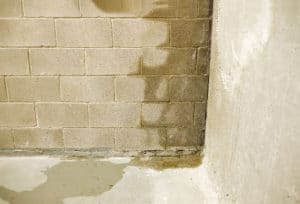
A finished basement permits homeowners to utilize lower-level living spaces more completely: dens, game rooms, exercise rooms, home offices, hobby rooms, and sometimes bedrooms and bathrooms occupy underground locations in numerous dwellings. Furthermore, yet to maximize your family’s enjoyment, you must ensure these areas remain dry and comfortable. Some landscaping features can help further this objective. Retaining walls, an ancient tool, today often perform an important role in helping real estate owners optimize their dry basement living spaces.
Retaining Walls Serve Many Purposes
In its most basic form, a “retaining wall” holds soil in place to help maintain it at a preferred slope. Builders sometimes use retaining walls to showcase the entrances of walk-out basements or patios, for instance. Retaining walls may also encourage rainwater or melting snow to flow away from a residential slab.
To some extent, every dry basement wall constitutes a retaining wall. Why? This structure must withstand intense lateral pressure from the surrounding soil. Also, an individual retaining wall may serve a highly practical purpose, (such as supporting a basement or preventing runoff from flowing towards a residential foundation), or it may fill a purely aesthetic role by contributing greater visual interest to a yard.
Retaining Walls: Rural And Urban, Too!
Retaining walls have assisted agriculture for centuries. In the past, farmers in places as far flung as China, Peru and Italy relied extensively on terraces and retaining walls to create level plots of arable land on steep hillsides for cultivation purposes.
While this use of retaining walls remains important in many locations, today retaining walls also perform important landscaping roles in cities and suburbs. In urban areas, retaining walls have enabled engineers to re-shape densely populated landscapes to permit the installation of underground parking garages, sidewalks, steps and sloping highway access ramps.
Popular Types of Retaining Walls
Landscapers and architects have developed a variety of useful specialized retaining walls, as well as several ancillary or alternative soil stabilization techniques. Some popular approaches for holding soil in place include:
An Anchored Wall
Often described as a “counterfort wall”, this specialized retaining wall includes a series of concrete-reinforced anchored cables. Also, beams extending from the wall into a hillside or rock face at regular intervals. Also, typically made from concrete, these walls usually require the assistance of an experienced engineer to construct. Intended to retain high loads, they sometimes exceed 25 feet in height.
A Gravity Wall
This type of retaining wall relies upon its huge mass to defy the lateral pressure of the surrounding soil. Built from heavy stone, concrete or even stacked steel compartments filled with stone. Also, these thick walls typically remain broader at the base and do not exceed four feet in height.
A Piling Wall
These attractive retaining walls occur in several forms, including bored pile retaining walls and sheet pile retaining walls. The builder inserts planks of wood or vinyl into soft soil or drives bored piles into harder ground, then adds anchors to further secure the wall. Each plank or pile remains only one third above ground.
A Cantilever Wall
Often constructed from cast-in-place concrete or reinforced steel, this type of retaining wall includes an underground lower extension at the base projecting into the surrounding soil. The wall sometimes resemble an upside-down “T” in shape. It typically requires considerable planning to install cantilever retaining walls correctly.
Soil Nailing
This technique reinforces retaining walls or excavations with beams (usually steel bars) inserted downwards into the ground at a slight angle without tension.
Mechanical Stabilization
A landscaper may perform this technique by using layers of horizontal mats to help affix soil in place and keep it in contact with the surface of outer-facing concrete walls.
Choosing Retaining Walls For a Dry Basement
Although retaining walls perform straightforward functions in residential settings, selecting the best type of wall and the best site for these structures sometimes proves complex. Factors such as the degree of slope, the type of soil, the extent of freezing. Also, water drainage, nearby infrastructure, and even potential seismic activity in the area may all become important considerations. For instance, the Soil Society of America recommends property owners consult with an engineer before installing a retaining wall on any slope exceeding a 3:1 ratio. Also, dry basements.
By reinforcing basement walls and/or encouraging water runoff away from the foundation. Also, a well-installed retaining wall may enhance a home’s useful lifespan. These structures also frequently contribute significantly to the beauty of the landscaping. Call us for assistance with any retaining wall or waterproofing project!
We also have the following services:
Archives
- May 2026
- April 2026
- March 2026
- February 2026
- January 2026
- December 2025
- November 2025
- October 2025
- September 2025
- August 2025
- July 2025
- June 2025
- May 2025
- April 2025
- March 2025
- January 2025
- December 2024
- November 2024
- October 2024
- August 2024
- July 2024
- June 2024
- May 2024
- April 2024
- March 2024
- February 2024
- January 2024
- December 2023
- November 2023
- October 2023
- September 2023
- August 2023
- July 2023
- June 2023
- May 2023
- April 2023
- March 2023
- January 2023
- December 2022
- November 2022
- September 2022
- August 2022
- July 2022
- June 2022
- May 2022
- April 2022
- March 2022
- February 2022
- December 2021
- November 2021
- October 2021
- September 2021
- August 2021
- July 2021
- June 2021
- May 2021
- April 2021
- March 2021
- February 2021
- January 2021
- December 2020
- November 2020
- October 2020
- September 2020
- August 2020
- July 2020
- June 2020
- May 2020
- April 2020
- March 2020
- February 2020
- January 2020
- December 2019
- November 2019
- October 2019
- September 2019
- August 2019
- July 2019
- June 2019
- May 2019
- April 2019
- March 2019
- February 2019
- January 2019
- December 2018
- November 2018
- October 2018
- September 2018
- August 2018
- July 2018
- June 2018
- May 2018
- April 2018
- February 2018
- January 2018
- December 2017
- October 2017
- September 2017
- August 2017
- July 2017
- June 2017
Recent Posts
- Vapor Barrier Installation Raleigh: 2026 Homeowner’s Guide to Protecting Your Crawl Space and Foundation
- Sealed Crawl Space Raleigh: 2026 Homeowner’s Guide to Moisture Control, Costs & Long-Term Protection
- Beat the Basement Blues: Essential 2026 Drainage Tips for Raleigh Homeowners
- Comprehensive Guide to Basement Moisture Control in Raleigh, NC: Keep Your Home Dry, Healthy, and Comfortable
- Sealed Crawl Space Encapsulation in Raleigh: Protect Your Home from Moisture, Mold & Energy Loss