For years, Drainage and Waterproofing Solutions, LLC has provided homeowners with the peace of mind and protection of foundation waterproofing. After all, the foundation is the most important part of your new home or existing home’s structure.
If your foundation has problems, you can expect to pay a fortune for repair. In most cases, homeowners only notice such costly problems after floors slant, walls crack and the roof develops leaks. Or maybe you are noticing mold and mildew build-up because of ongoing moisture. For these reasons, foundation waterproofing is more than just ensuring water does not come in your basement.
Foundation waterproofing is a process of using proven methods, approaches and products to permanently prevent water intrusion in your home. These projects typically require several methods applied to work together toward the same purpose.
Determining the right approaches for your property requires inspection of your house and its foundation. There is no one sure way to waterproof every new or existing home. Accurate estimation requires close inspection by one of Drainage and Waterproofing Solutions’ professionals. If you receive an estimate from a contractor who has not seen your home and inspected it for this purpose, you should be wary of the quality of that service.
One of the most damaging elements for your home is water. Water on its own can breech even the tiniest of crevices in or near a foundation and damage your entire home’s structure before you even suspect a problem. Fixing a foundation problem is also one of the most costly investments in your home, one requiring expensive excavation and other services.
Water damages your foundation in several ways. First, wet soil around the foundation can lose its strength. This causes the foundation to shift and crack. Telltale signs of a shifting foundation often include doors and windows that no longer shut properly. Or, your floor develops creaks and squeaks or a noticeable downward slope. Your walls can crack as they settle with the foundation’s movement.
Mold problems can also develop because of your foundation problems. These wreak havoc on your health by causing breathing problems, headaches, depression, aches, pains, memory loss and other issues.
Foundations are constructed using reinforced concrete. Although concrete appears solid, it is actually not waterproof on its own. Concrete also develops cracks. Even when water itself cannot get through the foundation, vapor and moisture still gets past this barrier.
Foundation waterproofing is the most effective method of keeping water, vapor and moisture out of your home. Using a written plan, your Drainage and Waterproofing Solutions experts apply their expert knowledge and best practices to waterproof your foundation, basement and crawl spaces.
Methods Often Used as Part of Foundation Waterproofing. To waterproof your home, our experts use multiple methods and approaches tailored to your specific needs, such as:
Dampproofing is not technically a foundation waterproofing method. But this service involves the application of an asphalt-based coating to the outside of your foundation. The coating is sprayed or brushed onto the foundation walls to keep soil moisture from entering the basement. Your home’s builder should apply this coating during any North Carolina house construction.
An important step to waterproof your foundation, and thus your basement, is the sealing and repair of areas where water enters through your foundation. For example, we seal and repair cracks in your basement walls. We often pair this approach with other methods like interior or exterior drainage systems.
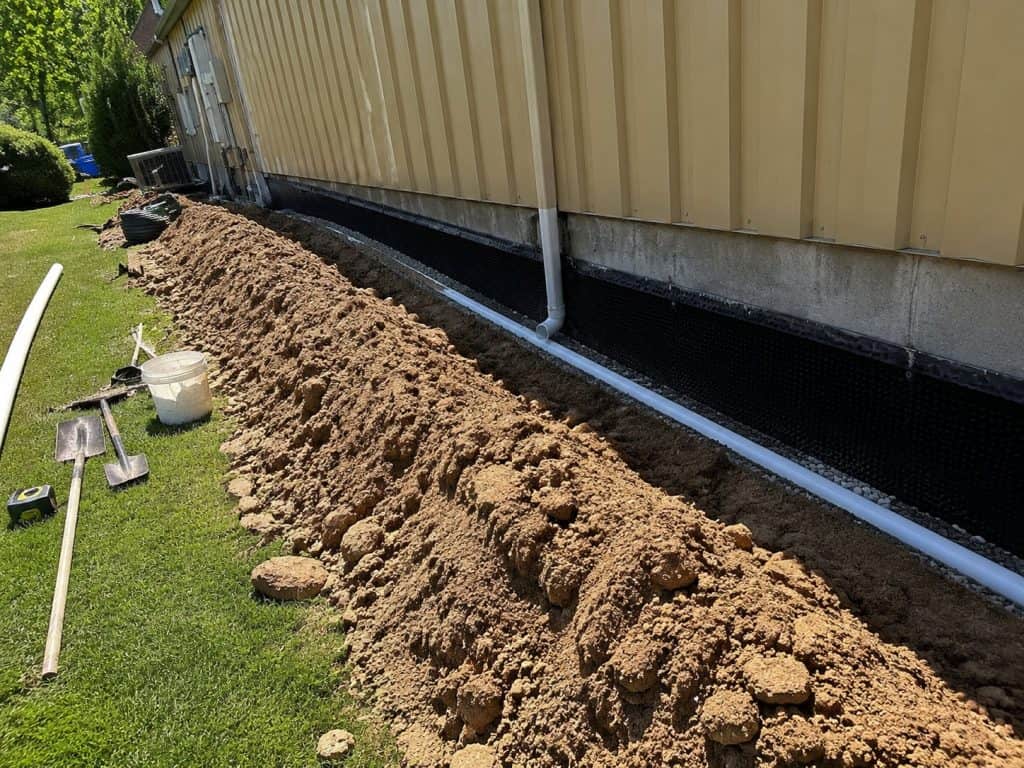
Is it critical to not allow water to pool around or under your foundation. Through prevention of this pooling, you can minimize the opportunities for water or moisture to enter the foundation walls into your basement. Exterior drainage systems often require excavation to the foundation footer. There, we install or replace drainage pipes that make up a french drain. We also sometimes apply a waterproof membrane to your foundation walls as another water and moisture barrier.
If you experience standing water in your basement, an interior drainage system can effectively solve this problem. Also, a perimeter drain and sump pump system is one of the most common ways to keep your basement dry. It is also one of the least problematic methods to extract water, in terms of disruption to your existing foundation.
For construction of your interior drainage system, our pros use a jackhammer to create a pathway for drainage piping installation. This pipeline routes water that comes into your basement to a sump pump system. The pump permanently removes the water. To keep the pump working during electrical power outages, we recommend installation of a sump pump with backup battery power.
Drainage and Waterproofing Solutions looks forward to helping Raleigh area homeowners enjoy a waterproof foundation and moisture-free home. For potential customers within a 60-mile radius of Raleigh, we provide a free estimate and a written foundation waterproofing plan.
Foundation waterproofing involves applying protective measures to prevent water from penetrating the foundation of a building. It is essential to prevent structural damage, mold growth, and other moisture-related issues that can compromise the integrity of your home.
Foundation waterproofing methods include exterior waterproofing (applying waterproof membranes and coatings), interior waterproofing (using sealants and drainage systems), and installing proper drainage solutions such as French drains and sump pumps to manage water flow.
Signs that your foundation may need waterproofing include visible cracks in the foundation, damp or wet walls in the basement, mold or mildew growth, musty odors, and water pooling around the base of your home.
The longevity of foundation waterproofing depends on the quality of the materials used and the expertise of the installation. High-quality waterproofing systems can last for several decades with proper maintenance.
Yes, foundation waterproofing can be applied to both new constructions and existing homes. Various techniques are available to address water intrusion issues effectively in existing structures.
The cost of foundation waterproofing can vary depending on the size of the foundation, the methods used, and the extent of the water intrusion issues. On average, homeowners can expect to pay between $3,000 and $15,000. It is best to get a detailed estimate from a professional.
While foundation waterproofing is highly effective in preventing water intrusion and related damage, it is essential to combine it with proper drainage solutions and regular maintenance to address all potential sources of water damage comprehensively.
The duration of the foundation waterproofing process depends on the scope of the project. Simple interior waterproofing projects can take a few days, while more extensive exterior waterproofing efforts can take one to two weeks.
Regular maintenance after foundation waterproofing includes inspecting for new cracks, ensuring that drainage systems are functioning properly, and keeping gutters and downspouts clear. Periodic professional inspections can help maintain the effectiveness of the waterproofing system.
While there are DIY waterproofing products available, professional waterproofing is recommended for the best results. Professionals have the expertise to identify the source of the problem and use the most effective methods and materials to ensure long-term protection.
Not waterproofing your foundation can lead to several issues, including structural damage, mold growth, pest infestations, and health problems due to poor air quality. These problems can result in costly repairs and negatively impact your home’s value.
Exterior foundation waterproofing involves excavating the soil around the foundation, cleaning the surface, and applying a waterproof membrane or coating to prevent water penetration. Additional drainage solutions like French drains may also be installed to manage water flow.
Yes, foundation waterproofing can significantly reduce or eliminate basement flooding by preventing water from entering the foundation and redirecting it away from the home. This helps maintain a dry and safe basement environment.
Common coatings used in foundation waterproofing include asphalt-based waterproofing coatings, polymer-modified asphalt, and liquid rubber coatings. These materials provide a durable and flexible barrier to prevent water intrusion.