Should You Finish a Basement Before Fixing Moisture Problems?
November 22nd, 2026Finish basement moisture concerns before remodeling safely
Quick Answer: Usually, no: if you are weighing whether to finish basement moisture concerns before drywall, flooring, cabinets, or living-space finishes, the safer sequence is to identify the water source, correct active moisture problems, and observe the area through the conditions that usually trigger dampness. EPA says, “Before beginning any conversion of basement space into living space, check the basement for leaks or other signs of moisture problems”, and “any moisture problems should be corrected before you proceed.” For a basement before remodeling, the practical question is whether you can see and understand the moisture source before materials cover the evidence.
That does not mean every damp basement needs the same system. A wet corner after storms, surface condensation on cool masonry, seepage at the wall-floor joint, a water heater leak, and a moving foundation wall are different problems. For Raleigh-area homeowners, where heavy summer storms and Piedmont clay soils can expose weak grading and drainage, the main goal is to avoid covering evidence before you understand what is happening.
Finished materials can make a basement look ready while the water source remains active. Once studs, insulation, drywall, flooring, trim, and built-ins are installed, a simple basement moisture inspection becomes harder. A small stain may be hidden behind a wall. A damp slab may be covered by flooring. A seepage path may not show itself until the next long rain.
Finish basement moisture concerns first: what that really means
The best time to solve a basement moisture problem is before the room is finished, not after the new surfaces are in the way. A remodel can improve comfort and usefulness, but it does not remove hydrostatic pressure, roof runoff, poor slope, plumbing leaks, or condensation. If moisture appears now, a finished wall may only hide it.
Think of this as a sequencing question. Before you choose flooring, wall systems, insulation, or cabinets, decide whether the basement has an active water source. If the answer is unclear, schedule a basement moisture inspection before you spend money on finishes that may need to be removed later.
For homeowners planning a basement before remodeling, the goal is not to panic over every mark on the wall. The goal is to slow down long enough to separate harmless old staining from active seepage, condensation, plumbing leaks, and drainage problems that still need attention.
Why basement before remodeling checks matter
An unfinished basement gives you access. You can see the wall-floor joint, inspect corners, look behind storage, check the sump basin, watch where water appears after rain, and compare conditions during humid weather. After remodeling, those clues may be hidden behind finished materials.
Drywall can conceal staining and dampness. Framing can hide cracks and the lower portion of foundation walls. Flooring can cover slab dampness, perimeter seepage, and old basement water damage. Cabinets, laundry platforms, closets, and mechanical-room finishes can make it harder to access the areas where water first appears.
A second walkthrough is often useful because one dry day does not prove the space is ready for finished materials. Look again after rain, during humid weather, and when the sump pump or dehumidifier has been running. Those conditions can reveal different clues.
There is also a timing issue. A basement may look fine on a dry day, especially if it has been cleaned for a contractor visit or a home sale. But water problems often show themselves after a hard rain, during humid weather, when gutters overflow, or after the soil around the foundation has been saturated for a while. NC State Extension’s guidance on modifying soil around a home is a reminder that soil conditions affect how water moves and drains near the house.
That is why one dry walkthrough is not the same as understanding the water source. If the basement has a history of damp carpet, musty odors, peeling paint, efflorescence, sump activity, or water along one wall, it deserves a closer look before remodeling starts.
How basement water damage gets hidden behind finishes
Basement water damage does not always look dramatic. Sometimes it is a water line on block walls, crumbling paint, white mineral deposits, cupped flooring, rust on metal shelving, or a musty smell around stored boxes. These signs may not identify the exact cause, but they are clues that moisture has been present.
Once finished surfaces are installed, the clues become harder to read. A wall cavity can hold damp framing or insulation. Flooring can trap moisture against the slab or cover the perimeter where water first enters. Baseboards can hide staining at the bottom of drywall. A finished closet can block access to a corner that used to show seepage after storms.
Basement water damage is also easier to misinterpret after a remodel. If a wet spot appears behind a finished wall, it may be difficult to tell whether it came from exterior seepage, condensation, a plumbing line, an HVAC condensate issue, or water running behind materials from another area. The repair may require cutting into new finishes just to locate the source.
Old basement water damage also matters when you are comparing finish materials. A stain behind a storage shelf, a damp carpet edge, or rust at the bottom of a metal item may show where water has traveled before. Those clues can help an inspector focus on the right wall, corner, sump area, or exterior drainage path.
The EPA’s mold guidance says, “The key to mold control is moisture control”. Drainage & Waterproofing Solutions, LLC does not provide mold testing, mold remediation, or health assessments, but the moisture-control principle matters for remodeling. If damp materials are covered or enclosed, the project may become more complicated later.
Basement water damage can also distort the remodeling budget. Even without publishing made-up prices, the cost drivers are clear: access, demolition, damaged materials, water-source diagnosis, drainage work, waterproofing work, discharge routing, sump components, and the need to coordinate with plumbers, electricians, building officials, or structural engineers when appropriate. Fixing the water source first usually gives you better information before finish decisions are made.
What are you seeing: seepage, condensation, grading, or a leak?
The same damp spot can have more than one possible explanation. That is why a basement moisture inspection should look at timing, location, weather, plumbing, air movement, foundation materials, and exterior drainage. A stain does not diagnose itself.
Seepage at walls, cracks, joints, or the slab
Seepage often appears after rain, after prolonged wet weather, or when soil around the foundation is saturated. It may show up at the wall-floor joint, through cracks, through porous masonry, around penetrations, or along one side of the basement. The Building America Solution Center explains that site drainage practices can help minimize localized flooding around homes by managing surface water.
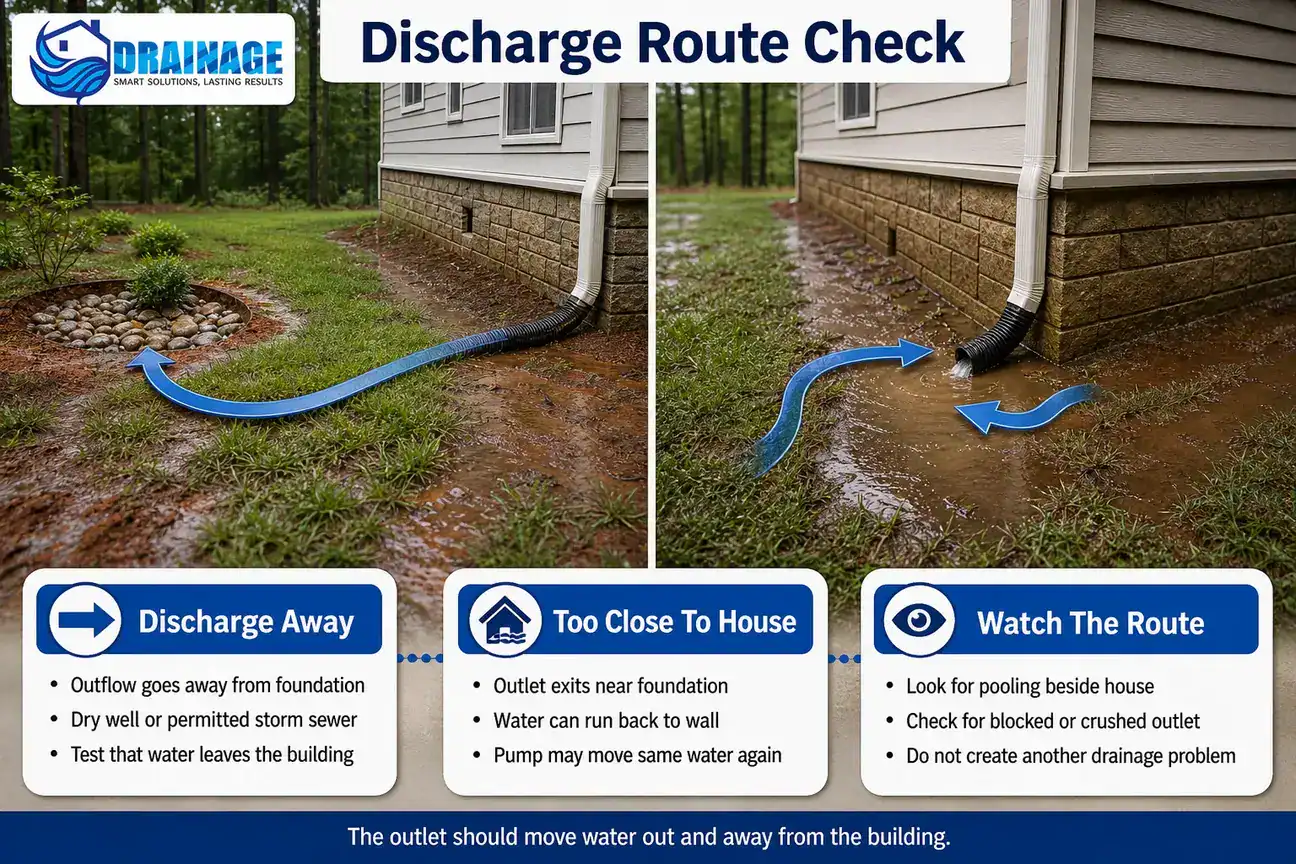
In the Triangle, compacted clay soils and poor slope can make surface water linger near foundation walls. That does not prove the cause in your house, but it is a common enough pattern to check carefully. Look for downspouts dumping beside the foundation, mulch beds built too high, patios sloping toward the home, and low spots that hold water after storms.
Condensation on cool basement surfaces
Condensation is different from seepage. It forms when warm, humid air contacts a cooler surface, such as a masonry wall, slab, metal duct, cold pipe, or basement window. It can look like sweating, beads of water, damp patches, or a clammy surface.
Condensation often appears during humid weather even when it has not rained. That makes it easy to mistake for a leak. A homeowner checking before a remodel should note whether water is on the surface or coming through a crack, joint, or wall. Surface moisture may point toward humidity control, air sealing, insulation strategy, or dehumidification, but it should not be assumed to be the only issue until bulk water has been ruled out.
Grading and roof runoff
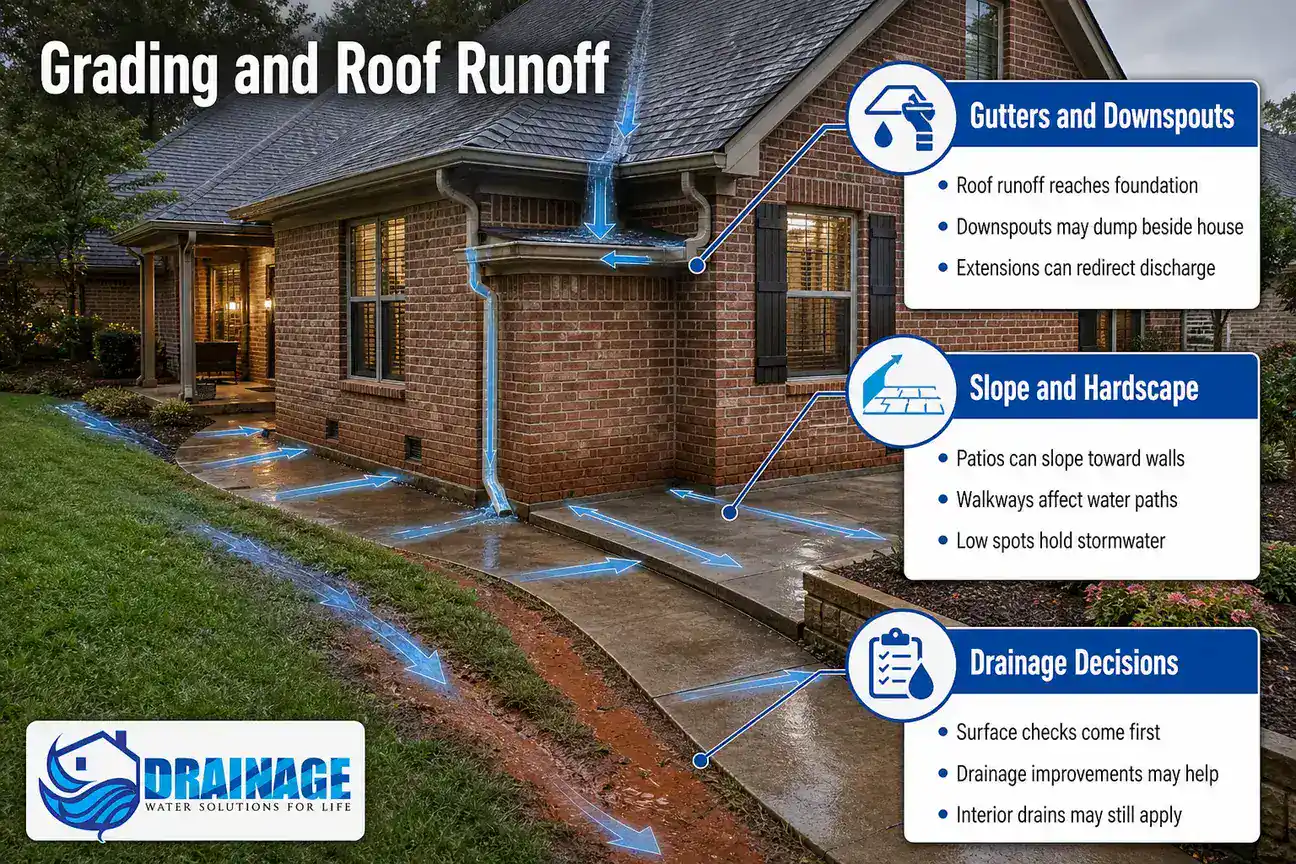
Basements are affected by what happens outside. Gutters, downspouts, roof valleys, patios, sidewalks, driveway edges, and yard slope can all influence how much water reaches the foundation. If water is directed toward the house, a finished basement wall does not solve that problem.
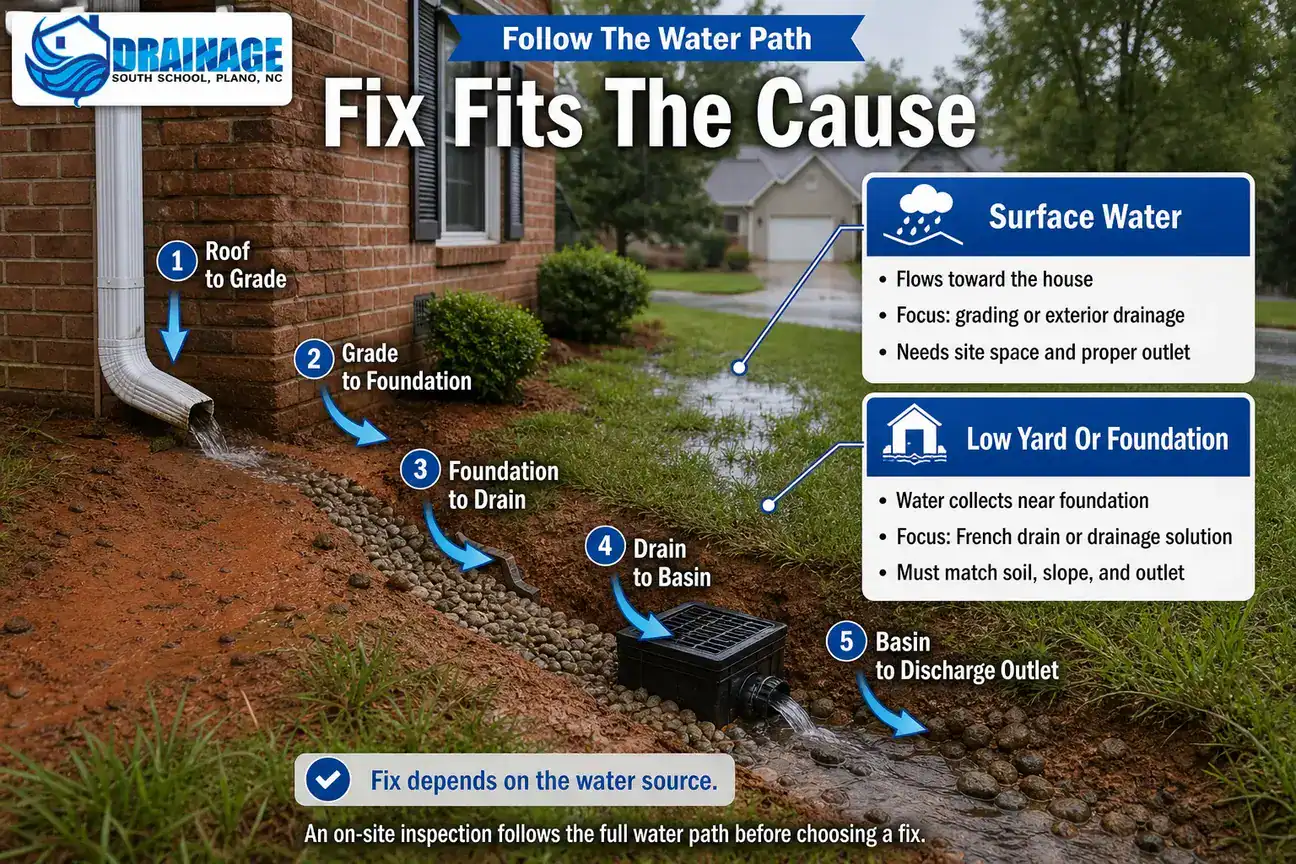
Before deciding to waterproof basement first, check whether water is being managed at the surface. Sometimes downspout extensions, grading corrections, or drainage improvements are part of the answer. In other cases, an interior drain system, sump pump, or foundation waterproofing evaluation may still be appropriate. The point is to avoid choosing a system before understanding the water path.
Plumbing and appliance leaks
Not every wet basement is a waterproofing problem. Water below a supply line, drain line, bathroom group, laundry connection, water heater, HVAC condensate line, refrigerator line, or sewer-related component may call for a plumber or another appropriate specialist. Drainage and waterproofing work should not be presented as plumbing repair.
If a wet spot appears only when a fixture runs, when laundry drains, or after a water heater cycles, separate that from storm-related moisture. A drainage contractor can look for foundation and site-water patterns, but plumbing leaks need plumbing diagnosis and repair.
Possible structural concerns
Some signs should pause the remodel completely. Horizontal displacement, significant wall movement, widening cracks, settlement indicators, sticking doors associated with movement, or visibly displaced foundation sections should be referred to a structural engineer. A blog article, photo, or quick walkthrough should not be used to diagnose structural failure.
If a structural engineer is needed, handle that question before cosmetic basement work. Waterproofing may manage water, but it is not the same as structural engineering or foundation structural repair.
A practical moisture checklist before basement remodeling
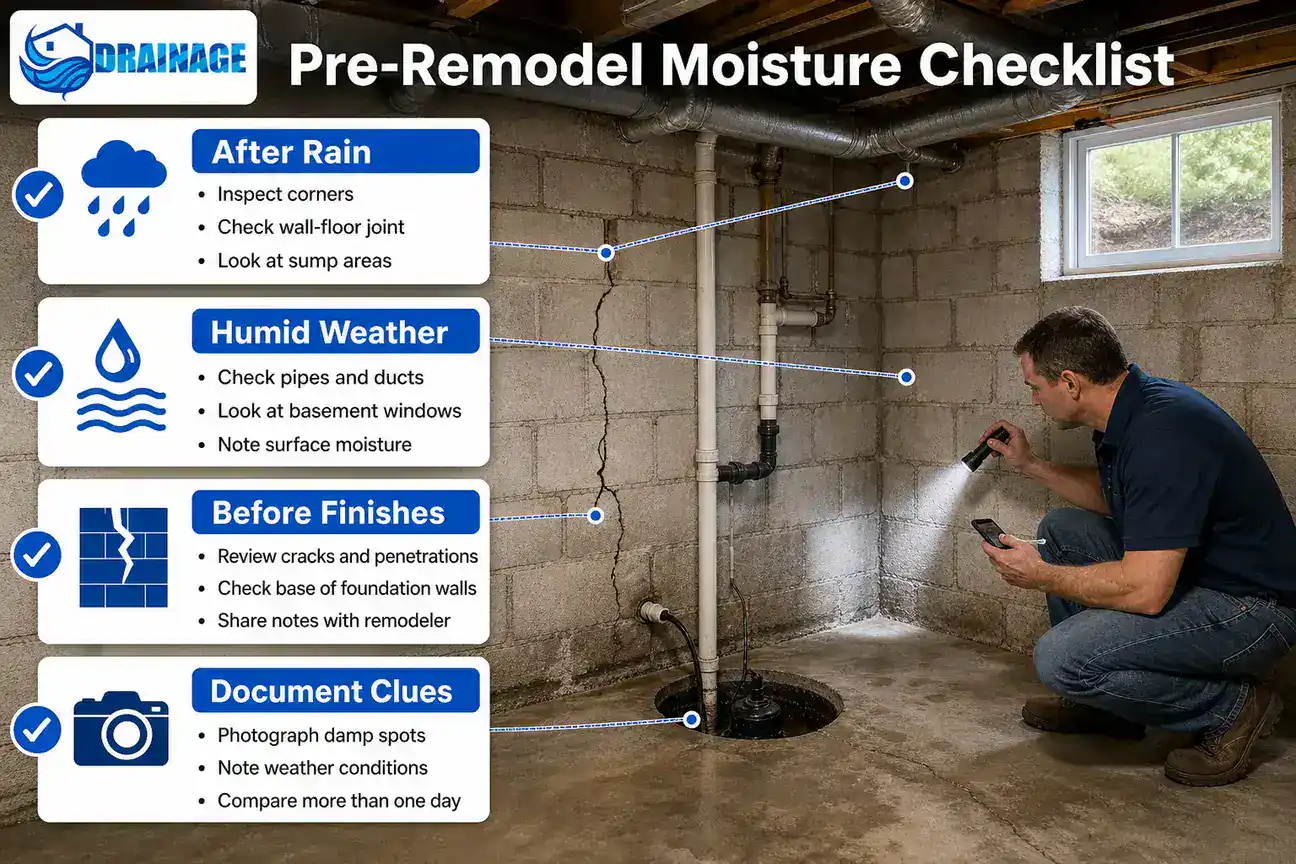
A careful checklist helps homeowners make better decisions without guessing. Use this process before drywall, flooring, insulation, cabinets, or built-ins are installed. If you are already working with a remodeling contractor, share your notes so moisture questions are handled before materials cover the evidence.
- Inspect after rain. Walk the basement after a hard rain and again after a longer wet period. Look at corners, the wall-floor joint, cracks, penetrations, sump areas, and the base of foundation walls.
- Inspect during humid weather. Look for condensation on pipes, ducts, windows, masonry walls, and the slab. Note whether moisture forms on the surface rather than emerging from a joint or crack.
- Look for old basement water damage. Check for staining, peeling paint, efflorescence, rust, swollen trim, damaged storage boxes, damp carpet, musty odors, and marks at the bottom of walls.
- Check gutters and downspouts. Make sure roof water is collected and directed away from the foundation, not discharged beside a basement wall.
- Evaluate grading and slope. Look for soil, mulch, patios, sidewalks, or driveway edges that send water toward the house.
- Look for standing water outside. Persistent wet spots near the foundation may point toward surface drainage issues or compacted soil that needs evaluation.
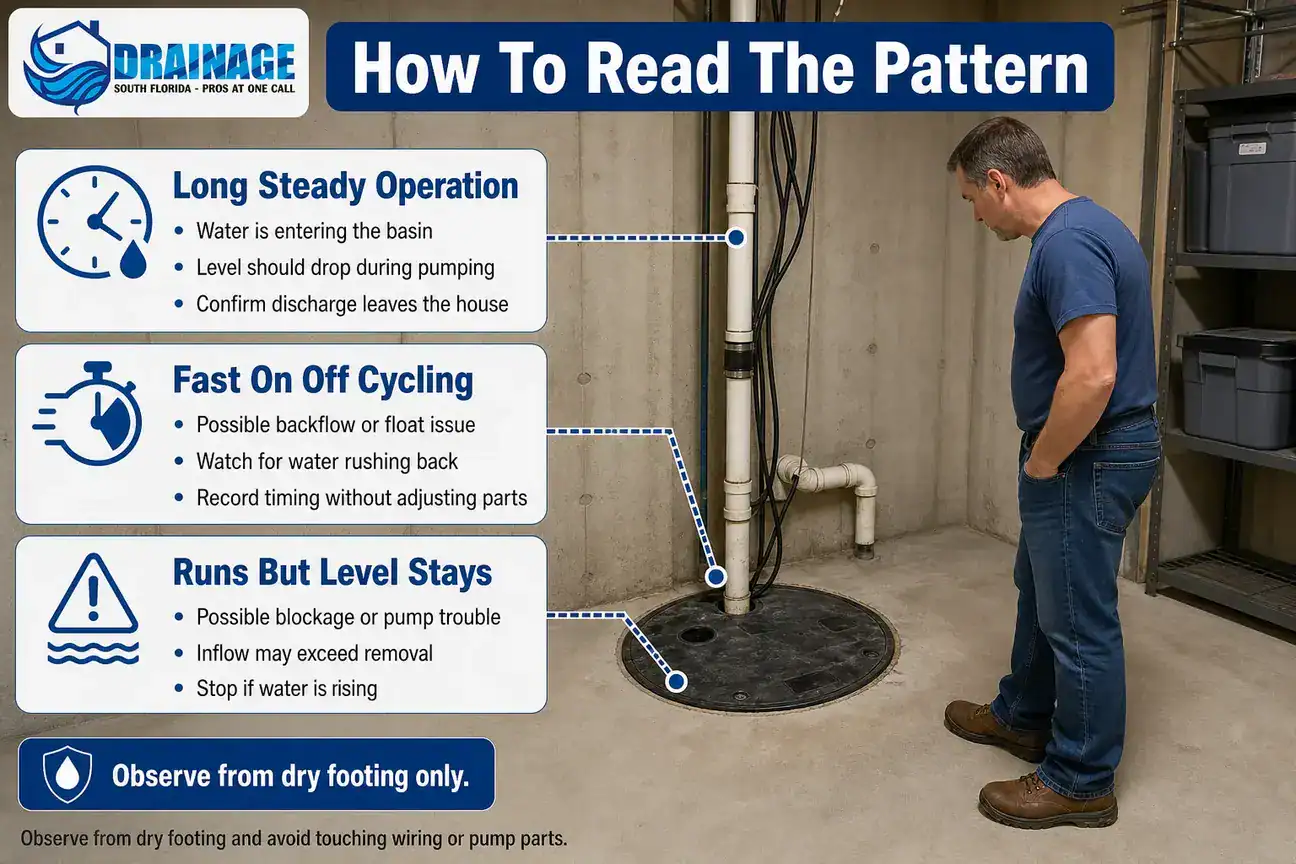
- Check sump equipment if present. Look at the basin, pump, visible discharge line, power source, and any accessible interior drain components. Do not rely on a sump pump alone as proof the basement is ready to finish.
- Separate plumbing clues. Note whether water appears below pipes, drains, appliances, bathrooms, laundry areas, or mechanical equipment. Call the appropriate specialist when plumbing is suspected.
- Photograph and date recurring moisture. Photos taken before and after rain can help an inspector understand timing and location.
- Do not cover damp surfaces. Avoid installing drywall, insulation, flooring, cabinets, or vapor-sensitive finishes over an unresolved moisture condition.
- Ask about permits and code questions. Basement living-space conversion may involve egress, electrical, ventilation, structural, and other issues outside drainage work. Confirm requirements with the proper local authority and qualified trades.
- Use caution around electrical hazards. If water is near outlets, service equipment, extension cords, appliances, or energized systems, avoid entering the area until it is safe and the proper professional has evaluated the risk.
This checklist is not a guarantee that every hidden condition has been found. It is a practical way to gather clues before an on-site inspection and before finish materials make the basement harder to evaluate. If the checklist shows recurring dampness, a basement moisture inspection should happen before finish selections are finalized.
Why homeowners ask whether to waterproof basement first
The question usually comes up when a homeowner has a remodeling plan but sees warning signs: a wet corner, damp block, a musty smell, water after storms, or unexplained staining. The instinct is to ask whether to waterproof basement first or keep the project moving and deal with moisture later.
In most cases, the better order is to investigate first. Waterproofing is not one product or one universal method. It may involve exterior drainage, foundation waterproofing, interior collection, sump evaluation, moisture control, or a combination that fits the actual water source. The right approach depends on site conditions, foundation construction, access, discharge options, and whether the issue is seepage, condensation, plumbing, or something else.
For example, if roof water is dumping beside the foundation, the first conversation may involve gutters, downspout discharge, grading, and yard drainage. If water reaches the interior perimeter despite exterior management, an interior drain system and sump pump may be evaluated. If the foundation wall itself is allowing seepage, foundation waterproofing may be part of the discussion. If the primary concern is humidity and dampness, basement moisture control may be the better starting point.
Asking whether to waterproof basement first is useful when it leads to diagnosis, not guesswork. A homeowner may need drainage corrections, waterproofing work, humidity control, plumbing repair, or a structural evaluation, depending on the evidence. That decision should come before new finishes make access harder.
That is why “waterproof basement first” should not mean choosing a random system before diagnosis. It should mean resolving the moisture question before the remodel hides the evidence.
Moisture patterns and possible next steps
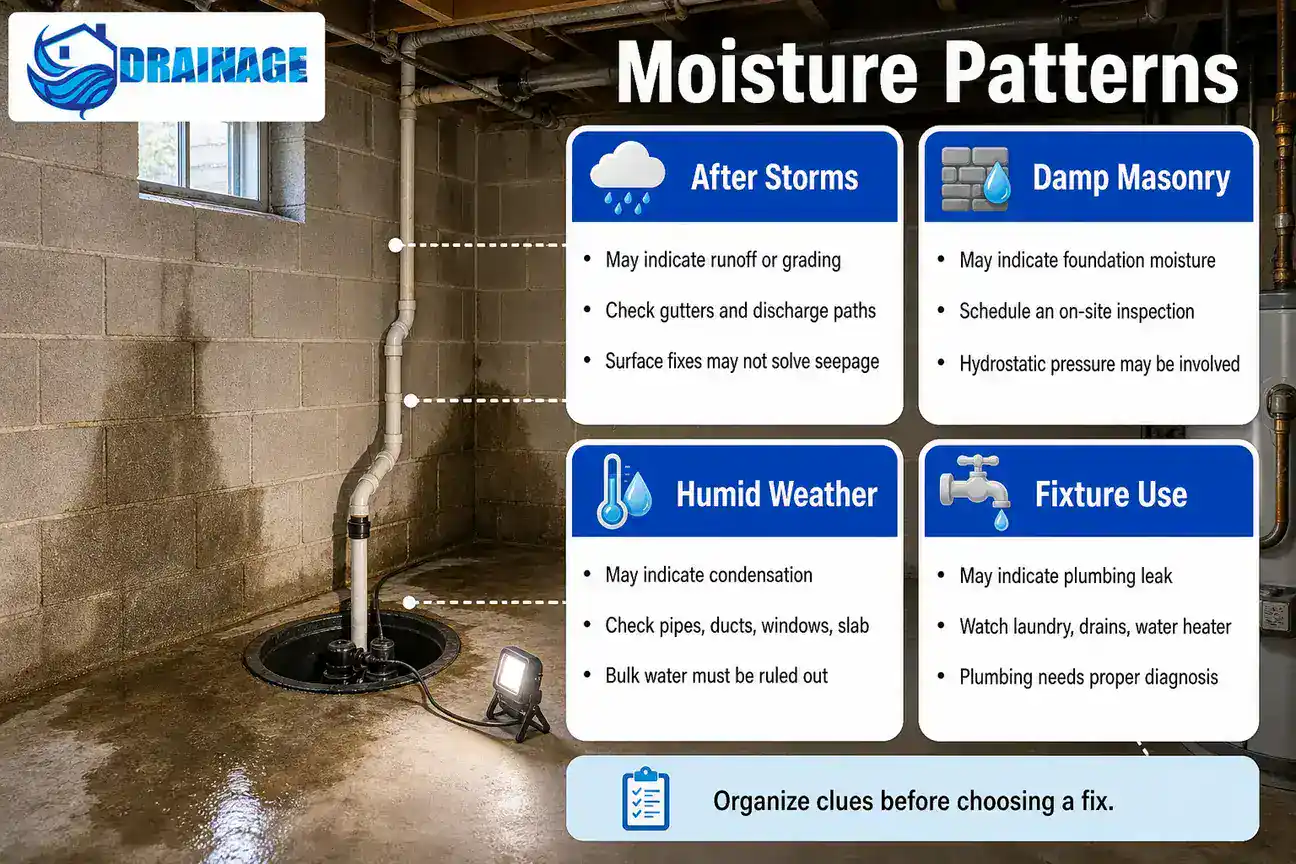
The table below is not a diagnosis. It is a homeowner-friendly way to organize what you are seeing before a professional inspection. Use it to think through possible categories of response, not as a promise that one fix applies to every basement.
| Observed pattern | What it may indicate | Possible next step | Important limitation |
|---|---|---|---|
| Water after storms near one wall or corner | Roof runoff, poor grading, saturated soil, or foundation seepage | Inspect gutters, downspouts, slope, discharge paths, and foundation walls | Surface fixes may not address water already entering below grade |
| Damp masonry or floor with no obvious plumbing source | Foundation moisture, seepage, or hydrostatic pressure | Schedule an on-site drainage and waterproofing evaluation | The same dampness can also involve condensation or hidden plumbing |
| Water beads on cold walls, pipes, ducts, or slab | Condensation from humid air contacting cool surfaces | Measure humidity and evaluate air movement, dehumidification, and other moisture sources | Do not assume condensation is the only issue without checking for bulk water |
| Water below a supply line, drain, appliance, or water heater | Plumbing or appliance leak | Contact a plumber or the appropriate trade | Waterproofing does not repair plumbing leaks |
| Water reaching the interior perimeter | Water entering at the wall-floor joint or foundation perimeter | Evaluate crawl space and basement waterproofing, interior drainage, and sump options | Interior collection does not replace diagnosis of exterior water sources |
| Concentrated runoff across the yard or toward the home | Surface or subsurface drainage problem | Consider whether French drain installation or other drainage design fits the site | Discharge must be appropriate and should not be routed onto a neighbor’s property or into a sanitary sewer |
| Major wall movement, displacement, settlement, or widening cracks | Possible structural concern | Stop remodeling and consult a structural engineer | Drainage work is not structural engineering or foundation structural repair |
What a basement moisture inspection should cover
A basement moisture inspection should connect indoor evidence with outdoor conditions. The inspector should not simply look at one damp spot and sell a one-size-fits-all answer. The better question is: where is the water coming from, where is it going, and what happens during the weather or household conditions that trigger it?
Inside, that means checking the wall-floor joint, visible cracks, block or concrete walls, slab edges, sump equipment, interior drains if present, mechanical areas, and signs of old basement water damage. It also means asking when the moisture appears: after rain, during humid weather, after laundry, after a plumbing fixture runs, or only in one season.
Outside, the inspection should look at grading, roof runoff, downspout discharge, drainage paths, patios, walkways, low spots, soil against the foundation, and places where water may be concentrated. A complete basement moisture inspection should compare the inside evidence with exterior water paths instead of treating the wet spot as an isolated clue.
For a homeowner planning a basement before remodeling, the inspection should also consider access. If a future wall will cover a known wet area, the plan should explain how the moisture source will be handled before the wall is installed. If a sump pump or interior drain system will remain, the plan should allow access for future inspection and maintenance.
A true basement moisture inspection is not the same as a quick glance at flooring options. It is a source-finding process. It should help separate drainage and waterproofing concerns from plumbing issues, structural concerns, and general remodeling questions.
Where drainage and waterproofing fit into the remodel plan
Once the water source is better understood, the remodel plan can be sequenced more intelligently. Some homes need exterior drainage corrections before interior finishes. Some need an interior drain system and sump pump evaluation. Some need foundation waterproofing. Some have condensation and humidity issues that require moisture-control strategies. Some have plumbing or structural concerns that need another professional first.
Basement moisture control can be relevant when the concern is dampness, humidity, condensation, or moisture conditions that need to be managed before finishes are selected. This does not mean every damp basement has the same cause. It means moisture should be part of the remodeling plan, not an afterthought.
Foundation waterproofing may be considered when the foundation assembly is allowing moisture through walls, cracks, joints, or other below-grade areas. Existing cracks or movement may also require evaluation by a structural engineer before waterproofing decisions are made.
Crawl space and basement waterproofing may be relevant when water is reaching the inside of the foundation or when a basement or crawl-space system is needed to collect and manage water that enters. If a crawl space connects to the basement environment, damp crawl-space conditions can also affect the overall moisture picture.
French drains may fit certain yard drainage or subsurface-water patterns, especially where water needs to be collected and directed to an appropriate discharge point. A French drain is not a substitute for plumbing repair, structural engineering, or every type of basement waterproofing.
Drainage system inspections matter after systems are installed. For internal drain systems installed by Drainage & Waterproofing Solutions, LLC, the company offers 6-month and yearly maintenance inspections for $150 per appointment, including the internal drain system, sump pump, and dehumidifier inspection with filter change. That maintenance inspection is different from a free estimate for new work.
If you are unsure which category fits your home, Drainage & Waterproofing Solutions, LLC can provide a free written estimate within 60 miles of the Raleigh/Garner area. The estimate includes an on-site inspection, a detailed written plan, a written quote, and an estimated timeline. You can request a free estimate or call (919) 508-7503 during business hours. Outside the 60-mile radius, a $200 trip/estimate charge applies.
When to bring in a different professional
Basement moisture work overlaps with other parts of a home, but it does not replace every trade. A good plan should say when another professional is needed instead of stretching drainage and waterproofing beyond what they are meant to do.
Call a plumber when the evidence points to a supply leak, drain leak, water heater issue, sewer or septic concern, appliance leak, or water that appears when fixtures are used. Plumbing problems can damage finished basements, but they are not solved by foundation waterproofing.
Call a structural engineer when you see significant movement, displacement, settlement, widening cracks, or other structural changes. Drainage & Waterproofing Solutions, LLC does not provide structural engineering, piering, underpinning, wall bracing, or foundation structural repair.
Call the proper electrical professional when water affects outlets, wiring, panels, appliances, or energized equipment. Do not enter flooded areas near electrical systems. Safety comes before investigation.
For mold concerns, follow EPA guidance: fix the moisture source and clean up appropriately. Drainage & Waterproofing Solutions, LLC does not provide mold testing, mold remediation, or health assessments.
For code, permit, occupancy, egress, electrical, ventilation, radon, and living-space conversion questions, confirm requirements with your local building department and qualified professionals. Moisture control is important, but it does not automatically make a basement suitable for occupancy.
When is the basement ready for finishes?
No article can certify that a basement is ready for remodeling. The right answer depends on what the inspection finds, how the basement behaves during rain and humid weather, and what the remodeling plan includes. Still, there are practical milestones to meet before finishing begins.
First, the likely water source should be identified. If the basement has active seepage, unexplained dampness, or recurring basement water damage, do not assume new materials will solve it. The remodel should wait until the source has been addressed or the plan clearly accounts for it.
Second, plumbing concerns should be separated from drainage concerns. A leaking pipe, appliance, or drain line needs the appropriate repair before wall and floor finishes cover the area.
Third, exterior drainage and discharge paths should be evaluated. Water flowing toward the foundation, short downspouts, clogged gutters, low spots, or concentrated runoff can continue affecting a finished basement if left unresolved.
Fourth, the basement should be observed through relevant conditions. If moisture only appears during heavy rain, one dry week is not enough information. If condensation appears during humid weather, monitor humidity and surface conditions when that weather returns.
Fifth, finish materials and construction details should account for moisture and condensation control. EPA moisture-control guidance emphasizes that moisture problems can involve water entry, air movement, vapor movement, and condensation. In basement remodeling, those issues should be considered before materials are enclosed.
Finally, any structural, permit, electrical, plumbing, mold, radon, or occupancy questions should be handled by the proper professionals. A basement can be improved without promising that any system makes it permanently dry or automatically suitable as living space.
A practical sequence for a safer basement remodeling project
If you are planning basement work, use a step-by-step sequence instead of jumping straight to finishes. This keeps the project practical and reduces the chance that new materials conceal an old problem.
- Document what you see. Photograph damp spots, staining, seepage, condensation, and sump activity. Date the photos and note the weather or household activity.
- Check the outside first. Look at gutters, downspouts, grading, patios, walkways, soil height, and places where stormwater concentrates near the house.
- Separate plumbing possibilities. Watch for leaks near fixtures, mechanical equipment, laundry areas, bathrooms, and appliances.
- Schedule a basement moisture inspection if the source is unclear. An on-site inspection can connect indoor symptoms with exterior drainage and foundation conditions.
- Choose the moisture-control approach that matches the source. This may involve grading, drainage, interior collection, sump evaluation, foundation waterproofing, dehumidification, or another appropriate step.
- Observe performance before covering the area. Give the basement a chance to show how it behaves during the conditions that caused the concern.
- Coordinate with remodelers and other trades. Make sure access, maintenance, permits, and safety issues are not blocked by the finish plan.
This sequence helps answer the “waterproof basement first” question in a practical way. It does not mean every basement needs major work. It means the moisture decision should come before materials hide the evidence.
How Drainage & Waterproofing Solutions, LLC can help
Drainage & Waterproofing Solutions, LLC is a locally owned and family operated drainage, waterproofing, and crawl space contractor serving Raleigh, Garner, and the surrounding Triangle and central North Carolina area. The company provides basement moisture control, foundation waterproofing, crawl space and basement waterproofing, French drains, and drainage system inspections for the systems it installs.
The company’s role is to evaluate water-source clues, explain drainage and waterproofing options, and provide a written plan when the issue falls within its confirmed services. It does not provide plumbing repair, structural engineering, foundation structural repair, mold testing, mold remediation, radon mitigation, or emergency service.
If you are deciding whether to finish basement moisture concerns now or move ahead with remodeling, an on-site inspection can help you make a better sequencing decision. A free estimate within 60 miles of Raleigh/Garner includes an on-site inspection, a written plan, a written quote, and an estimated timeline. To get started, contact Drainage & Waterproofing Solutions, LLC or call (919) 508-7503.
This article is general homeowner information. The right drainage or waterproofing solution depends on an on-site inspection of your property.
Frequently Asked Questions
Can I finish a basement that only gets damp during heavy rain?
Usually, the moisture source should be investigated and addressed before finishing. Rain-related dampness may involve grading, gutters, downspouts, surface drainage, soil saturation, or foundation seepage. A basement that is dry on ordinary days can still have an active moisture problem during the weather conditions that matter most.
How can I tell whether basement moisture is condensation or seepage?
Condensation is usually surface moisture that forms when humid air contacts a cooler wall, pipe, duct, window, or slab. Seepage usually appears to come from a crack, joint, wall, floor, or the wall-floor connection. These clues are not a definite diagnosis, so document when the moisture appears and have the area evaluated if the source is unclear.
Should grading be corrected before installing an interior drain?
Exterior grading and drainage should be evaluated before choosing an interior system because water flowing toward the house can contribute to basement moisture. An interior drain may still be appropriate, but the sequence depends on site conditions, foundation construction, discharge options, and the actual water source.
Does foundation waterproofing address plumbing leaks?
No. Plumbing leaks need plumbing diagnosis and repair. Foundation waterproofing and drainage work address water related to soil, weather, grading, foundation assemblies, or drainage conditions; they do not repair supply lines, drains, sewer or septic components, water heaters, or appliance leaks.
Can drywall hide a basement water problem?
Yes. Drywall, framing, insulation, trim, and flooring can hide staining, seepage, damp framing, condensation, and old water damage. They can also make later diagnosis and repairs more disruptive because materials may need to be opened or removed to find the water source.
When should a structural engineer inspect a basement?
Call a structural engineer when you see significant wall movement, displacement, settlement, widening cracks, or other structural changes. A drainage or waterproofing article should not diagnose structural failure from a description or photo, and waterproofing is not the same as foundation structural repair.
What should I inspect before installing basement flooring?
Check for floor seepage, dampness at the perimeter, condensation, plumbing leaks, prior basement water damage, sump operation, and drainage performance after rain. Do not cover an unresolved moisture condition with flooring, underlayment, or cabinets.
Does fixing basement moisture make the space suitable for occupancy?
Not automatically. Moisture control is only one part of converting a basement into living space. Egress, ventilation, electrical work, radon, permits, structural conditions, and other requirements may need separate evaluation by the appropriate professionals.
Sources
- EPA: Mold and Your Home
- EPA: Moisture Control Guidance for Building Design, Construction and Maintenance
- EPA: A Brief Guide to Mold, Moisture and Your Home
- Building America Solution Center: Site Drainage Practices to Minimize Localized Flooding
- NC State Extension: Modifying Soil for Plant Growth Around Your Home