Drainage System Inspections Raleigh NC: How Routine Checks Help Protect Basements, Crawl Spaces, Sump Pumps, and Foundations
Drainage system inspections Raleigh NC homeowners can trust help protect the home before small water-control issues become expensive basement, crawl space, foundation, or moisture problems. A drainage system may be installed correctly, but it still needs to keep working through heavy rain, clay soil movement, seasonal storms, debris, sump pump wear, discharge-line issues, and humidity changes.
For homeowners in Raleigh, Garner, Cary, Apex, Durham, Chapel Hill, Clayton, Fuquay-Varina, Holly Springs, Wake Forest, Wilson, Fayetteville, Southern Pines, and surrounding Central North Carolina communities, water management is not something to ignore after installation. A drainage system protects the home only when the system remains clear, active, and properly routed.
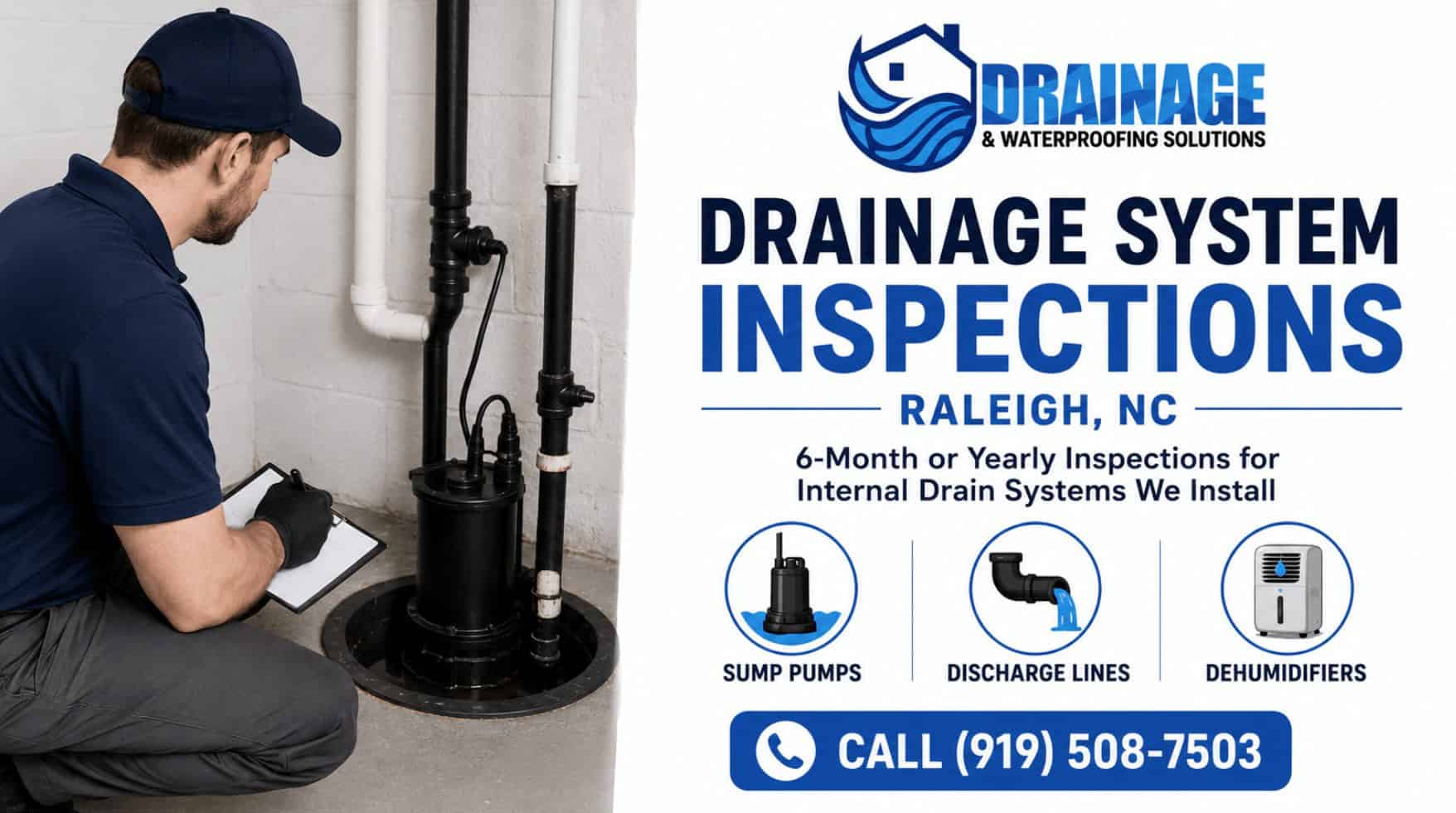
Drainage & Waterproofing Solutions LLC provides drainage system inspections for internal drain systems the company installs. These inspections can be scheduled on a 6-month or yearly basis and include a professional review of key waterproofing components such as internal drain systems, sump pumps, discharge lines, dehumidifiers, and related moisture-control equipment. The company is locally owned, family operated, and focused on helping homeowners protect their homes from water damage with practical, long-lasting solutions.
If your home has an internal drainage system, sump pump, basement waterproofing system, crawl space drainage, or dehumidifier setup, call (919) 508-7503 or request service from Drainage & Waterproofing Solutions LLC.
What Is a Drainage System Inspection?
A drainage system inspection is a professional review of the components that help move water away from vulnerable areas of the home. This may include internal drain systems, sump pumps, discharge lines, dehumidifiers, filters, moisture-control components, and visible signs that water is not moving as intended.
Drainage system inspections may include:
- Internal drain system inspection
- Drain line review
- Piping and connection check
- Clog or obstruction review
- Sump pump test
- Float switch check
- Backup battery review when applicable
- Discharge line inspection
- Dehumidifier performance check
- Filter replacement
- Basement moisture review
- Crawl space moisture review
- Signs of water pooling
- Signs of basement seepage
- Signs of crawl space humidity
- Maintenance recommendations
- Repair recommendations when needed
The goal is not to wait until the basement floods or the crawl space smells musty. The goal is to confirm that the drainage and waterproofing system is still working before water damage appears.
Drainage System Inspections Raleigh NC: Why They Matter
Drainage system inspections Raleigh NC homeowners schedule on a routine basis can help protect the home from recurring moisture problems. Water intrusion is one of the most serious threats to basements, crawl spaces, foundation walls, floor systems, and stored belongings.
A properly installed drainage system may help direct water away from the foundation or collect water before it causes damage. But if the system becomes clogged, the sump pump fails, the discharge line backs up, or the dehumidifier stops working, the home may become vulnerable again.
Routine drainage inspections can help support:
- Better basement protection
- Better crawl space moisture control
- Earlier detection of clogs
- Sump pump reliability
- Dehumidifier performance
- Reduced risk of musty odors
- Better foundation-adjacent protection
- Longer system lifespan
- Better storm-season readiness
- Fewer surprise water problems
- Peace of mind during heavy rain
A drainage system is not “set it and forget it.” Like other home systems, it should be checked and maintained.
Common Signs Your Drainage System Needs Inspection
Some drainage issues are obvious. Others develop quietly. A sump pump may still turn on but not discharge properly. A dehumidifier may run but not control humidity well. A drain line may be partially clogged before water backs up.
Common warning signs include:
- Sump pump running more often than usual
- Sump pump not turning on
- Strange sump pump noises
- Water pooling near the basement perimeter
- Damp basement walls
- Musty odors
- Crawl space humidity
- Standing water in the crawl space
- Water stains after storms
- Mold-like growth near damp areas
- Dehumidifier not keeping humidity down
- Dehumidifier filter looks dirty
- Drainage system was installed more than 6–12 months ago
- Discharge line appears blocked
- Water discharges too close to the home
- Basement feels humid
- Crawl space insulation feels damp
- Drain system gurgling or backing up
- Previous waterproofing system has not been checked recently
- Heavy storms are forecast
- You are preparing to sell the home
If you notice these signs, a drainage system inspection can help identify whether maintenance, repair, sump pump service, discharge correction, dehumidifier work, or a larger waterproofing review is needed.
What Systems Should Be Inspected?
Drainage system inspections are most helpful when the home already has a waterproofing or moisture-control system in place. Drainage & Waterproofing Solutions LLC offers 6-month and yearly inspections for internal drain systems the company installs.
Systems and components that may need inspection include:
| Component | Why It Matters | What Homeowners Should Know |
|---|---|---|
| Internal drain system | Collects and directs water away from vulnerable basement or crawl space areas | Clogs or obstructions can reduce performance |
| Sump pump | Pumps collected water out before it causes damage | Mechanical failure can leave the home vulnerable |
| Discharge line | Carries water away from the foundation | Poor discharge can send water back toward the home |
| Backup battery | Helps during outages when applicable | Battery condition should be checked before storms |
| Dehumidifier | Helps control moisture and humidity | Filters and performance should be maintained |
| Crawl space drain system | Helps control water under the home | Must remain clear and properly routed |
| Basement drainage system | Helps manage perimeter water | Should be checked after storms and seasonally |
| Foundation drainage support | Helps move water away from foundation walls | Drainage problems may affect waterproofing performance |
Every home is different. The inspection should be based on the systems installed, the moisture history, and the current condition of the basement or crawl space.
What Is Included in a Drainage System Inspection?
A professional drainage system inspection should focus on the system components that keep the basement or crawl space protected. Drainage & Waterproofing Solutions LLC describes inspections as an in-depth assessment of the key parts of the internal drain system.
A typical inspection may include:
- Internal drain system inspection
The drain system is reviewed for clogs, obstructions, piping issues, connection concerns, leaks, damage, and proper water flow.
Drainage flow review
The technician checks whether water is being directed away from the home’s foundation as intended.
Sump pump test
The sump pump is tested to confirm that it turns on and moves water properly.
Float switch check
The float switch is reviewed because a stuck or failed float can prevent the pump from activating.
Discharge line inspection
The discharge line is checked to confirm water is leaving the system and not draining back toward the foundation.
Backup battery review when applicable
If the system includes a battery backup, the backup system should be checked for readiness.
Dehumidifier performance review
The dehumidifier is checked to confirm that it is removing moisture effectively.
Filter replacement
A dirty dehumidifier filter can reduce airflow and performance, so filter replacement may be included.
Moisture and warning-sign review
The technician looks for signs of water pooling, humidity, odors, staining, or system stress.
Maintenance and repair recommendations
If the inspection reveals an issue, the homeowner receives recommendations for repair or maintenance.
The purpose is simple: keep the drainage and waterproofing system working before water damage appears.
How Often Should Drainage Systems Be Inspected?
Drainage & Waterproofing Solutions LLC offers drainage system inspections on a 6-month or yearly basis for internal drain systems the company installs. The right schedule depends on your home, system age, moisture history, sump pump use, drainage demands, and storm exposure.
A 6-month inspection may make sense if:
- The home has a history of basement water
- The crawl space has had moisture problems
- The sump pump runs often
- The home is in a low area
- Heavy storms affect the property
- Water previously entered near foundation walls
- The homeowner wants maximum peace of mind
- The basement is finished or used for storage
- The system is older or heavily used
- The home is being prepared for sale
- A yearly inspection may make sense if:
- The drainage system is newer
- The home has been dry since installation
- The sump pump does not run often
- The basement or crawl space is monitored
- The homeowner wants routine preventive maintenance
- The system is part of seasonal home care
The best inspection schedule is the one that keeps the system checked before storm season and before problems return.
Drainage System Inspection vs. Drainage System Repair
Inspection and repair are not the same service. An inspection is a professional review of the current system. A repair is the work needed if the inspection finds a problem.
| Service | Best For | What Homeowners Should Know |
|---|---|---|
| Drainage system inspection | Routine maintenance, system review, early problem detection | Helps identify issues before they become expensive |
| Drainage system repair | Clogs, damaged piping, failed components, pump issues | May be recommended after inspection |
| Sump pump service | Pump performance, float switch, discharge problems | Important before storm season |
| Dehumidifier service | Humidity control and filter maintenance | Helps reduce musty odors and moisture |
| Basement waterproofing | Active basement water or recurring seepage | May be needed if the system is missing or insufficient |
| Crawl space waterproofing | Standing water, humidity, or moisture under the home | May include drainage, vapor barrier, sump pump, or encapsulation |
| Foundation waterproofing | Water entering through foundation walls | May require exterior work and drainage support |
An inspection gives the homeowner clarity. Repair only happens if the system needs it.
Why Sump Pump Inspection Matters
A sump pump is one of the most important parts of many basement and crawl space drainage systems. It collects water from the drain system and pumps it away before it can flood the home or create moisture problems.
A sump pump inspection may include:
- Confirming the pump turns on
- Checking the float switch
- Listening for unusual noises
- Checking for wear and tear
- Reviewing the discharge line
- Looking for debris in the pit
- Confirming water is moving properly
- Checking backup battery operation when applicable
- Looking for signs of mechanical failure
- Recommending service or replacement when needed
A sump pump can fail at the worst time: during heavy rain. Regular inspection helps reduce that risk.
Why Dehumidifier Inspection and Filter Changes Matter
A dehumidifier can be an important part of basement and crawl space moisture control. It helps keep humidity lower, reduces musty odors, and supports a cleaner environment.
A dehumidifier inspection may include:
- Checking whether the unit turns on
- Reviewing moisture-removal performance
- Inspecting for mechanical issues
- Replacing the filter
- Checking airflow
- Reviewing drainage or condensate routing
- Looking for humidity warning signs
- Recommending service when needed
A dirty filter can limit airflow and reduce performance. If the dehumidifier is part of your moisture-control system, it should be checked regularly.
Why Discharge Line Inspection Matters
A sump pump or drain system must send water somewhere safe. If the discharge line is clogged, crushed, disconnected, frozen, or routed poorly, water may not leave the home properly.
Discharge line problems can cause:
- Water returning toward the foundation
- Sump pump overwork
- Basement or crawl space moisture
- Yard pooling
- Erosion near the outlet
- Short cycling
- Reduced pump performance
- Recurring water problems after storms
The discharge route is just as important as the drain or pump. Water must be moved away from the home, not simply moved from one problem area to another.
How Much Does a Drainage System Inspection Cost?
Drainage & Waterproofing Solutions LLC lists drainage system inspections at $150 per appointment for 6-month or yearly inspections. This inspection fee applies to the routine system inspection service described on the company’s drainage system inspection page.
The cost may be affected if the inspection reveals that additional maintenance, repairs, pump replacement, drainage correction, dehumidifier service, or waterproofing work is needed. The inspection is designed to identify whether the system is operating properly and whether recommendations are needed.
For broader drainage or waterproofing problems outside a routine inspection, Drainage & Waterproofing Solutions LLC provides free estimates within a 60-mile radius of the Raleigh/Garner area, according to the company’s contact page.
What Homeowners Should Do Before a Drainage System Inspection
Most homeowners do not need to do much before an inspection. Simple preparation helps the technician access the system and understand any recent concerns.
Before a drainage system inspection:
- Clear access to the sump pump
- Clear access to the drain system area
- Move stored items away from basement walls
- Unlock crawl space access if needed
- Share recent water concerns
- Mention unusual sump pump noises
- Point out musty odors
- Share photos from recent storms
- Mention power outages or backup pump concerns
- Identify dehumidifier issues
- Note whether the basement or crawl space feels humid
- Keep pets secure during the visit
- Move vehicles if they block access
- Ask whether your system should be checked every 6 months or yearly
You do not need to diagnose the issue. The inspection is meant to confirm system performance and identify possible concerns.
How Long Does a Drainage System Inspection Take?
The timeline depends on the system type, access, crawl space or basement conditions, sump pump location, dehumidifier setup, discharge-line accessibility, and whether any problems are found.
| Inspection Type | Typical Scope | Timeline Factors |
|---|---|---|
| Basic internal drain inspection | Drain lines, visible system areas, water-flow concerns | Access and system layout matter |
| Sump pump inspection | Pump test, float switch, discharge review | Pit access and pump condition matter |
| Dehumidifier inspection | Performance check and filter replacement | Unit location and condition affect timing |
| Crawl space system review | Drainage, moisture signs, sump or dehumidifier components | Crawl space height and access matter |
| Basement system review | Internal drain, sump pump, moisture signs | Finished areas may limit visibility |
| Storm-readiness check | System performance before rainy season | Best scheduled before heavy storm periods |
| Post-storm inspection | Review after unusual water activity | Recent water signs may guide recommendations |
Drainage & Waterproofing Solutions LLC can explain the expected inspection timeline when scheduling.
When to Schedule a Drainage System Inspection
Routine inspections are helpful because water problems often appear during the least convenient time. The best time to find a weak sump pump, dirty filter, or drainage obstruction is before the next heavy rain.
Good times to schedule include:
- Every 6 months
- Once per year
- Before storm season
- After a major rain event
- Before finishing a basement
- Before storing valuables in a basement
- Before selling the home
- After buying a home with a drainage system
- When the sump pump sounds different
- When the basement smells musty
- When a crawl space feels humid
- When water stains appear
- When the dehumidifier filter has not been changed
- When the discharge line seems blocked
- When the system has not been checked recently
A drainage system inspection is a preventive step. It is much easier to maintain a working system than recover from a flooded basement or wet crawl space.
Drainage System Inspections for Raleigh, Garner, Cary, Durham, and Central NC
Drainage & Waterproofing Solutions LLC serves Raleigh, Garner, Cary, Apex, Chapel Hill, Clayton, Durham, Fayetteville, Fuquay-Varina, Holly Springs, Southern Pines, Wake Forest, Wilson, and surrounding Central North Carolina communities.
Local homes often benefit from drainage system inspections because of:
- Heavy rainfall
- Humid summers
- Clay soil
- Stormwater pooling
- Yard drainage problems
- Basement seepage history
- Crawl space moisture
- Older waterproofing systems
- Sump pump dependency
- Downspout discharge concerns
- Finished basement storage
- Home inspection findings
- Foundation water pressure
- Seasonal storms
- Long-term home protection needs
A local drainage and waterproofing company understands how Central North Carolina soil, rain, grading, and home construction affect drainage systems.
How Drainage & Waterproofing Solutions LLC Helps Homeowners
Drainage & Waterproofing Solutions LLC is locally owned, family operated, and focused on helping homeowners protect their homes from water damage. The company provides drainage system inspections, basement waterproofing, basement moisture control, foundation waterproofing, French drains, crawl space repair, sealed crawl spaces, retaining walls, and related water-management services.
Homeowners choose Drainage & Waterproofing Solutions LLC for:
- Drainage system inspections
- Internal drain system review
- Sump pump inspection
- Discharge-line inspection
- Dehumidifier inspection
- Filter changes
- Basement waterproofing
- Basement moisture control
- Foundation waterproofing
- Crawl space and basement waterproofing
- Sealed crawl spaces
- Crawl space repair and encapsulation
- French drains
- Retaining walls
- Written plans and estimates
- Local Central North Carolina experience
- Peace of mind
The goal is to keep the waterproofing system working before water damage appears.
Anonymized Examples of Drainage System Inspection Situations
Every home is different, but these examples show why Raleigh-area homeowners schedule drainage system inspections.
A Raleigh homeowner with a sump pump that sounded different
A homeowner noticed the sump pump making a different sound during rain. The basement did not flood, but the sound created concern before the next storm. A drainage system inspection helped review the pump, float switch, and discharge line.
A Garner homeowner with a finished basement
A homeowner had a finished basement and wanted peace of mind before storm season. Because finished materials can hide early moisture problems, a routine inspection helped confirm whether the system needed maintenance.
A Cary homeowner with a dehumidifier that was not keeping up
A homeowner noticed the basement felt humid even though the dehumidifier was running. Inspection helped review performance, airflow, and filter condition so the homeowner could understand whether maintenance was needed.
A Wake Forest homeowner preparing to sell
A homeowner wanted to show buyers that the drainage system was being maintained. A routine inspection helped identify system condition before the listing and gave the homeowner clearer next steps.
These examples are educational and not based on identifiable customers. Inspection results, repair needs, timelines, and recommendations depend on system type, access, moisture history, sump pump condition, discharge routing, dehumidifier condition, and home layout.
Schedule a Drainage System Inspection in Raleigh NC
If your home has an internal drain system, sump pump, crawl space drainage, dehumidifier, basement waterproofing system, or recurring moisture history, Drainage & Waterproofing Solutions LLC can help keep your system checked and ready.
Call (919) 508-7503 or schedule a drainage system inspection with Drainage & Waterproofing Solutions LLC.
- Schedule a drainage system inspection
- Request a free estimate
- Review basement waterproofing services
- Explore basement moisture control
- Explore foundation waterproofing
- Learn about French drains
- Explore crawl space and basement waterproofing
- Review sealed crawl space services
- Explore crawl space repair and encapsulation
- Explore retaining walls
- Read more drainage and waterproofing articles
This article is for general information only. Drainage system inspection recommendations depend on system type, system age, sump pump condition, discharge routing, dehumidifier performance, crawl space or basement conditions, water history, and property drainage. Waterproofing and drainage systems should be evaluated by a qualified professional before repair or replacement decisions are made.
FAQs About Drainage System Inspections in Raleigh NC
What is a drainage system inspection?
A drainage system inspection is a professional review of the components that help collect, move, pump, discharge, or control water around a basement or crawl space. It may include internal drains, sump pumps, discharge lines, dehumidifiers, filters, and signs of moisture or system stress.
How often should I schedule a drainage system inspection?
Drainage & Waterproofing Solutions LLC offers 6-month and yearly drainage system inspections for internal drain systems they install. A 6-month schedule may be helpful for homes with a history of water problems, heavy sump pump use, finished basements, or storm concerns.
How much does a drainage system inspection cost?
Drainage & Waterproofing Solutions LLC lists routine drainage system inspections at $150 per appointment for 6-month or yearly inspections. Additional repairs, pump service, dehumidifier work, or waterproofing recommendations would depend on what the inspection finds.
What does a sump pump inspection include?
A sump pump inspection may include testing the pump, checking the float switch, reviewing wear and tear, inspecting the discharge line, confirming water movement, and checking backup battery operation when applicable. The goal is to reduce the chance of pump failure during heavy rain.
Why does my dehumidifier need inspection?
A dehumidifier helps control basement or crawl space humidity. Inspection can help confirm that the unit is working, airflow is adequate, the filter is clean, and moisture is being removed effectively. A dirty filter can reduce performance.
Can a drainage system inspection prevent basement flooding?
A drainage system inspection cannot guarantee a basement will never flood, but it can help identify problems early. Clogs, sump pump issues, discharge problems, and dehumidifier performance issues may be corrected before they contribute to larger moisture problems.
Should I schedule an inspection before storm season?
Yes. Scheduling before storm season can help confirm that the sump pump, internal drain system, discharge line, dehumidifier, and related components are ready before heavy rain. Preventive maintenance is easier than emergency water cleanup.
Do I need an inspection if my basement has stayed dry?
Yes, routine inspections can still be helpful. A dry basement may mean the system is working well, but pumps, filters, lines, and drains can still wear, clog, or lose performance over time. Routine checks help maintain protection.
Can you inspect a crawl space drainage system?
Yes. Drainage & Waterproofing Solutions LLC can review crawl space moisture-control components, internal drain systems, sump pumps, dehumidifiers, and signs of standing water or humidity. Crawl space access and system type affect the inspection scope.
Who should I call for drainage system inspections Raleigh NC?
Call Drainage & Waterproofing Solutions LLC at (919) 508-7503 for drainage system inspections in Raleigh NC, Garner, Cary, Apex, Durham, Wake Forest, Holly Springs, Fayetteville, Southern Pines, and surrounding Central North Carolina communities.
Sources
- Drainage & Waterproofing Solutions LLC
- Drainage & Waterproofing Solutions LLC Contact
- Drainage & Waterproofing Solutions LLC Drainage System Inspections
- Drainage & Waterproofing Solutions LLC Basement Waterproofing
- Drainage & Waterproofing Solutions LLC Basement Moisture Control
- Drainage & Waterproofing Solutions LLC Foundation Waterproofing
- Drainage & Waterproofing Solutions LLC French Drains
- Drainage & Waterproofing Solutions LLC Crawl Space & Basement Waterproofing
- Drainage & Waterproofing Solutions LLC Sealed Crawl Space
- Drainage & Waterproofing Solutions LLC Crawl Space Repair & Encapsulation
- Drainage & Waterproofing Solutions LLC Retaining Walls
- Drainage & Waterproofing Solutions LLC Blog & News
- EPA: A Brief Guide to Mold, Moisture and Your Home
- North Carolina Department of Environmental Quality: Stormwater
- Building America Solution Center: Interior Drainage Plane and Basement Waterproofing