Basement Moisture Control Raleigh NC: How to Stop Dampness, Musty Odors, Mold Risk, and Recurring Water Problems
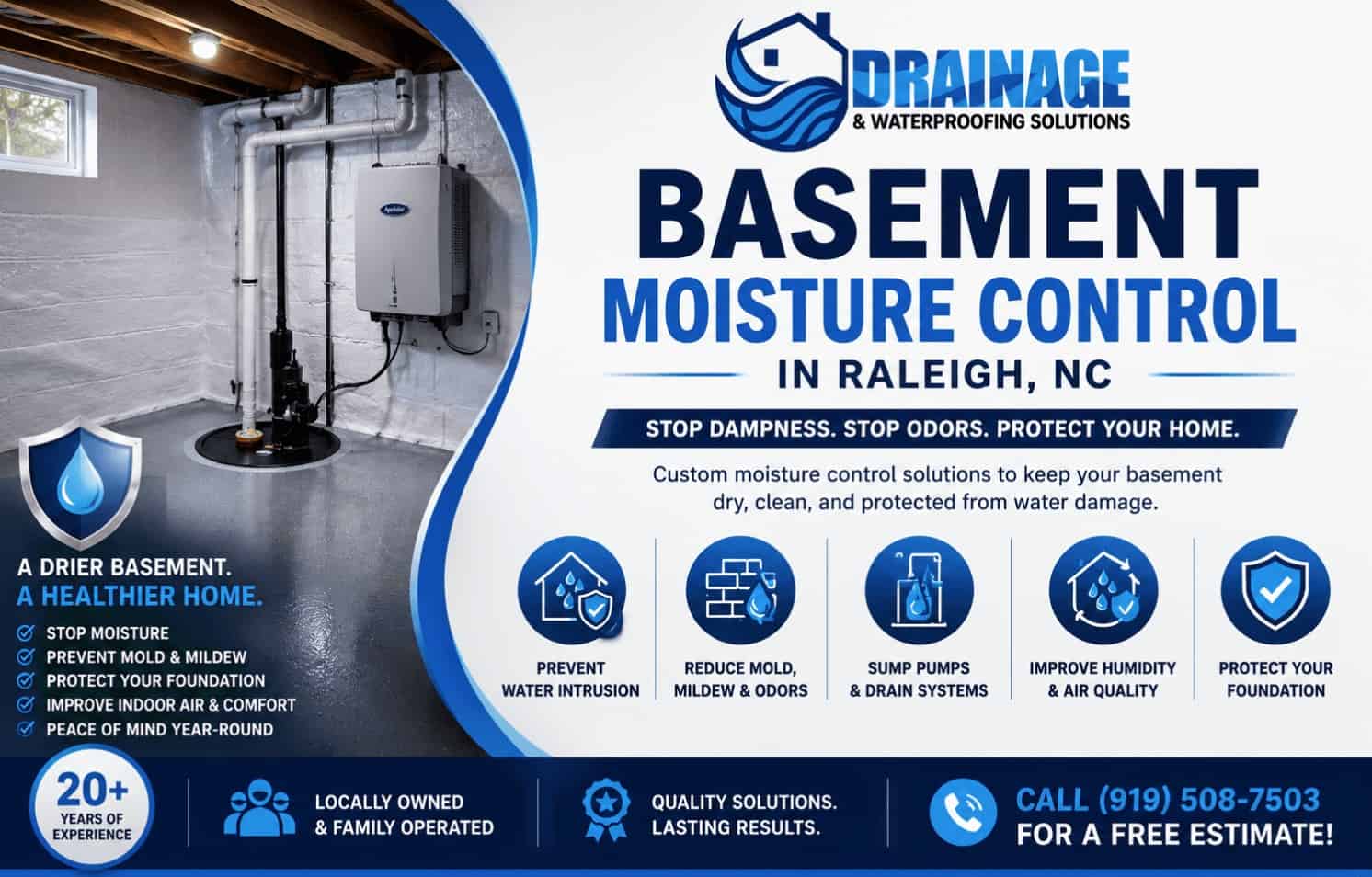
Basement moisture control Raleigh NC helps homeowners protect below-grade spaces from damp walls, musty odors, humidity, seepage, water stains, mold-like growth, damaged belongings, and long-term foundation concerns. A basement does not have to flood to have a moisture problem. Sometimes the first warning sign is a smell. Other times it is peeling paint, white powder on masonry, condensation, damp flooring, or a humid feeling that never fully goes away.
For homeowners in Raleigh, Garner, Cary, Apex, Durham, Chapel Hill, Clayton, Fuquay-Varina, Holly Springs, Wake Forest, Wilson, Fayetteville, Southern Pines, and surrounding Central North Carolina communities, basement moisture is common. Heavy rainfall, clay soil, high humidity, poor grading, foundation cracks, clogged gutters, short downspouts, and failed drainage systems can all push water toward a home.
Drainage & Waterproofing Solutions LLC helps homeowners with basement moisture control, basement waterproofing, foundation waterproofing, French drains, sealed crawl spaces, crawl space repair and encapsulation, retaining walls, and drainage system inspections. The company is locally owned, family operated, and focused on helping homeowners protect their homes from water damage with practical, long-lasting solutions.
If your basement smells musty, feels damp, shows water stains, has condensation, or gets wet after storms, call (919) 508-7503 or request a free estimate from Drainage & Waterproofing Solutions LLC.
What Is Basement Moisture Control?
Basement moisture control is the process of identifying where moisture is coming from and using the right combination of drainage, waterproofing, sealing, ventilation, dehumidification, and repair methods to reduce recurring dampness.
Basement moisture control may include:
- Basement wall inspection
- Foundation crack evaluation
- Interior drainage planning
- Exterior drainage evaluation
- Sump pump planning
- French drain installation
- Basement waterproofing
- Foundation waterproofing
- Basement wall repairs
- Wall sealants
- Window and door sealing
- Downspout discharge improvements
- Yard drainage correction
- Basement humidity control
- Dehumidifier recommendations
- Drainage system inspections
- Crawl space and basement waterproofing
The goal is not to mask the smell or dry one spot temporarily. The goal is to identify the moisture source and create a plan that helps protect the basement, foundation, and surrounding drainage system.
Basement Moisture Control in Raleigh NC: Why It Matters
Basement moisture control in Raleigh NC matters because local homes often deal with a combination of rain, clay soil, humidity, groundwater, and drainage problems. Water can move through small foundation gaps, wall cracks, porous masonry, window wells, the wall-floor joint, or soil pressure around the foundation.
Moisture control can help support:
- A drier basement environment
- Reduced musty odors
- Better protection for stored belongings
- Reduced mold and mildew risk
- Better indoor comfort
- More confidence before finishing a basement
- Better protection for foundation-adjacent areas
- Reduced risk of recurring seepage
- Peace of mind during storm season
- Better home resale confidence
- Long-term water-damage prevention
Basement moisture control is not one single product. It is a strategy. Some homes need active moisture control like sump pumps or dehumidifiers. Others need passive protection like sealing, drainage correction, wall repairs, or exterior waterproofing. Many homes need both.
Common Signs Your Basement Has a Moisture Problem
Basement moisture problems often appear gradually. A homeowner may notice a smell before seeing visible water. A wall may feel cool and damp. A corner may stain after storms. A finished basement may show bubbling paint or soft flooring before the full water source is obvious.
Common warning signs include:
- Musty basement odors
- Damp basement walls
- Water stains
- Efflorescence or white powder on masonry
- Peeling paint
- Bubbling wall coatings
- Blistering drywall or trim
- Condensation on pipes or walls
- Damp carpet or flooring
- Mold-like growth
- High indoor humidity
- Rust on metal items
- Stored boxes feeling damp
- Basement windows leaking
- Water near the wall-floor joint
- Puddles after heavy rain
- Sump pump running often
- Cracks in foundation walls
- Poor yard drainage outside
- Downspouts draining near the home
- Crawl space moisture connected to basement dampness
If these signs appear, a drainage system inspection can help determine whether the moisture is coming from groundwater, poor grading, foundation seepage, window wells, plumbing, humidity, or a failed drainage system.
What Causes Basement Moisture in Raleigh Homes?
Basement moisture can come from several sources at once. That is why a single patch or coating may not solve the full problem. A basement wall may leak because exterior drainage is poor, groundwater is pressing against the foundation, and a small wall crack has become a pathway for moisture.
Common causes include:
- Heavy rainfall
- Clay soil holding water near the foundation
- Poor grading
- Downspouts discharging too close to the home
- Clogged gutters
- Foundation cracks
- Porous concrete or masonry
- Poorly sealed basement walls
- Water draining under the basement floor
- Failed foundation drains
- Hydrostatic pressure
- Basement window leaks
- Gaps around doors or penetrations
- Condensation from humid air
- Poor ventilation
- Plumbing leaks
- Sump pump problems
- Yard drainage problems
- Landscaping that traps water
- Previous repairs that did not solve the source
A lasting basement moisture control plan should address the source of moisture, not just the visible symptom.
Active vs. Passive Basement Moisture Control
Basement moisture control usually falls into two broad categories: active and passive. Active systems remove or manage moisture. Passive systems make it harder for moisture to enter in the first place.
| Moisture Control Type | Examples | What Homeowners Should Know |
|---|---|---|
| Active moisture control | Dehumidifiers, sump pumps, interior drains, diversion drains | Helps remove moisture or water after it appears |
| Passive moisture control | Wall sealants, basement wall repairs, waterproofing, gutters, grading, window/door sealing | Helps reduce moisture entry |
| Exterior drainage | French drains, downspout routing, yard drainage corrections | Helps move water away before it reaches the foundation |
| Foundation waterproofing | Exterior wall protection, drainage board, foundation drains | Helps protect the wall from outside water pressure |
| Basement waterproofing | Interior or exterior water-management systems | May combine active and passive solutions |
| Drainage inspection | Site evaluation, water-source diagnosis, system review | Helps determine what solution is actually needed |
The best solution depends on the inspection. Many recurring basement moisture problems need both active and passive moisture control.
Basement Moisture Control vs. Basement Waterproofing
Basement moisture control and basement waterproofing are closely related, but they are not always the same scope. Moisture control can include humidity management, condensation reduction, sealing, drainage improvements, and dehumidification. Waterproofing focuses more directly on preventing or managing water intrusion.
| Service | Best For | What Homeowners Should Know |
|---|---|---|
| Basement moisture control | Dampness, humidity, musty odors, condensation, light seepage | Often includes diagnosis and a combination of solutions |
| Basement waterproofing | Water intrusion, leaks, perimeter seepage, active water problems | May include interior or exterior waterproofing systems |
| Foundation waterproofing | Water entering through below-grade foundation walls | Often focuses on exterior wall protection and drainage |
| French drains | Groundwater, yard drainage, foundation water movement | Helps redirect water away from problem areas |
| Sealed crawl space | Under-home moisture and humidity | May be needed when crawl space moisture affects the home |
| Drainage system inspection | Unclear moisture source or recurring issues | Helps diagnose before work begins |
A homeowner may need basement moisture control, basement waterproofing, or a combination of both. The right plan depends on whether the issue is humidity, seepage, groundwater, drainage, cracks, or active leaking.
When Basement Moisture Control Is Needed
Basement moisture control may be needed when the basement is not flooding, but the space still feels damp, smells musty, or shows signs of recurring moisture. Waiting until there is standing water can make the repair more expensive and disruptive.
Basement moisture control may be appropriate when:
- The basement smells musty
- Humidity feels high
- Walls feel damp
- Water stains appear after rain
- Paint or coatings peel
- Efflorescence appears on masonry
- A finished basement feels humid
- Stored belongings are getting damp
- Condensation appears on pipes
- Mold-like growth appears
- Small leaks keep returning
- The sump pump runs often
- You plan to finish the basement
- A home inspection flagged moisture
- Yard drainage sends water toward the home
- Previous patch repairs did not last
Moisture control is especially important before finishing a basement. Drywall, flooring, insulation, and finished materials can hide water problems until damage becomes more costly.
Basement Moisture Control Process at Drainage & Waterproofing Solutions LLC
Basement moisture control in Raleigh NC should begin with inspection and diagnosis. The goal is to understand what is causing the moisture and recommend the right plan for the home.
A typical basement moisture control process may include:
- Basement inspection
The team reviews walls, floors, corners, windows, doors, sump areas, cracks, stains, odors, humidity, and visible seepage.
Exterior drainage review
The inspection may include gutters, downspouts, grading, soil conditions, low spots, foundation drainage, and water flow around the home.
Moisture source diagnosis
Drainage & Waterproofing Solutions LLC evaluates whether moisture is coming from groundwater, surface water, foundation cracks, wall seepage, humidity, condensation, plumbing, or drainage failure.
Written plan and estimate
Homeowners receive a clear plan, price quote, and timeline so they understand what is being recommended and why.
Drainage correction when needed
If water is collecting around the foundation, the plan may include French drains, downspout routing, grading improvements, sump pump support, or foundation drainage.
Wall and crack repair when needed
Foundation cracks, damaged wall areas, or vulnerable joints may need repair before other moisture-control steps are added.
Active moisture-control planning
Depending on the home, solutions may include sump pumps, interior drains, diversion drains, or dehumidification.
Passive moisture-control work
The project may include wall sealants, waterproofing measures, exterior water diversion, basement window or door sealing, or related protection.
Final review and maintenance guidance
The team reviews the completed work and explains what homeowners should watch for during future storms.
The best results come from matching the solution to the source.
What Homeowners Should Do Before a Basement Moisture Inspection
Most homeowners do not need to diagnose the problem before calling. A few simple steps can help the inspection go more smoothly.
Before a basement moisture control inspection:
- Clear access to damp walls and corners
- Move boxes away from problem areas
- Take photos of water during or after rain
- Share where moisture appears first
- Point out musty odors
- Mention sump pump issues
- Identify previous waterproofing work
- Share home inspection reports if available
- Note whether moisture appears seasonally
- Check whether downspouts discharge near the foundation
- Unlock access to crawl space areas if needed
- Move outdoor items near problem foundation walls
- Keep pets secure during the inspection
- Ask whether drainage should be evaluated outside
You do not need to clean the basement completely. The inspection is meant to reveal the source of moisture and determine the best next step.
How Long Does Basement Moisture Control Take?
The timeline depends on the source of the moisture, project size, access, drainage needs, basement finish level, sump pump requirements, foundation condition, weather, and whether interior or exterior work is needed.
| Project Type | Typical Scope | Timeline Factors |
|---|---|---|
| Moisture inspection | Basement and exterior drainage review | Usually completed before quoting work |
| Humidity-control improvement | Dehumidifier planning, sealing, minor corrections | Access and moisture source matter |
| Sump pump or drain support | Active water-management improvements | Basement layout and discharge route affect timing |
| Basement wall repair | Cracks, joints, or damaged wall areas | Repair type and wall condition matter |
| Exterior drainage correction | Downspouts, French drains, grading, foundation water management | Soil, trenching, and discharge route affect timeline |
| Basement waterproofing | Interior or exterior waterproofing system | Scope depends on water source |
| Moisture control plus foundation waterproofing | Combined interior and exterior protection | Larger projects may take several days or more |
Drainage & Waterproofing Solutions LLC can explain the expected timeline after inspecting the basement and surrounding drainage.
How Much Does Basement Moisture Control Cost in Raleigh NC?
Basement moisture control cost in Raleigh NC depends on what is causing the moisture. A simple humidity issue may be less involved than a basement seepage problem caused by groundwater pressure or failed foundation drainage.
| Cost Factor | Why It Matters | What Homeowners Should Know |
|---|---|---|
| Moisture source | Humidity, seepage, cracks, and groundwater require different solutions | Diagnosis drives the scope |
| Basement size | Larger spaces require more labor and materials | Square footage affects cost |
| Finished vs. unfinished space | Finished basements may limit access and visibility | Inspection clarifies options |
| Drainage needs | French drains, sump pumps, or exterior grading may be needed | Water must be moved away |
| Wall condition | Cracks, porous masonry, or damaged areas add scope | Repair needs vary by home |
| Exterior access | Tight spaces, landscaping, and soil affect work | Site conditions matter |
| Active systems | Sump pumps, dehumidifiers, or drains may be recommended | Equipment affects cost |
| Passive protection | Sealants, waterproofing, repairs, and water diversion vary | Material and labor affect price |
Some moisture-control projects may be relatively limited. Larger basement waterproofing or drainage projects can range from several thousand dollars to five figures depending on access, water source, materials, and scope. A free estimate is the best way to understand the correct solution for your home.
Do You Need a Sump Pump, French Drain, or Waterproofing?
Some basement moisture problems can be improved with humidity control and sealing. Others need drainage and waterproofing. A sump pump, French drain, or waterproofing system may be recommended when moisture is caused by active water movement rather than indoor humidity alone.
A sump pump or drainage system may be needed when:
- Water collects at the basement perimeter
- Water appears after heavy rain
- The basement floor gets wet
- Groundwater pressure pushes water inside
- Existing drains are clogged or failed
- A low point needs water removal
- Interior drainage needs discharge support
- Exterior water needs to be redirected
- A French drain may be recommended when:
- Water pools near the foundation
- Yard drainage sends water toward the home
- Low areas stay soggy
- Soil remains saturated after rain
- Downspouts discharge near basement walls
- Foundation moisture keeps returning
- Foundation waterproofing may be recommended when:
- Water enters through foundation walls
- Exterior waterproofing has failed
- Soil pressure is forcing moisture through masonry
- Basement seepage returns after patch repairs
- Exterior excavation is needed to protect the wall
The right solution may include one or more of these systems.
Basement Moisture Control Before Finishing a Basement
Basement moisture should be addressed before adding drywall, flooring, trim, insulation, storage systems, or finished living areas. Finishing a damp basement can hide water problems and create expensive repairs later.
Before finishing a basement, homeowners should check for:
- Musty odors
- Wall stains
- Floor dampness
- Efflorescence
- Cracks
- Sump pump problems
- Window leaks
- High humidity
- Condensation
- Water near the wall-floor joint
- Poor exterior drainage
- Downspout discharge issues
- Past flooding history
- Mold-like growth
- Soft or damaged materials
A professional moisture inspection can help homeowners decide whether basement moisture control, basement waterproofing, foundation waterproofing, or drainage corrections are needed before the space is finished.
How Basement Moisture Affects the Rest of the Home
Moisture in the basement can affect more than the basement itself. Damp conditions can contribute to odors, humidity, damaged belongings, mold concerns, and problems that impact comfort throughout the home.
Potential effects include:
- Musty indoor odors
- Higher indoor humidity
- Mold and mildew concerns
- Damaged stored belongings
- Rust on metal items
- Peeling paint
- Damp flooring
- Finished basement damage
- Foundation moisture concerns
- Pest-friendly conditions
- Sump pump overuse
- Lower resale confidence
- Buyer inspection concerns
- Reduced peace of mind during storms
A dry basement supports a healthier, more comfortable, and more protected home environment.
Basement Moisture Control for Home Sales and Inspections
Basement moisture can become a major concern during home sales. Buyers may worry about water stains, foundation cracks, musty odors, mold-like growth, sump pump issues, or past water intrusion.
Basement moisture control may help before:
- Listing the home
- Buyer inspections
- Appraisals
- Finished basement projects
- Flooring replacement
- Storage improvements
- Foundation repair planning
- Renovation work
- Storm season
- Long-term home maintenance
A written inspection and estimate can help homeowners understand the scope and show that the issue is being handled professionally.
Basement Moisture Control for Raleigh, Garner, Cary, Durham, and Central NC
Drainage & Waterproofing Solutions LLC serves Raleigh, Garner, Cary, Apex, Chapel Hill, Clayton, Durham, Fayetteville, Fuquay-Varina, Holly Springs, Southern Pines, Wake Forest, Wilson, and surrounding Central North Carolina communities.
Local homes often need basement moisture control because of:
- Heavy rainfall
- Humid summers
- Clay soil
- Poor grading
- Stormwater pooling
- Downspouts discharging near the home
- Foundation seepage
- Basement wall cracks
- Yard drainage problems
- Older waterproofing systems
- Failed foundation drains
- Crawl space humidity
- Finished basement concerns
- Home inspection findings
- Soggy soil near the foundation
A local drainage and waterproofing company understands how Central North Carolina soil, rain, grading, humidity, and home construction affect basement moisture.
How Drainage & Waterproofing Solutions LLC Helps Homeowners
Drainage & Waterproofing Solutions LLC is locally owned, family operated, and focused on helping homeowners protect their homes from water damage. The company brings deep experience in basement moisture control, basement waterproofing, foundation waterproofing, French drains, crawl space repair, sealed crawl spaces, retaining walls, and drainage system inspections.
Homeowners choose Drainage & Waterproofing Solutions LLC for:
- Basement moisture control
- Basement waterproofing
- Foundation waterproofing
- Crawl space and basement waterproofing
- Sealed crawl spaces
- Crawl space repair and encapsulation
- French drains
- Drainage system inspections
- Retaining walls
- Sump pump and drainage planning
- Written plans and estimates
- Long-lasting, durable solutions
- Local Central North Carolina experience
- Peace of mind
The goal is to solve the source of the moisture problem, not just cover the symptom.
Anonymized Examples of Basement Moisture Control Situations
Every home is different, but these examples show why Raleigh-area homeowners schedule basement moisture inspections and repairs.
A Raleigh homeowner with musty basement odors
A homeowner noticed a musty odor in the basement during humid months. No standing water was visible, but the walls felt damp and stored boxes were getting soft. An inspection helped identify humidity and drainage concerns so the homeowner could address the source.
A Garner homeowner with water stains after storms
A homeowner saw water stains along one basement wall after several heavy rains. The problem was not constant, but it returned during storms. The inspection focused on exterior drainage, foundation seepage, and basement moisture-control options.
A Cary homeowner preparing to finish a basement
A homeowner wanted to install flooring and finished walls but noticed occasional dampness near the wall-floor joint. Before investing in the remodel, they scheduled a moisture-control inspection to reduce the risk of hidden water damage.
A Wake Forest homeowner with recurring sump pump activity
A homeowner noticed the sump pump running often during rainy weather. The basement was not flooding, but the system seemed to be working harder than expected. A drainage evaluation helped determine whether additional water-management improvements were needed.
These examples are educational and not based on identifiable customers. Project cost, timeline, materials, and results depend on moisture source, basement size, foundation condition, drainage, access, soil, weather, and repair scope.
Schedule Basement Moisture Control in Raleigh NC
If your basement smells musty, feels humid, shows water stains, has condensation, or gets damp after storms, Drainage & Waterproofing Solutions LLC can help identify the source and recommend a lasting solution.
Call (919) 508-7503 or request a free estimate from Drainage & Waterproofing Solutions LLC.
- Request a free estimate
- Explore basement moisture control
- Review basement waterproofing services
- Explore foundation waterproofing
- Learn about French drains
- Explore crawl space and basement waterproofing
- Review sealed crawl space services
- Explore crawl space repair and encapsulation
- Schedule a drainage system inspection
- Explore retaining walls
- Read more drainage and waterproofing articles
This article is for general information only. Basement moisture control recommendations depend on moisture source, foundation type, soil conditions, grading, drainage, basement finish level, access, visible damage, and prior repairs. Waterproofing and drainage solutions should be evaluated by a qualified professional before work begins.
FAQs About Basement Moisture Control in Raleigh NC
What is basement moisture control?
Basement moisture control is the process of identifying and reducing dampness, humidity, seepage, condensation, and recurring water problems in a basement. It may include drainage corrections, sump pumps, dehumidifiers, wall repairs, waterproofing, sealing, French drains, or foundation waterproofing depending on the source.
How do I know if my basement has a moisture problem?
You may have a basement moisture problem if you notice musty odors, damp walls, water stains, efflorescence, peeling paint, condensation, mold-like growth, damp flooring, high humidity, or water after storms. A professional inspection can identify the source.
Is basement moisture control the same as basement waterproofing?
Not always. Basement waterproofing focuses on stopping or managing water intrusion. Basement moisture control may also include humidity control, condensation reduction, sealing, dehumidification, drainage improvements, and repairs. Many homes need a combination of both.
Can basement moisture control help with musty odors?
Yes. Basement moisture control may help reduce musty odors when the odor is caused by humidity, damp walls, seepage, condensation, or water intrusion. The best results come from correcting the moisture source instead of only masking the smell.
Do I need a sump pump for basement moisture?
You may need a sump pump if water collects inside the basement, drains toward a low point, or needs to be removed from an interior drainage system. Not every basement moisture issue requires a sump pump, so inspection matters.
Do I need a French drain for basement moisture?
You may need a French drain if groundwater, surface water, or yard drainage is sending water toward the foundation. French drains can help redirect water before it creates basement seepage, foundation pressure, or recurring dampness.
How long does basement moisture control take?
The timeline depends on the source of the moisture, basement size, drainage needs, foundation condition, sump pump requirements, wall repairs, exterior access, and weather. Smaller projects may be quicker, while larger drainage or waterproofing projects may take several days or more.
How much does basement moisture control in Raleigh NC cost?
Cost depends on moisture source, basement size, finished vs. unfinished space, drainage needs, wall condition, sump pump requirements, exterior access, and materials. A free inspection and written estimate are the best way to understand the correct scope.
Can basement moisture control protect a finished basement?
Yes. Basement moisture control can help reduce the risk of dampness, water stains, musty odors, damaged flooring, and hidden moisture before or after finishing a basement. Moisture concerns should be addressed before adding new finished materials.
Who should I call for basement moisture control in Raleigh NC?
Call Drainage & Waterproofing Solutions LLC at (919) 508-7503 for basement moisture control in Raleigh NC, Garner, Cary, Apex, Durham, Wake Forest, Holly Springs, Fayetteville, Southern Pines, and surrounding Central North Carolina communities.
Sources
- Drainage & Waterproofing Solutions LLC
- Drainage & Waterproofing Solutions LLC Contact
- Drainage & Waterproofing Solutions LLC Basement Moisture Control
- Drainage & Waterproofing Solutions LLC Basement Waterproofing
- Drainage & Waterproofing Solutions LLC Foundation Waterproofing
- Drainage & Waterproofing Solutions LLC French Drains
- Drainage & Waterproofing Solutions LLC Crawl Space & Basement Waterproofing
- Drainage & Waterproofing Solutions LLC Sealed Crawl Space
- Drainage & Waterproofing Solutions LLC Crawl Space Repair & Encapsulation
- Drainage & Waterproofing Solutions LLC Drainage System Inspections
- Drainage & Waterproofing Solutions LLC Retaining Walls
- Drainage & Waterproofing Solutions LLC Blog & News
- EPA: A Brief Guide to Mold, Moisture and Your Home
- North Carolina Department of Environmental Quality: Stormwater
- Building America Solution Center: Interior Basement Insulation and Moisture Control