
Quick Answer
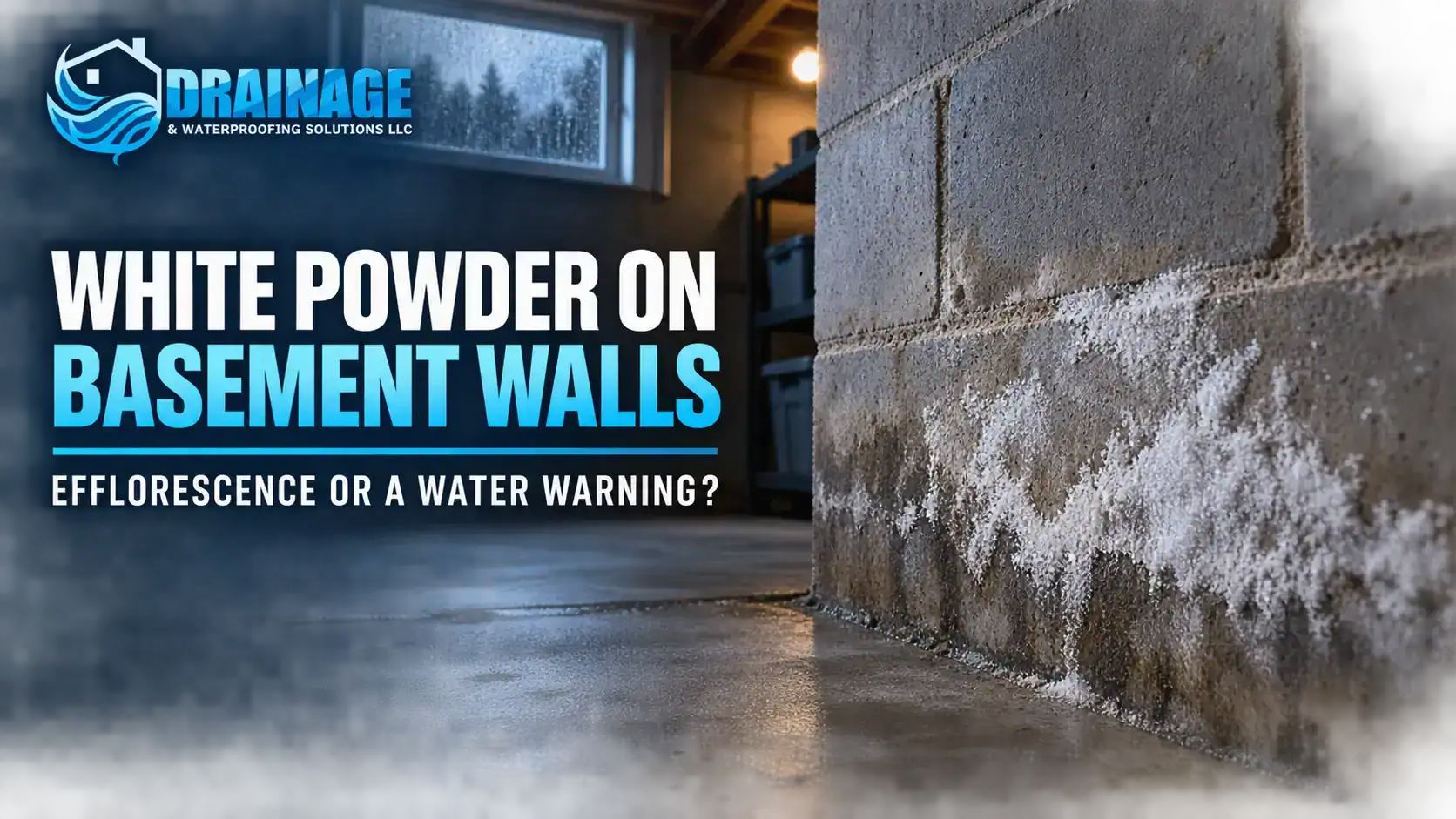
Efflorescence forms when water dissolves salts inside masonry, carries them toward the surface, and then evaporates. The remaining white or gray deposit may look powdery, chalky, crystalline, or fluffy. Efflorescence is not the same as mold, but both can occur in a damp basement. Cleaning the deposit can improve appearance; stopping recurrence requires identifying whether the moisture comes from exterior runoff, saturated soil, foundation seepage, cracks, wall-floor joints, condensation, plumbing, or another source.
How Can You Tell Whether White Powder Is Efflorescence?
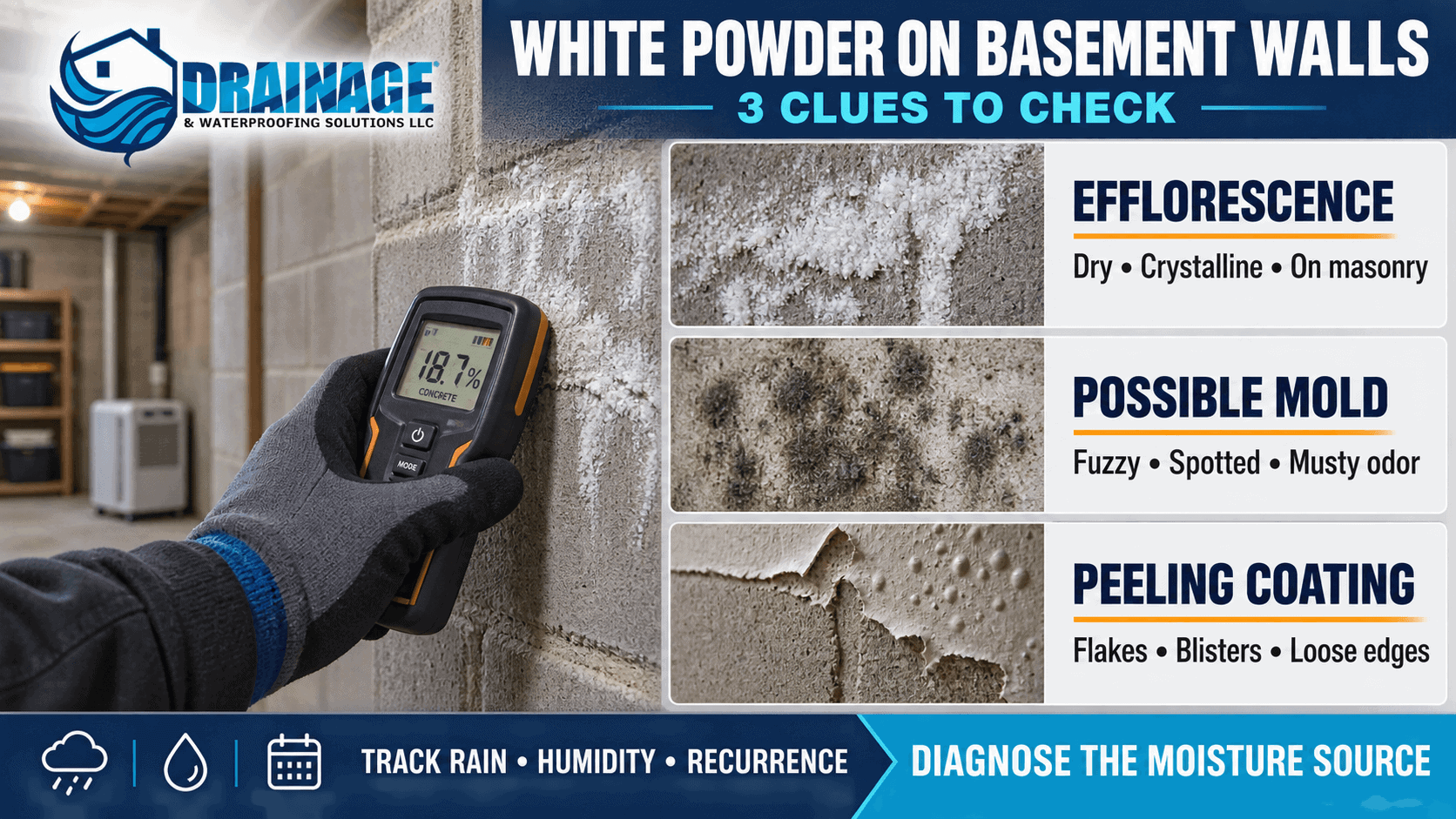
Efflorescence commonly appears on porous mineral surfaces such as poured concrete, concrete block, brick, stone, and mortar. It may brush away as a dry powder, form a thin crust, or create feathery crystals. Its location often follows pores, mortar joints, cracks, damp bands, or areas where water evaporates.
Appearance alone is not a perfect test. White mold, deteriorating paint, concrete dust, mineral scale from a plumbing leak, and residue from previous cleaning can look similar. Do not taste, sniff closely, or aggressively disturb an unknown material. If the growth is fuzzy, produces a musty odor, sits on wood or paper, covers a large area, or affects an occupant with respiratory sensitivity, treat it as an unidentified moisture-related material until evaluated.
| Possible Material | Common Clues | What It Suggests | Best Next Step |
|---|---|---|---|
| Efflorescence | Dry, white or gray, powdery or crystalline; typically on masonry | Moisture has moved through or across mineral material | Document, clean gently, and investigate the moisture path |
| Possible mold | Fuzzy, spotted, irregular, or colored; may occur with musty odor | A surface or nearby material has remained damp | Avoid disturbance and follow appropriate moisture and mold guidance |
| Peeling coating | Flakes, blisters, curling edges, or a powdery paint film | Moisture, poor adhesion, incompatible coating, or material age | Check moisture before scraping, sealing, or repainting |
| Concrete or mortar dust | Loose material near abrasion, drilling, crumbling joints, or surface wear | Mechanical wear or material deterioration may be involved | Inspect the substrate and determine why it is deteriorating |
How Does Efflorescence Form on Basement Walls?
Efflorescence requires three ingredients: soluble salts, water, and a path to an evaporating surface. The salts may already be present in concrete, mortar, masonry units, soil, or groundwater. Moisture dissolves them, travels through pores or cracks, and deposits them when it evaporates.
STEP 1
Moisture Reaches Masonry
Rain, groundwater, damp soil, condensation, or a leak wets the wall or floor.
STEP 2
Salts Dissolve
Water dissolves soluble minerals within the masonry or adjacent material.
STEP 3
Solution Moves
Capillary movement or water pressure carries dissolved salts toward the basement surface.
STEP 4
Water Evaporates
The water becomes vapor, leaving visible crystals or powder behind.
Is Efflorescence Dangerous?
Efflorescence is a mineral deposit, not a diagnosis of toxic mold or structural failure. The more important concern is what allowed water to move through the material. Repeated wetting can damage coatings, keep nearby wood or stored materials damp, contribute to odors, and create conditions in which mold can grow on organic surfaces.
Heavy crystallization, crumbling mortar, surface scaling, displaced masonry, widening cracks, bowing walls, or active leaks require more than cosmetic cleaning. Those signs should be evaluated by the appropriate drainage, waterproofing, masonry, or structural professional.
What Can the Location and Timing Tell You?
A pattern does not prove the cause, but it helps direct the inspection. Photograph the deposit before cleaning and note rainfall, humidity, plumbing use, exterior conditions, and whether the wall feels damp.
| Observed Pattern | Possible Explanation | Inspection Priority |
|---|---|---|
| Worse after rain | Runoff, grading, downspouts, saturated soil, cracks, or drainage limitations | Exterior water path and foundation perimeter |
| Band near wall bottom | Moisture near the footing, wall-floor joint, or lower masonry courses | Joint, floor edge, foundation drainage, and sump system |
| Below a pipe or fixture | Plumbing leak or condensation may be adding moisture | Plumbing and mechanical evaluation |
| Around one crack | The crack may be a preferential moisture route | Crack width, movement, leakage, and exterior conditions |
| Broad area with condensation | High indoor humidity and cold wall surfaces may contribute | Humidity, ventilation, insulation, and hidden seepage |
Root-Cause Checklist
Eight Common Causes of White Powder on Basement Walls
1. Exterior Runoff Near the Foundation
Overflowing gutters, short downspouts, settled soil, hard surfaces sloping toward the house, and low areas can concentrate rainwater against the foundation. The wall may never show flowing water, yet repeated dampness can transport salts to the interior surface.
2. Saturated Soil and Groundwater
Long storms or slow-draining soil can increase moisture around below-grade walls. Water may move through pores, joints, cracks, or the footing area even when the basement does not visibly flood.
3. Foundation Cracks or Open Joints
Shrinkage cracks, penetrations, mortar joints, and the wall-floor joint can become moisture routes. Efflorescence concentrated along one line can help locate the pathway, but crack movement and structural significance require separate evaluation.
4. Inadequate or Failing Drainage
A missing, blocked, damaged, or overwhelmed foundation drainage system can leave water beside the footing. Interior drains, exterior drains, sump equipment, and discharge routes must be evaluated as a connected system.
5. Interior Condensation
Warm humid air can condense on a cool basement wall. Condensation may not create classic through-wall seepage, but repeated surface wetting can mobilize salts near the surface and keep coatings or belongings damp.
6. Plumbing or Mechanical Moisture
A supply leak, drain leak, sweating pipe, condensate problem, or appliance discharge can mimic foundation moisture. Localized deposits that do not track rainfall deserve a plumbing and mechanical check.
7. New Masonry or Recent Repair
New concrete, mortar, patching, or masonry can contain moisture and soluble salts. Early deposits may lessen as materials dry, but persistent or expanding efflorescence still warrants investigation of ongoing water exposure.
8. A Coating That Traps or Redirects Moisture
An incompatible paint or sealer may blister, peel, or move the visible deposit to an uncoated edge. A coating can change where moisture evaporates without correcting why the wall is wet.
Safe Checks Homeowners Can Make
Do not enter a flooded area with energized equipment, disturb suspected mold, or scrape old coatings that may contain hazardous material. When the area is dry and safe, use observation rather than destructive testing.
- Photograph the deposit. Include a wide view and close-up before cleaning.
- Mark the boundary lightly. A removable note near the edge can show whether the area grows.
- Track the weather. Record whether it appears after rain, during humid weather, or without a weather change.
- Inspect outside. From safe ground, look for gutter overflow, short downspouts, ponding, erosion, and surfaces sloping toward the home.
- Check nearby plumbing. Look for staining, dripping, condensation, or dampness near pipes and fixtures.
- Measure humidity. Use a reliable hygrometer and compare readings over several days.
- Observe cracks. Note the location and visible changes without drilling, widening, or sealing them blindly.
- Check stored materials. Damp boxes, wood, fabric, insulation, or odors may indicate a broader moisture problem than the wall deposit shows.
What Should You Avoid?
- Do not paint or seal over an active deposit before diagnosing moisture.
- Do not use strong acid, chlorine mixtures, or an unapproved cleaner on masonry.
- Do not use high-pressure washing indoors or saturate the wall unnecessarily.
- Do not assume every white material is harmless efflorescence.
- Do not treat a dehumidifier as a substitute for drainage or leak repair.
- Do not ignore bowing, displacement, active flow, electrical hazards, or rapidly changing cracks.
How Should White Powder on Basement Walls Be Professionally Evaluated?
A useful inspection does not begin and end at the powder. It traces water from the roof and yard to the foundation, through the basement, and out through any drainage or sump system.
| Area | What to Evaluate | Why It Matters |
|---|---|---|
| Exterior runoff | Roof drainage, downspouts, grading, hardscapes, low areas, and erosion | Shows whether rainwater is being concentrated at the foundation |
| Foundation surface | Material, cracks, joints, penetrations, coatings, staining, and deterioration | Locates moisture paths and material concerns |
| Wall-floor connection | Damp bands, seepage, deposits, floor cracks, and perimeter conditions | Helps distinguish wall moisture from footing-level water |
| Interior environment | Relative humidity, condensation, airflow, temperature, finishes, and stored materials | Identifies surface moisture and hidden consequences |
| Drainage system | Interior or exterior drains, sump basin, pump, check valve, and discharge route | Confirms whether collected water can leave reliably |
| Other water sources | Plumbing, HVAC condensate, appliances, and utility penetrations | Prevents foundation work from being recommended for a non-foundation leak |
A drainage system inspection can connect the basement symptom to exterior water flow, foundation conditions, drains, sump equipment, and discharge performance.
How Is the Right Solution Chosen?
The repair should match the verified water source. Cosmetic cleaning alone cannot stop new deposits when moisture remains active.
| Confirmed Condition | Potential Response | Key Limitation |
|---|---|---|
| Gutter or downspout discharge | Repair roof drainage and route water to a suitable outlet | Discharge must not create erosion or send water back |
| Poor grading or yard pooling | Correct surface flow, grading, swales, or drainage as site conditions require | Buried utilities, neighboring runoff, and outlet elevation affect design |
| Foundation seepage | Appropriate exterior or interior drainage and waterproofing measures | A coating alone may not manage water pressure or drainage |
| Wall-floor joint leakage | Evaluate footing-level water, perimeter drainage, sump capacity, and the joint | Surface patching may redirect rather than resolve water |
| Interior condensation | Control humidity, airflow, and cold-surface conditions | Humidity control will not repair seepage |
| Plumbing or condensate leak | Repair the source through the appropriate qualified trade and dry materials | Waterproofing is not a substitute for plumbing or HVAC repair |
Why Raleigh-Area Basements Need a Whole-Property Diagnosis
Central North Carolina homes can experience intense rain, humid weather, variable grading, and soil conditions that slow drainage around a foundation. Water may approach from the roof, yard, shallow surface flow, saturated soil, plumbing, or indoor air. The visible white powder on basement walls only shows where moisture and salts reached an evaporating surface.
That is why a lasting plan may connect basement moisture control, foundation waterproofing, exterior water management, and drainage inspection rather than treating the deposit as an isolated stain.
Can You Clean Efflorescence Yourself?
A small, dry deposit on sound, unpainted masonry may sometimes be documented and removed gently after the area is dry. Start with the least aggressive method: use appropriate personal protection, avoid creating airborne dust, and test a soft nonmetallic brush on a small inconspicuous area. Collect loose material rather than spreading it through the basement.
Do not introduce more water than necessary, mix household chemicals, or use a strong acid. Historic, painted, deteriorated, decorative, or unknown masonry deserves material-specific guidance. Federal masonry-cleaning guidance emphasizes identifying the substrate and cause, testing a small area, and choosing the gentlest successful method.
If the deposit returns, cleaning has confirmed only that the symptom is recurring. It has not corrected the water source.
When Does White Powder on Basement Walls Need Professional Help?
Prompt Evaluation
- Active water or rapid spreading
- Bowing, displacement, or changing cracks
- Standing water near electrical equipment
- Crumbling masonry or falling material
- Suspected sewage or a major plumbing leak
Schedule an Inspection
- The powder returns after cleaning
- Deposits worsen after rain
- Paint peels or walls remain damp
- Musty odor or possible mold accompanies it
- Several basement areas show moisture signs
Evidence and Limits
What Does White Powder on Basement Walls Prove?
When the material is confirmed as efflorescence, white powder on basement walls proves that soluble salts reached the visible surface with moisture and remained after evaporation. It does not prove how much water moved, how often it occurred, where the water originated, whether the foundation is structurally damaged, or which repair is appropriate.
That distinction prevents two common mistakes: dismissing the deposit as harmless dust, or assuming that every deposit requires the most extensive waterproofing system. The evidence should be combined with timing, wall condition, exterior drainage, humidity readings, crack behavior, plumbing conditions, and any active leakage.
It Does Not Prove Mold
Efflorescence is not mold. However, moisture that creates white powder on basement walls can also support mold on cardboard, wood, dust, drywall, fabric, or other organic material. Nearby surfaces must be considered separately.
It Does Not Prove Structural Failure
A mineral deposit alone does not establish that a wall is unsafe. Bowing, displacement, widening cracks, crumbling masonry, or differential movement are separate warning signs that may require structural evaluation.
It Does Not Select the Repair
The same visible deposit can follow condensation, rainwater concentration, groundwater, a plumbing leak, or curing masonry. The repair must address the verified source rather than the appearance alone.
How Can You Reduce the Chance of Efflorescence Returning?
Preventing white powder on basement walls means reducing the moisture that carries salts. No single checklist applies to every property, but the following maintenance practices can reveal or reduce common water pathways.
Watch the Roof-Water Path
Keep gutters functional, check downspouts during rain, and confirm that discharged water reaches a suitable outlet instead of soaking soil beside the foundation.
Protect Positive Surface Flow
Monitor settlement, erosion, garden beds, patios, walkways, and low spots that may redirect water toward the house. Do not cover foundation materials or create inaccessible inspection areas.
Maintain Drainage Equipment
Inspect installed drains, sump pumps, alarms, backup systems, and discharge routes on an appropriate schedule. A system cannot protect the basement if it is blocked, disconnected, or unable to discharge.
Control Interior Humidity
Track relative humidity and condensation rather than relying on comfort alone. Humidity control can reduce surface moisture but should be combined with drainage or leak correction when water enters through another route.
Keep Walls Observable
Avoid placing absorbent belongings directly against foundation walls. Maintain enough access to notice new dampness, white powder on basement walls, peeling coatings, odors, or crack changes.
Document Recurrence
After permitted cleaning, photograph the same locations during dry weather and after rain. A repeatable pattern gives an inspector better evidence than a freshly cleaned wall with no history.
Practical takeaway: If white powder on basement walls keeps returning, do not keep repeating cosmetic cleaning. Recurrence is useful evidence that the moisture pathway remains active.
How Should You Monitor White Powder on Basement Walls?
Create a simple record before changing the surface. Photograph white powder on basement walls with a date and a fixed reference point, note recent rain and indoor humidity, and mark whether the area is dry, cool, damp, stained, or accompanied by odor. Repeat the same observations after several dry days and after the next significant rain.
Also record sump-pump activity, plumbing use, gutter overflow, exterior pooling, and any new white powder on basement walls. This timeline cannot replace moisture testing or inspection, but it can show whether the pattern responds to storms, indoor humidity, or a localized leak and help prevent unnecessary trial-and-error repairs.
People Also Ask
Frequently Asked Questions
What is the white powder on my basement walls?
White powder on basement walls is often efflorescence, a deposit of mineral salts left when moisture travels through concrete, block, brick, stone, or mortar and evaporates. It can resemble mold or damaged paint, so the material and surrounding moisture conditions should be considered before cleaning.
Is efflorescence the same as mold?
No. Efflorescence is a mineral deposit, while mold is biological growth. Efflorescence usually forms on masonry and may look dry, chalky, or crystalline. Mold may look fuzzy, spotted, or irregular and can grow on damp organic material. Both can occur in the same moisture-affected basement.
Does efflorescence mean my basement is leaking?
It means moisture has dissolved and transported salts to an evaporating surface, but it does not identify the source by itself. The moisture may come from foundation seepage, damp soil, rainwater near the house, condensation, plumbing, new masonry, or another pathway.
Is white powder on concrete walls dangerous?
The mineral deposit itself is generally a symptom rather than the main hazard. The concern is persistent moisture and any accompanying deterioration, mold, damaged finishes, odors, or electrical risk. Crumbling material, bowing walls, active flow, or changing cracks require prompt professional evaluation.
Why does efflorescence return after I clean it?
It returns when moisture continues carrying dissolved salts to the surface. Cleaning removes the visible deposit but not exterior runoff, saturated soil, wall seepage, cracks, condensation, plumbing leaks, or failed drainage. Recurrence is a reason to investigate the complete moisture path.
Can I paint over efflorescence?
Painting directly over an active deposit is not a lasting solution. Salts and moisture can interfere with adhesion and cause blistering, peeling, or renewed deposits. Identify and control the moisture source, allow the wall to dry, prepare the surface appropriately, and use a compatible coating system.
Can a dehumidifier stop basement efflorescence?
A dehumidifier may reduce condensation and indoor humidity, but it cannot stop groundwater, rainwater, a plumbing leak, or moisture moving through the foundation. It is useful only when humidity is part of the confirmed problem and should not replace drainage or waterproofing repairs.
Why is the white powder worse after rain?
Rain can increase soil moisture and expose problems with gutters, downspouts, grading, foundation drainage, cracks, or wall-floor joints. As that moisture moves through masonry and later evaporates, it can leave more salts behind. Document the timing and inspect exterior water flow.
Should I seal the basement wall from the inside?
An interior coating may be appropriate in some systems, but it should not be selected from the deposit alone. If water pressure, drainage failure, active cracks, or exterior runoff is involved, coating the visible surface may fail or redirect moisture. Diagnose the source before choosing a sealer.
Who should inspect white powder on basement walls in Raleigh, NC?
A drainage and waterproofing professional can evaluate exterior runoff, grading, foundation moisture, cracks, wall-floor joints, drainage, sump equipment, and discharge conditions. Material deterioration or structural movement may require a masonry or structural specialist, while plumbing and HVAC sources require the appropriate qualified trade.
Find the Water Source
Request a Basement Moisture and Drainage Evaluation
If white powder returns after cleaning, spreads after rain, or appears with dampness, peeling paint, odors, cracks, or leakage, evaluate the complete water pathway before covering the wall.
Drainage & Waterproofing Solutions, LLC serves Raleigh and surrounding Central North Carolina communities with drainage inspection, basement moisture control, foundation waterproofing, and related water-management services.
Call (919) 508-7503 Contact the TeamRelated Resources
Editorial Sources
This guide references moisture and mold guidance from the U.S. Environmental Protection Agency, masonry-care guidance from the U.S. National Park Service, federal masonry-cleaning procedures from the U.S. General Services Administration, and basement-moisture information from University of Minnesota Extension. This content is general information and does not replace an on-site assessment or advice from the appropriate qualified trade.