
Quick Answer
Start by determining whether the odor truly originates at the sump pit. A musty sump pump smell commonly points to moisture, damp materials, or microbial growth nearby. A stale or swampy odor may follow water and debris sitting in the basin. A sewage odor can come from wastewater, a floor drain, a dry trap, damaged plumbing, or another source that needs a plumber. A rotten-egg odor can have several causes, including hydrogen sulfide or fuel-gas odorants, so leave the area and contact the appropriate utility or emergency service if the smell is strong, sudden, unexplained, or accompanied by symptoms.
What Can Different Sump Pump Smells Suggest?
Odor descriptions are subjective. One person’s “sewage” smell may be another person’s “swampy” smell, and air movement can carry an odor from a drain, water heater, plumbing vent, stored chemical, dead pest, or damp wall toward the sump. Use the table as a triage tool, not a final diagnosis.
The safest question is not only “What does it smell like?” Ask when it began, whether it changes after rain, whether the pit contains standing water or debris, whether nearby drains are used, whether plumbing fixtures are slow, and whether anyone experiences headache, dizziness, nausea, eye irritation, or breathing difficulty.
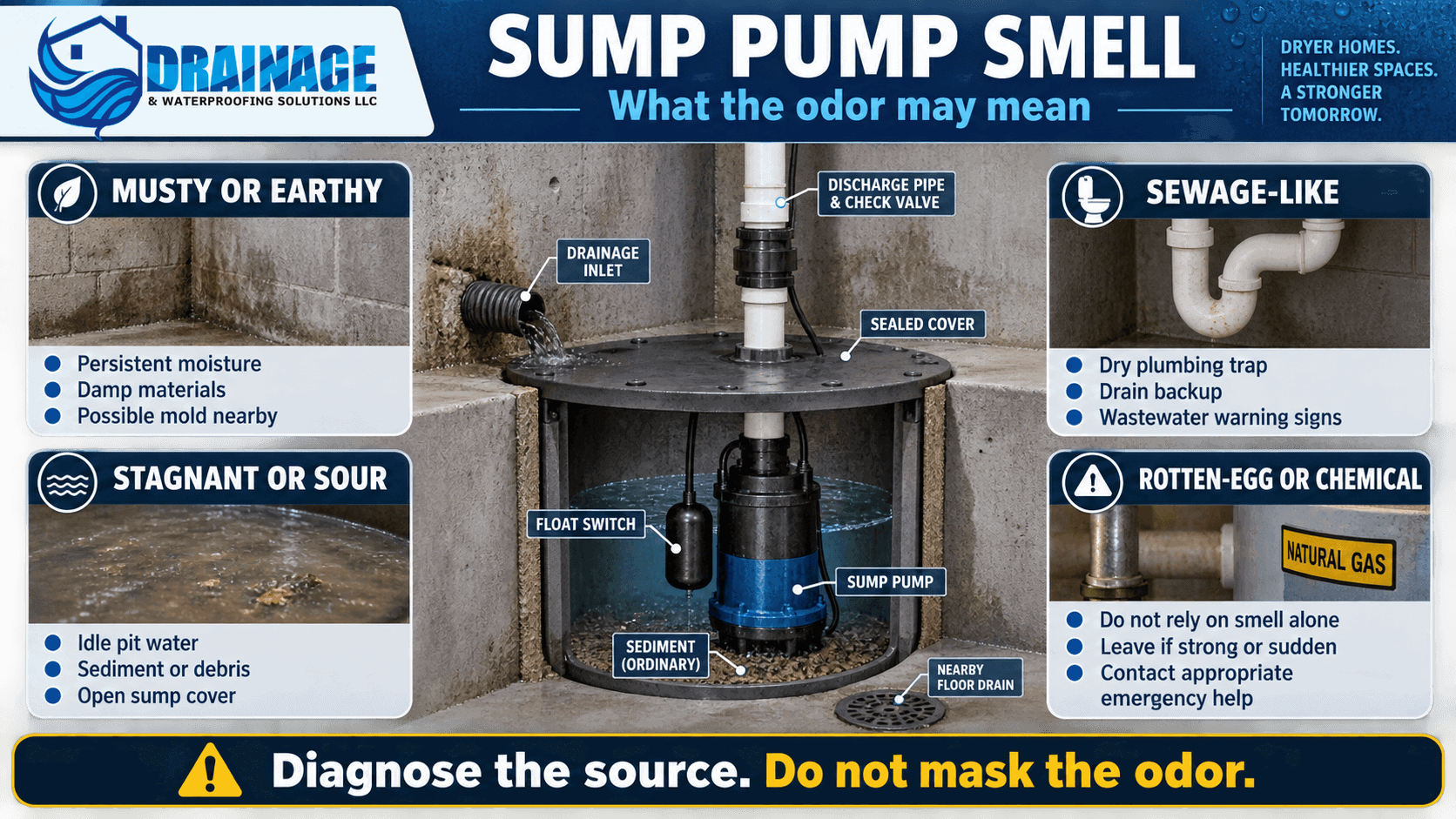
| Odor Description | Possible Sources | Clues to Check | Response Level |
|---|---|---|---|
| Musty or earthy | Persistent moisture, damp dust, wet wood, cardboard, or possible mold nearby | Humidity, condensation, staining, wet materials, seepage | Investigate moisture and materials |
| Stagnant, swampy, or sour | Standing pit water, sediment, leaves, insects, or microbial film | Long idle period, debris, slimy surfaces, uncovered basin | Schedule cleaning and system inspection |
| Sewage or wastewater | Drain backup, plumbing defect, dry trap, wastewater entry, or another sanitary source | Slow drains, gurgling, discolored water, solids, floor-drain odor | Avoid contact and call a qualified plumber |
| Rotten egg | Hydrogen sulfide, fuel-gas odorant, plumbing or water source, or decaying material | Sudden intensity, symptoms, nearby fuel appliances, whole-room odor | Leave if strong or unexplained; seek appropriate emergency help |
| Fuel, solvent, or chemical | Spill, stored product, fuel system, garage migration, or contaminated water | Containers, appliances, sheen, sudden onset, irritation | Do not operate equipment; leave and contact emergency specialists |
Safety Comes Before Diagnosis
When Should You Leave the Area?
Leave the basement or crawl space and move to fresh air if an odor is strong, sudden, chemical-like, fuel-like, or accompanied by headache, dizziness, nausea, weakness, eye irritation, confusion, or breathing difficulty. From a safe location, contact the fuel-gas utility, fire department, emergency service, plumber, or other appropriate responder based on the suspected source.
Hydrogen sulfide is associated with a rotten-egg odor, but the sense of smell can become fatigued and should not be relied on to determine whether the gas remains present. Fuel gases are intentionally odorized and can also be described as sulfurous or rotten-egg-like. Do not assume the sump pit is responsible simply because the odor is strongest in the basement.
Do not switch lights or equipment on or off, use a flame, operate the sump pump, enter a confined crawl space, or attempt odor testing when a gas, fuel, chemical, or hazardous-air condition is possible.
Why Can a Sump Pit Produce Odor?
A sump basin is a collection point. Groundwater or drainage water enters the pit, and a float-operated pump sends it through a discharge line. That design concentrates moisture, sediment, air exchange, mechanical components, and whatever small amount of organic material reaches the basin. If water remains for a long time, debris accumulates, the cover is open, or drainage conditions change, an odor can become noticeable.
COLLECT
Water Enters the Basin
Perimeter or sub-slab drainage carries water, sediment, and sometimes small debris toward the pit.
STORE
Some Water Remains
The pump shuts off before every drop is removed. Residual water is normal, but long idle periods can allow odor to develop.
VENT
Air Escapes the Pit
An open, loose, damaged, or unsealed cover allows humid or odorous pit air to mix with basement air.
SIGNAL
Odor Reveals a Condition
The smell may reveal maintenance needs, but it can also be air moving from an entirely different source.
Root-Cause Checklist
Eight Common Causes of Sump Pump Smell
1. Stagnant Water in an Infrequently Used Pit
During a dry period, the pump may not cycle for weeks. Residual water can become stale as dust, insects, sediment, or organic matter settles in the basin. The smell may become more noticeable when air pressure or mechanical equipment moves pit air into the room.
2. Sediment, Debris, or Microbial Film
Fine soil, iron-bearing deposits, leaves, insects, and other material can collect on the pit walls, pump, float, or bottom. Wet material can support microbial activity and a swampy or sour odor. Cleaning must protect the pump, electrical components, check valve, and drainage inlet.
3. An Open or Poorly Sealed Sump Cover
An uncovered basin releases moisture and odor directly into the basement. A cover with unsealed pipe, wire, or inspection openings can do the same. The appropriate lid must remain serviceable, compatible with the installed system, and properly detailed around penetrations.
4. A Dry Trap or Nearby Plumbing Source
An infrequently used floor drain, sink, shower, or other trapped fixture can lose its water seal and allow sewer gas into the room. The air path may make the sump seem responsible. Damaged traps, drain connections, cleanouts, and plumbing vents require a qualified plumbing diagnosis.
5. Wastewater or Drain Backup
A groundwater sump should not normally contain sanitary wastewater. Discolored water, solids, toilet-paper-like material, gurgling fixtures, multiple slow drains, or odor that worsens with plumbing use can indicate a drain or sewer problem. Avoid contact and call a plumber or wastewater specialist.
6. Persistent Moisture or Mold Near the Pit
The pit may be only the wettest visible feature in a larger moisture problem. Seepage, condensation, wet cardboard, damp carpet, wall cavities, wood framing, or dust on humid surfaces can create a musty odor. Moisture correction and material-specific cleanup are both necessary.
7. Discharge or Check-Valve Problems
A malfunctioning check valve can let discharged water fall back into the pit. Poor outlet placement can send water back toward the foundation. Repeated cycling, standing water, or recirculation may keep the system wet and bring exterior organic material into the drainage pathway.
8. Pests, Stored Products, Fuel, or Another Nearby Source
A dead rodent, contaminated storage, gasoline, paint, solvents, a leaking appliance, or gas-system issue can be misidentified as sump pump smell. Expanding the inspection beyond the basin prevents cleaning the wrong component while a more urgent source remains.
What Does the Timing of the Odor Reveal?
Timing can separate system maintenance from broader moisture or plumbing problems. Keep a short record instead of repeatedly adding cleaners. Note rainfall, pump cycles, plumbing use, HVAC operation, temperature, humidity, and whether the cover was disturbed.
| Pattern | Possible Explanation | Inspection Priority |
|---|---|---|
| Worse after a long dry period | Stale pit water, accumulated debris, or a dry plumbing trap nearby | Pit condition and nearby trapped fixtures |
| Worse after heavy rain | New drainage water, organic material, high humidity, seepage, or system stress | Water source, sump cycle, discharge, and basement moisture |
| Worse when fixtures drain | Drain, trap, vent, or wastewater problem | Qualified plumbing evaluation |
| Strongest with lid open | Pit water, sediment, debris, or unsealed basin air | Professional pit cleaning and cover review |
| Throughout basement, not just pit | Moisture, HVAC transport, plumbing, pest, fuel, or stored-product source | Whole-room source tracing |
| Sudden, intense, or symptomatic | Potential gas, fuel, chemical, or hazardous wastewater condition | Leave and obtain appropriate emergency assistance |
Safe Checks Homeowners Can Make
Only continue if the odor is mild, the area is electrically safe, there is no suspected gas or chemical source, no wastewater is visible, and no one has symptoms. Do not enter a low crawl space or confined area to investigate an unknown odor.
- Step outside first. Confirm that the odor improves in fresh air and that no one feels ill.
- Identify the strongest safe location. From the open room, compare the pit, floor drain, laundry, water heater, HVAC equipment, wall edges, and stored products without leaning into openings.
- Look through an access panel if available. Note water color, surface film, debris, sediment, insects, and whether the cover is damaged. Do not reach into the basin.
- Observe system behavior. Note water level, recent pump cycling, unusual noise, discharge flow, and whether water appears to return after the pump stops.
- Check for moisture nearby. Look for condensation, staining, damp cardboard, wet carpet, peeling coatings, efflorescence, and musty materials.
- Review plumbing clues. Record slow drains, gurgling, unused floor drains, recent plumbing work, and whether odor changes with fixture use.
- Inspect the exterior discharge from safe ground. Look for blockage, pooling, erosion, damage, or water returning toward the foundation.
- Document rather than dose. Take photos and notes. Do not pour an unapproved chemical into the pit to see whether the smell changes.
What Should You Never Pour Into a Sump Pit?
Do not pour gasoline, solvents, drain opener, pesticides, paint, acids, ammonia, concentrated bleach, fragrances, or mixed household chemicals into a sump basin. A sump system is not a sanitary drain or chemical-disposal route. Products can create fumes, react with one another, damage the pump or seals, contaminate discharged water, and hide evidence needed for diagnosis.
Do not mix bleach with ammonia, acids, drain cleaners, or other products. If a manufacturer or qualified service professional recommends a specific maintenance product or procedure for the installed equipment, follow those instructions precisely. Otherwise, have the pit and pump serviced with the system electrically isolated by someone qualified to do the work.
What Should a Professional Inspection Include?
The appropriate professional depends on the evidence. A drainage and waterproofing technician can assess the sump basin, pump, float, drainage inlets, check valve, cover, discharge route, surrounding moisture, and whether exterior water management contributes. A plumber should investigate traps, sanitary drains, wastewater, supply leaks, and venting. Fuel or chemical concerns belong to emergency, utility, environmental, or fire-response specialists.
Pit and Pump
Water level, sediment, debris, pump condition, float clearance, inlet condition, electrical safety, cycling behavior, and signs of backflow or contamination.
Cover and Penetrations
Lid fit, damage, inspection access, pipe and wire openings, serviceability, moisture release, and compatibility with the installed system.
Drainage and Discharge
Check valve, pipe support, visible restrictions, outlet condition, erosion, freezing exposure, recirculation, and whether water is carried away from the foundation.
Surrounding Sources
Floor drains, plumbing fixtures, appliances, condensate lines, damp materials, wall seepage, humidity, pests, stored chemicals, and other sources outside the pit.
How Is Sump Pump Smell Corrected?
A lasting response removes the verified source and restores the system’s intended operation. Masking odor with fragrance does neither. The solution may involve maintenance, drainage correction, plumbing repair, moisture control, material cleanup, pest removal, or emergency response.
| Confirmed Condition | Appropriate Response | What It Does Not Solve |
|---|---|---|
| Stale water and ordinary debris | Qualified pit and pump cleaning; inspect pump operation and inlet conditions | Plumbing, fuel-gas, sewage, or whole-basement moisture problems |
| Open or damaged cover | Install or repair a compatible, serviceable cover and properly detail penetrations | Contaminated water or an odor source outside the basin |
| Backflow or discharge recirculation | Correct check valve, discharge line, outlet, or exterior water-routing issue | A drain or sewer backup unrelated to the sump discharge |
| High humidity or damp materials | Stop water entry, dry the area, remove or clean affected materials appropriately, then control humidity | Active liquid leakage if only a dehumidifier is added |
| Dry trap or plumbing defect | Have a qualified plumber restore the trap seal or repair the drain, vent, or fixture | Groundwater drainage or sump-pump maintenance |
| Wastewater contamination | Stop use as advised, obtain plumbing repair, and use appropriate contaminated-water cleanup | Safe remediation through deodorizer or ordinary pit cleaning |
| Gas, fuel, or chemical concern | Leave the area and contact the appropriate utility or emergency professional from a safe location | Safe diagnosis through smell or homeowner testing |
Why Raleigh-Area Homes Need a Whole-Basement Diagnosis
Central North Carolina’s humid weather and heavy rain can increase pump activity, raise indoor humidity, wet foundation materials, and carry organic material into drainage pathways. A sump pump smell after a storm may come from the basin, but it may also reflect wall seepage, floor moisture, a dehumidifier or condensate issue, damp storage, or exterior water returning toward the foundation.
Dry periods create different clues. A pit may sit idle, and an infrequently used floor drain can lose water from its trap. Seasonal patterns are useful, but they still require the sump, drainage system, plumbing, and surrounding basement to be evaluated separately.
Drainage & Waterproofing Solutions can evaluate installed water-management components through drainage-system inspections, along with basement moisture control and crawl-space and basement waterproofing when those services match the evidence.
Evidence and Limits
What Does Sump Pump Smell Actually Prove?
An odor proves only that volatile compounds reached your nose. It does not prove their source, concentration, toxicity, or whether the sump system caused them. Even the location of maximum odor can be misleading because air flows toward mechanical equipment, openings, stairways, and pressure differences.
The diagnosis should combine odor timing with visible water, pit condition, pump behavior, discharge performance, plumbing symptoms, humidity, surrounding materials, fuel appliances, stored products, and occupant symptoms. Instruments and trade-specific tests may be needed when air quality, plumbing, or fuel systems are involved.
It Does Not Prove Sewage
Stagnant groundwater, debris, microbial film, and damp materials can smell unpleasant without sanitary wastewater. Visible contamination and plumbing evidence matter.
It Does Not Prove Mold
A musty odor can support a moisture investigation, but it does not identify the organism, location, or extent of growth. Correct the moisture source and evaluate materials.
It Does Not Prove Safety
A fading odor does not establish that a gas is gone. Leave strong or symptomatic conditions and rely on qualified detection and response.
How Can You Prevent Sump-Pit Odor From Returning?
Maintain the Installed System
Have the pump, float, inlet, check valve, cover, backup equipment, and discharge reviewed on an appropriate schedule, especially before heavy-rain seasons.
Keep Debris Out
Maintain the cover and keep storage, loose material, pests, and work debris from entering the basin or blocking access.
Control the Water Source
Maintain gutters, downspouts, grading, drainage outlets, and foundation water management so the sump is not repeatedly overloaded by preventable runoff.
Manage Basement Humidity
After liquid-water problems are corrected, monitor relative humidity and maintain properly sized dehumidification or conditioned-air systems as appropriate.
Store Materials Off the Floor
Use moisture-resistant shelving and remove damp cardboard, fabric, wood scraps, and other absorbent material that can hold odor near the pit.
Act on Plumbing Clues
Do not wait when drains gurgle, fixtures become slow, wastewater appears, or odor responds to plumbing use. Early plumbing diagnosis can limit contamination.
When Should You Schedule Professional Help?
Schedule a drainage-system inspection when a mild sump pump smell returns after ordinary maintenance, the pit contains sediment or debris, the lid is missing or damaged, the pump cycles abnormally, water falls back after shutdown, the discharge outlet pools, or the basement stays damp. Call a plumber for sewage odor, drain symptoms, suspected wastewater, dry-trap uncertainty, or plumbing-related changes.
Seek emergency assistance rather than scheduling routine service when odor is strong, sudden, fuel-like, chemical-like, associated with symptoms, or potentially related to gas. If standing water is near energized electrical equipment, keep out of the area and obtain qualified help.
People Also Ask
Frequently Asked Questions
Why does my sump pump smell like sewage?
A sewage-like sump pump smell may come from wastewater contamination, a drain backup, a dry floor-drain trap, damaged plumbing, or air moving from another sanitary source. A groundwater sump should not normally receive sanitary waste. Avoid contact with discolored or contaminated water and call a qualified plumber.
Why does my sump pump smell like rotten eggs?
Rotten-egg odor may be associated with hydrogen sulfide, fuel-gas odorants, plumbing, water, or decaying organic material. Smell alone cannot distinguish them. If the odor is strong, sudden, unexplained, or causes symptoms, leave the area and contact the appropriate utility or emergency service from a safe location.
Why does the sump pit smell musty?
A musty odor commonly indicates persistent moisture affecting dust, cardboard, carpet, wood, wall cavities, or other organic material near the pit. The pit may contribute humidity without being the only source. Correct seepage or condensation and evaluate damp materials rather than masking the odor.
Can stagnant water make a sump pump smell?
Yes. Residual water can become stale during long idle periods, especially when sediment, insects, leaves, or organic debris is present. The pump normally leaves some water behind, so recurring odor warrants inspection of the basin, cover, pump, drainage inlet, and nearby moisture conditions.
Can I pour bleach into my sump pit?
Do not pour concentrated bleach or mixed household chemicals into a sump pit. Chemicals can create fumes, react dangerously, damage equipment, contaminate discharge water, and conceal the source. Follow the installed equipment manufacturer’s instructions or use a qualified sump-pump service professional.
Should a sump pit have an airtight cover?
Many systems benefit from a sealed or tightly fitted, serviceable cover that reduces moisture and pit-air movement while allowing appropriate inspection and equipment access. The cover must fit the specific basin, pipes, wiring, and system requirements. Have a professional evaluate missing, damaged, or improvised covers.
Why is the odor worse after rain?
Rain can increase pump activity, introduce new drainage water and organic material, raise basement humidity, or expose a discharge and recirculation problem. Check whether the pump cycles normally, whether water returns, whether the outlet drains away from the foundation, and whether other basement surfaces became damp.
Can a dehumidifier remove sump pump odor?
A dehumidifier may reduce mustiness caused by high humidity after water sources are controlled. It cannot clean pit debris, repair a check valve, stop sewage, restore a dry plumbing trap, or resolve fuel and chemical hazards. Treat it as humidity control, not an odor-source diagnosis.
How often should a sump pump and pit be inspected?
Inspection frequency depends on the installed equipment, manufacturer guidance, water history, pump activity, sediment, backup system, and property conditions. Review the system before heavy-rain seasons and after unusual operation, odor, flooding, power loss, or discharge problems.
Who should inspect a smelly sump pump in Raleigh, NC?
A drainage and waterproofing professional can inspect the sump basin, pump, float, cover, check valve, drainage inlet, discharge line, exterior outlet, and surrounding moisture. Use a qualified plumber for sewer, trap, drain, vent, or wastewater concerns and emergency services for suspected gas, fuel, or chemical hazards.
Find the Actual Source
Request a Sump and Drainage-System Evaluation
If a mild sump pump smell keeps returning, the basin contains debris, the pump behaves differently, or the discharge sends water back toward the home, inspect the complete system before using deodorizer or replacing parts.
Drainage & Waterproofing Solutions, LLC serves Raleigh and surrounding Central North Carolina communities with drainage inspection, sump-system evaluation, basement moisture control, and related water-management services.
Related Drainage and Moisture Resources
Authoritative References
This guide is educational and cannot identify an odor or hazardous-air condition remotely.